
About Bandita Patro
Nobody at work is going to tell you how you are being read.
I do. The read has already happened, in every meeting you sat in this year, and there is no form it arrives on.

Bandita PatroImage consultant and corporate trainer. For fifteen years before that, the woman in the meeting getting read.
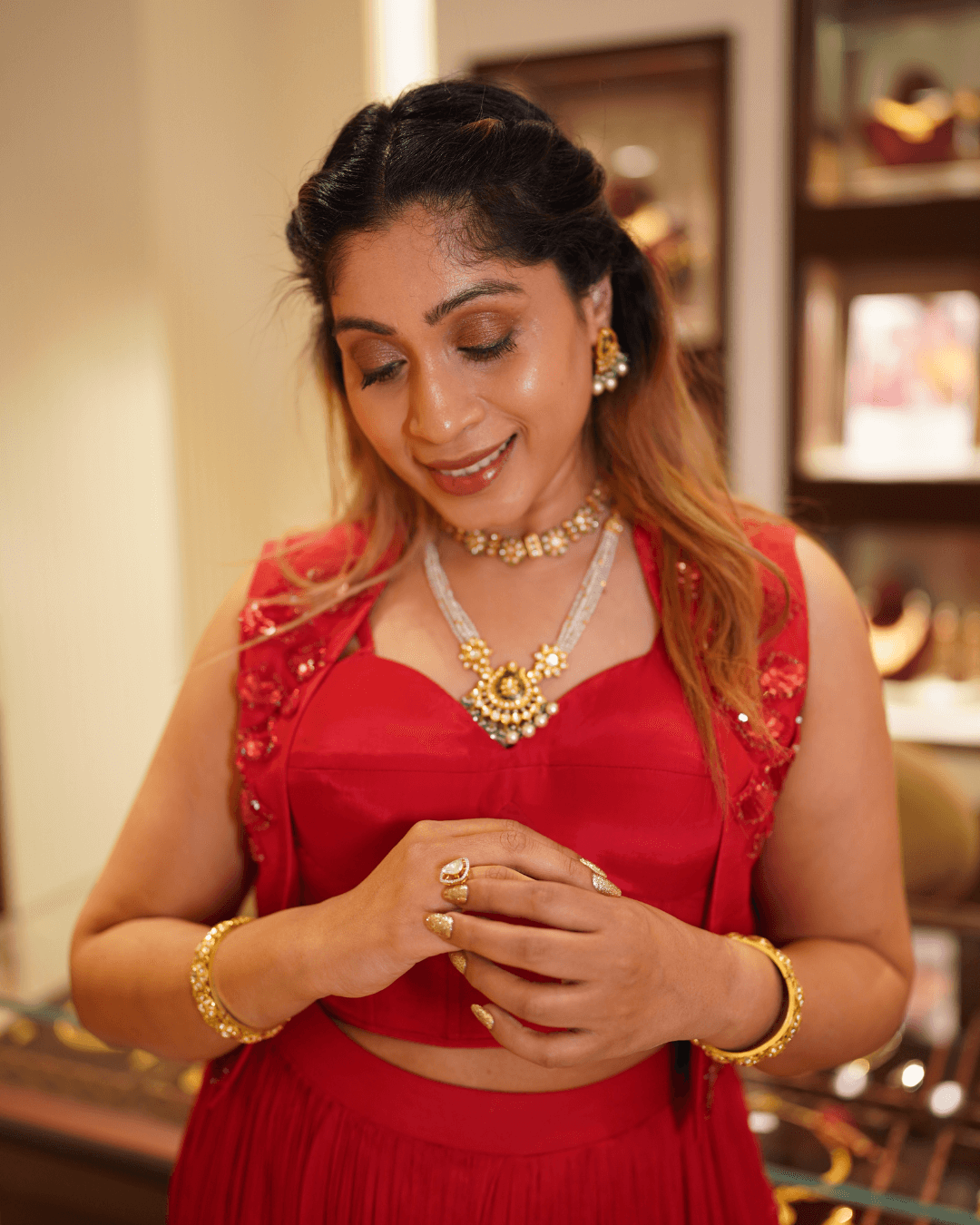
Seven markers, on me, because it is easier to see on somebody else first. Four of them show in a photograph. Three do not.
Tap a markerWhat women ask me once the session has ended
- What do I wear to the meeting where the promotion gets decided.
- How do I get taken seriously without turning into someone I would not like.
- Is it allowed to want to be respected and to want to look like myself at the same time.
Never in the session. Always in the ten minutes after, while everyone else is packing up. I have been asked that third one in some form several thousand times and it still makes me angry on her behalf, because wanting to be respected and wanting to look like yourself were never opposing requests. Most of this work is proving that to one person at a time.
01 · Where this came from
I am not a stylist. I was an engineer who kept watching the better case lose.
For fifteen years I sat in rooms where the numbers were supposed to settle it. They did not, often enough that I stopped calling it luck.
- 01
Engineer
Which is why this has seven parts and a score rather than a mood board. If nobody else in the room can observe it, it does not go in.
- 02
Fifteen years, corporate pharma
Long enough to stop believing the strongest case wins on its own. I have sat in the meetings my cohorts sit in, on the same side of the table.
- 03
Conselle Institute, Utah
An international qualification in image management. The point where a private irritation turned into something teachable.
- 04
Twenty years of the work
100,000+ professionals across 223+ organisations. Corporate floors most weeks, one person in a room in Andheri East on the others.
I do not have one clean story about the day I noticed. I have fifteen years of the same story. Somebody arrives with a thinner case and a steadier presence and walks out with the decision, and nobody writes that part down. There is no line for it on an appraisal. Nobody is going to say it to your face afterwards either, because it would be rude and because most of them could not name what they saw.
What changed it for me was small and slightly annoying. I altered how I draped a saree, and the room altered how it dealt with me, with the same case, the same numbers and the same voice.
I draped a saree differently one day, and then I kept doing it.
Bandita PatroWhat it showed me was how much unplanned work your appearance is doing while you are busy preparing the actual content. Twenty years later I am still taking it apart, in seven pieces, with a score at each end.
02 · The method
Presence gets treated as a personality trait, and a trait is hard to train.
Break it into seven behaviours somebody else can observe and every one can be taught, practised and scored. These are the same seven markers from the photograph at the top, written out. Open any of them.
What a person believes about their own standing before they walk in. It sets everything downstream, which is why it is first and not last.
What it looks likeEnters a room without apologising for taking up space. Does not open with a disclaimer. Takes the seat they were given rather than the one nearest the door.
Highest self-scores and lowest observer-scores of any pillar. People believe they project more certainty than others can see.
Everything an observer processes before a word is spoken. Colour against the person's own colouring, silhouette against their frame, grooming, and formality calibrated to the specific room.
What it looks likeFormality matches the meeting rather than the industry stereotype. Colours work with their undertone. Fit is correct at shoulder and hem. Nothing they are wearing is doing unplanned work.
Widest variance inside a single cohort. Usually two or three people are already excellent and nobody has ever told them why.
Pace, pitch, volume, pause, and the specific confidence question of accent in Indian professional settings.
What it looks likeFinishes sentences. Pauses instead of filling. Does not rise in pitch at the end of a statement. Audible at the far end of the table without effort.
Word choice, structure, and how a position gets stated. Whether the point arrives first or last, and how much hedging surrounds it.
What it looks likeStates the recommendation before the reasoning. Removes the softeners: just, sort of, I might be wrong but. Answers the question that was asked.
Hedging before a recommendation. Frequently the single highest-yield change available to a cohort, and the fastest to rehearse.
Posture, stillness, gesture, eye contact, and how a person occupies a chair, a stage or a doorway.
What it looks likeStill when listening. Gestures within the frame rather than below the table. Weight even. Holds eye contact through the end of their own sentence.
Etiquette, protocol, hosting, introductions, dining, and reading the codes of a room that has not explained itself.
What it looks likeIntroduces people in the right order. Hosts rather than attends. Knows what to do with the cutlery, the business card and the senior guest.
How a person is read on a video call, on a professional profile, and in the written traces they leave. Framing, lighting, background, photograph, and the gap between the in-person read and the online one.
What it looks likeCamera at eye level. Face lit from the front. A profile photograph that matches how they present at work. Consistent between the room and the screen.
The largest gap of the seven and the quickest to close. Most of it is a lamp, a shelf moved out of shot, and one new photograph.
03 · Where the work happens
Most of it happens standing up.
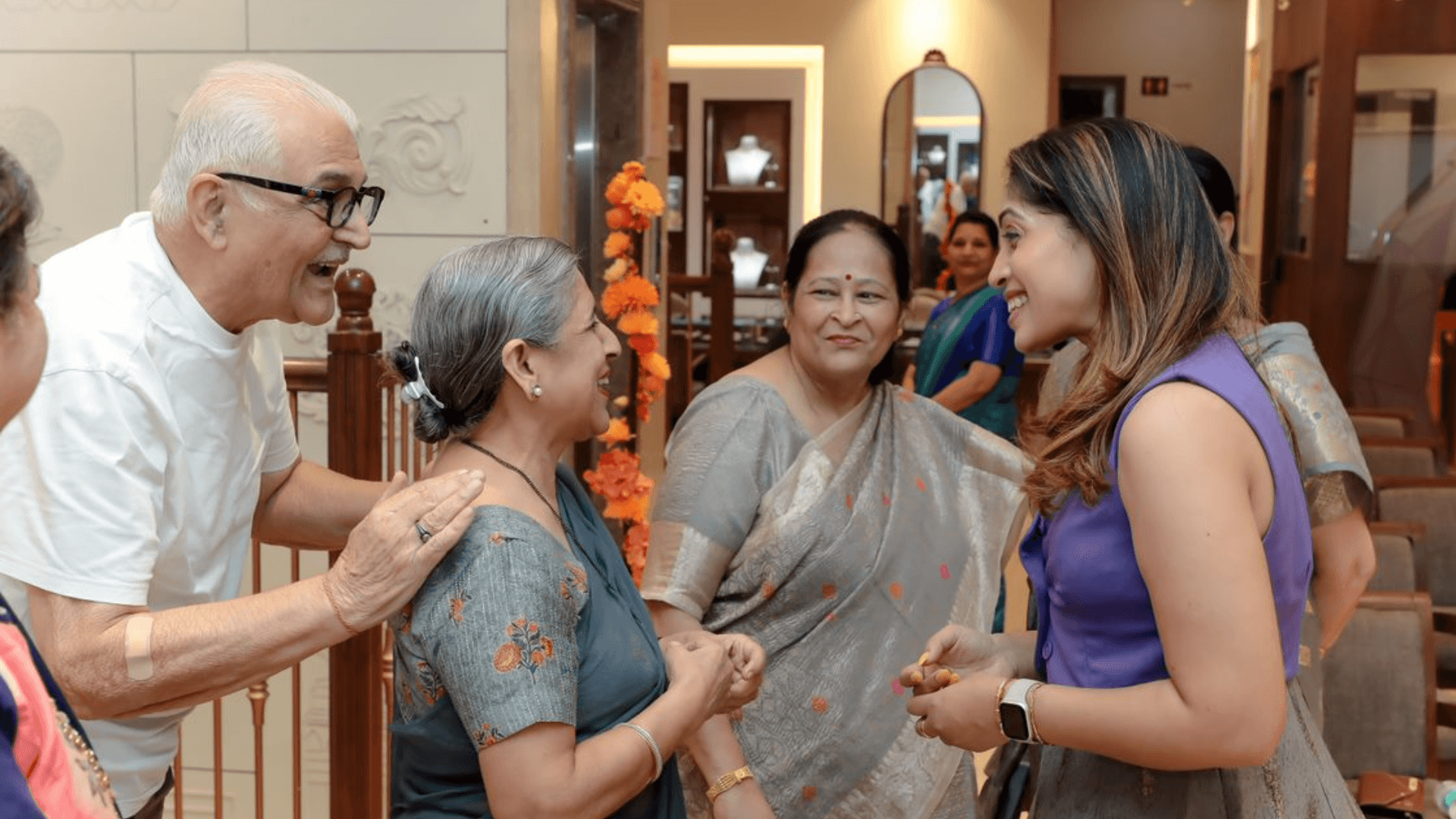
A studio session is one afternoon. The rest is a retail floor at ten in the morning, a stage, a training room with forty people in it, and one woman deciding something in front of a mirror.
04 · Signature style, in six parts
The part most people get wrong first.
Six short films. The argument runs across them in order, and nothing loads until you press play.
Style into substance, in ninety seconds.
First impressions get most of the attention. This film is about what happens after one, and it is the shortest version of what the practice does.
You already have a signature style. You have not named it yet.
It is in the piece you reach for without thinking. The colour that keeps reappearing in your cupboard. The way you walk differently in some outfits than others. Style is something you recognise rather than something you build from nothing.
Style is a relationship, and it has three parties.
With your wardrobe, built on trust. With your body, built on comfort. With the world, built on how you choose to show up in it. When all three line up you stop getting dressed and start arriving.
Trends tell you what is popular. Your body tells you what is yours.
Proportion, silhouette, and the cuts that work with you rather than against you. Most people dress for the hanger. When the outfit agrees with the body you stop adjusting yourself to fit the clothes.
Not every silhouette is built for every body.
Once you know what works for yours, getting dressed stops being a decision every morning and becomes instinct. That is most of what a body line session buys you, and it is permanent in a way a shopping trip is not.
The expensive mistake is usually the colour, not the price tag.
The hanger does not wear it, you do. The question that changes a shopping trip is whether the colour likes you. Most people only ask whether they like it.
The most stylish people you know are repeating themselves.
Look closely and they are wearing the same silhouettes, colours and details, decided once and repeated with enough confidence that people read it as taste.
05 · On record
Four certifying bodies, named.
The question worth asking about any trainer is who certified her. Certificates go into a vendor file on request, and I would rather send them unprompted than be asked.
Conselle
Conselle Institute of Image Management, Utah, USA. An international qualification in image management.
ICBI
Image Consulting Business Institute, Mumbai. Certification in image consulting and soft skills training.
SQA UK
Scottish Qualifications Authority, with NABET accreditation in India.
IMPA
Image Management Professionals Association. Professional body membership.
Stages, awards, and the frames on the wall
Twelve of them, from conferences, industry bodies and client organisations.
06 · The studio
What actually happens in the room, in the order it happens.
One person, one afternoon, in an office on Andheri Kurla Road. The whole shape of it, including the parts people are surprised by.
Bare face for the colour drape
First fifteen minutes, no exceptions. Foundation is a filter and the drape is a measurement. People find this the hardest instruction on the list.
Bring the four things you wear most
Including the one you are not sure about. And the shoes you actually wear to work, rather than the pair you meant to break in.
Three to four hours, in one sitting
Colour against your own colouring, body line, then wardrobe. It runs long because the three depend on each other and splitting them across weeks loses the thread.
Nothing gets decided in the room
No shopping list written under pressure, no purchase made while a consultant is standing next to you. That is a rule for my benefit as much as yours.
Your lookbook arrives one week later
Most of what comes out of it is subtraction. People arrive expecting to be told what to buy and leave with a shorter list than they walked in with.
Where
Mundial Image Private LimitedOffice 201, Acme Plaza No. 2
Andheri Kurla Road, next to JB Nagar metro station
Chakala, Andheri East
Mumbai 400059, Maharashtra, India
+91 77381 51668
bandita@mundial.in
Sessions run in English and Hindi. Corporate work is delivered across India, in person, through a certified associate network. I deliver the leadership cohorts and the train the trainer myself.
Mon to Fri, 10 to 6 IST07 · Fit
Three situations where I am the wrong person to call.
This costs a small number of bookings a year and saves both of us a bad one. It is also faster than finding out in hour three.
You want somebody to shop with you
That is a stylist, and there are good ones in this city. What happens here is a system you run yourself afterwards. It takes longer and costs more at the start, and it is still working in five years.
Somebody else booked this for you
A manager, a spouse, a parent. The session will be perfectly pleasant and nothing will change. Presence work needs the person in the chair to want it, and no amount of method substitutes for that.
You want to be told you are fine
Sometimes you are, and I will say so and refund the rest of the afternoon. When you are not, I will say that inside the first hour, and some people would rather not have paid to hear it.
08 · Three ways in, none of them paid
Start with the free one.
The paid work is on the other pages and it will still be there next month. These three cost nothing and most people get further with them than they expect to.
Signature Style Quiz
Thirty questions, about four minutes, and a persona at the end that you can act on the same evening.
Take the quiz The method FreeExecutive Presence Blueprint
Eleven chapters on the seven pillars. Four of them open before you give an email address, so you can see whether it is any good first.
Read the blueprint The room FreeWoMundial
700+ women, and I answer questions in the circle itself, not in a private message with a consultation offer attached.
See the circle