Technology or startup
A useful starting outfit
Shirt, blouse or accepted polo with chinos or trousers; kurta set
When to reconsider
Investor meetings, enterprise clients, recruitment panels or company events
Office 201, Acme Plaza No.2, Andheri Kurla Road, next to JB Nagar metro, Chakala, Andheri East, Mumbai 400059
Mon to Fri, 10 to 6 IST
GuideProfessional style · India 2026
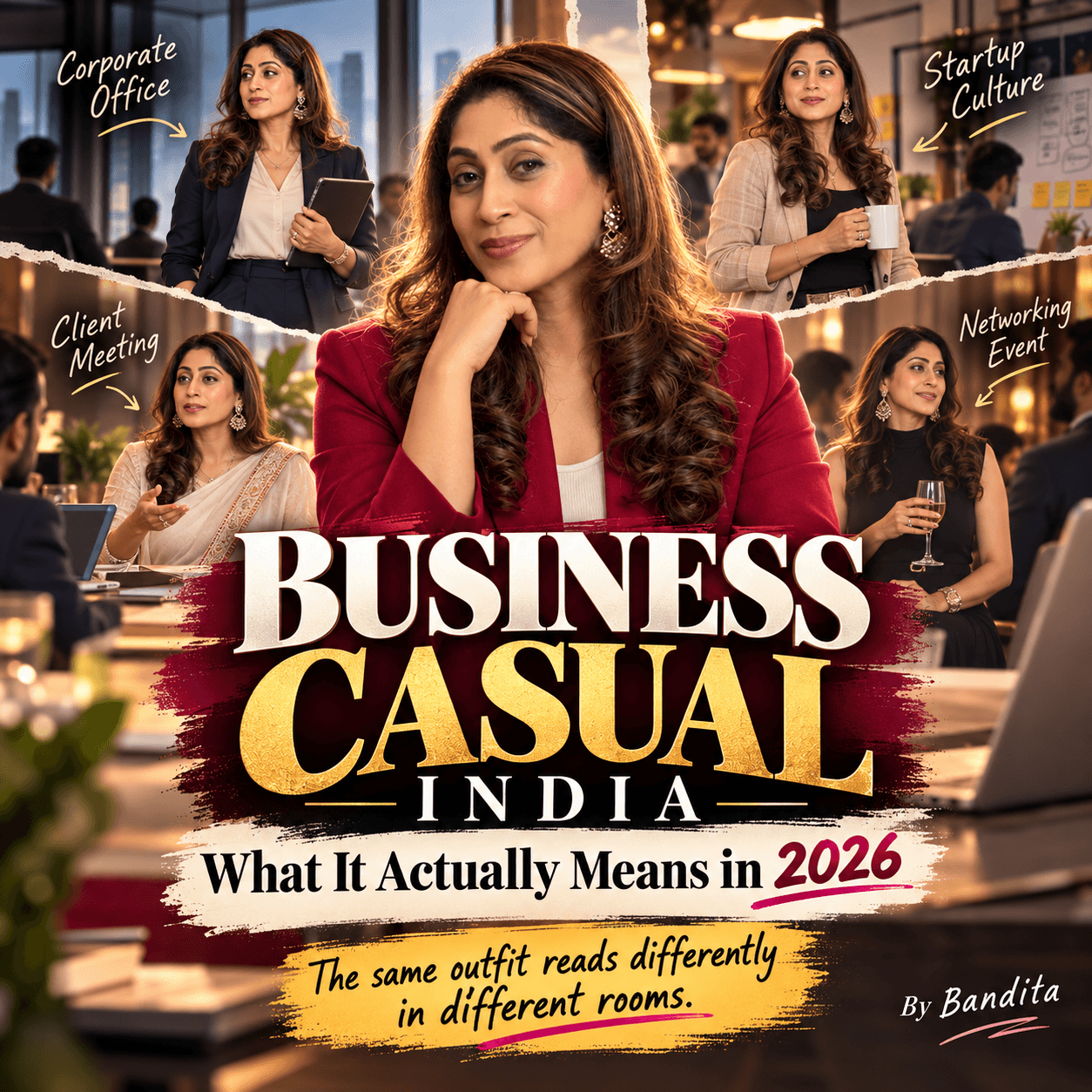
Business casual changes with the room. What to wear in Indian offices, from everyday team meetings to client presentations, with practical advice for women and men, Indian and Western options, climate, and a decision system that starts with the day’s responsibilities.
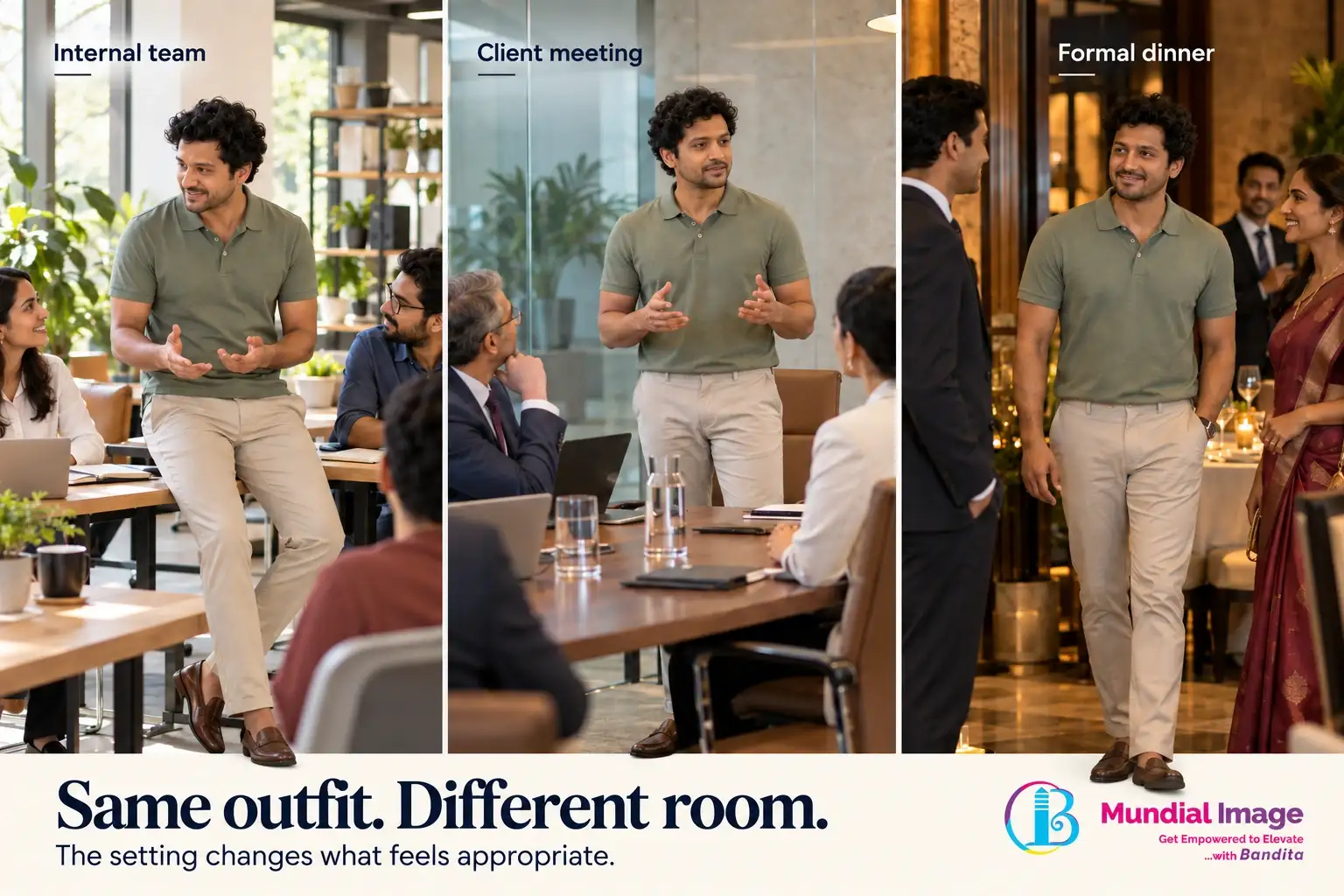
At 10 a.m., a polo shirt, chinos and clean sneakers look entirely at home in a product-team meeting. At 2 p.m., the same person joins a first presentation to a bank’s procurement team. At 7 p.m., there is an industry dinner whose invitation says business formal.
One outfit has crossed three different expectations.
The clothes have not changed; the room has.
The whole guide, in one line
That is the difficulty with business casual in India. A dress-code label tells only part of the story. The rest comes from who is present, what is happening and what responsibility the wearer carries.
01The short answer
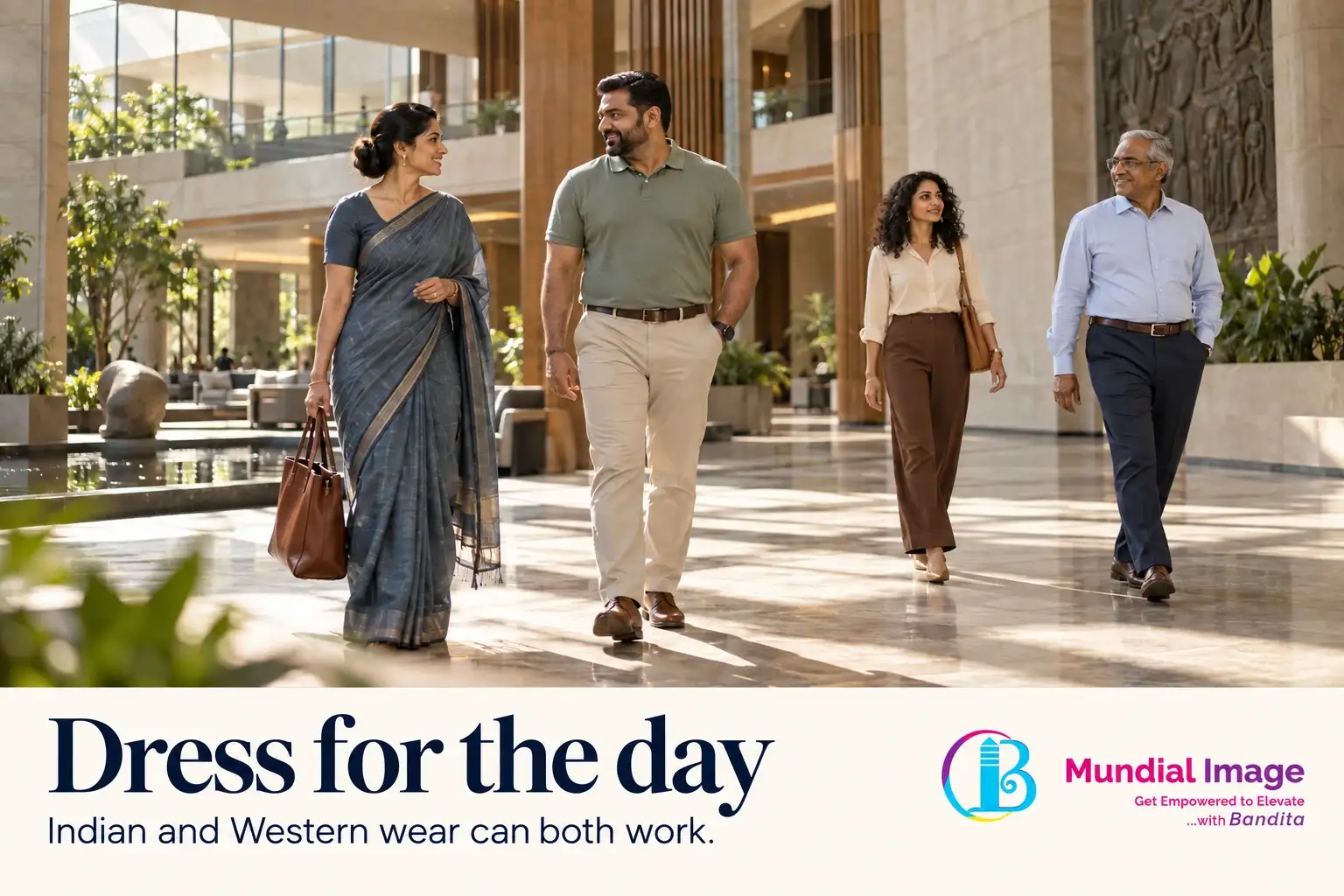
Business casual in India means neat, work-appropriate clothing with less formality than a full business suit. It can include shirts, blouses, tailored trousers, chinos, suitable kurtas or sarees, and well-maintained footwear. Jeans, polos and sneakers depend on employer policy, team norms and the day’s meetings. Indian wear is not automatically casual.
A useful starting point is a shirt or blouse with trousers, or a simple kurta with coordinated bottoms. Check the actual workplace before treating denim, trainers or festive clothing as acceptable alternatives.
2026The context
Returning to an office does not mean returning to one shared uniform. Fashion coverage has revived interest in tailoring and workwear, while the practical wardrobe still has to accommodate commuting, desk work and remote calls. Moneycontrol’s 2025 workwear coverage describes relaxed tailoring alongside more structured pieces. That is a fashion direction, not permission to ignore an employer’s dress code.
The ambiguity exists even inside one industry. A technology employee at a financial institution may dress differently from a colleague meeting wealth-management clients. A founder’s habitual T-shirt is also a poor guide to what a new account manager should wear to an unfamiliar customer’s office.
Hybrid work creates another complication: the days spent in person may be the days with more presentations, visitors or team events. Dressing only for the commute can leave the rest of the calendar unaccounted for.
International teams add local differences. A colleague’s outfit at overseas headquarters does not establish the norm at an Indian client site. Nor does a city settle the question. Two offices in Bengaluru can have different expectations; two departments in Mumbai can, too.
Read the policy first. Then look at people doing comparable work in comparable situations.
Indeed India’s business-casual guide also places employer policy ahead of general outfit advice.
02Three labels
These labels overlap. Use them as working descriptions, then confirm the organisation’s meaning.
| Dress code | What usually sets it apart | Possible Indian-office examples |
|---|---|---|
| Smart casual | More freedom for off-duty pieces, when the setting allows them | Dark jeans with a shirt; a relaxed dress; polo and chinos; minimal sneakers |
| Business casual | An office-ready baseline, usually without a full suit requirement | Blouse and trousers; Oxford shirt and chinos; a restrained kurta set; a work-appropriate saree |
| Business formal | A deliberately formal ensemble for the organisation or occasion | Coordinated suit and dress shoes, with a tie where expected; a formal saree; other structured Indian ensembles accepted by the host |
Adding a blazer does not automatically make ripped jeans business casual. Equally, removing a jacket does not make a carefully assembled saree outfit less professional.
03The daily outfit brief
Use a daily outfit brief. Complete the decisions in order; a later preference cannot cancel an earlier requirement.
Check employer policy, the invitation and any client-site requirements. Uniforms, protective equipment and safety instructions take priority. Then identify the most demanding appointment that genuinely affects clothing that day. A formal dinner may require a separate outfit rather than one more accessory.
Write one sentence:
“I am presenting a recommendation to people who have not worked with me before.”
That is more useful than “I work in tech.”A familiar internal team has context about your work. New clients have less. A manager facilitating a workshop needs freedom to move; a spokesperson appearing in photographs needs to consider the full outfit from several angles. Seniority changes responsibilities, but does not create a universal requirement to wear a suit.
Start with something that already works in that environment. Change the element creating the mismatch: perhaps jeans for trousers, a soft T-shirt for a shirt, or a heavily embellished kurta for a quieter one. Keep the pieces that remain suitable.
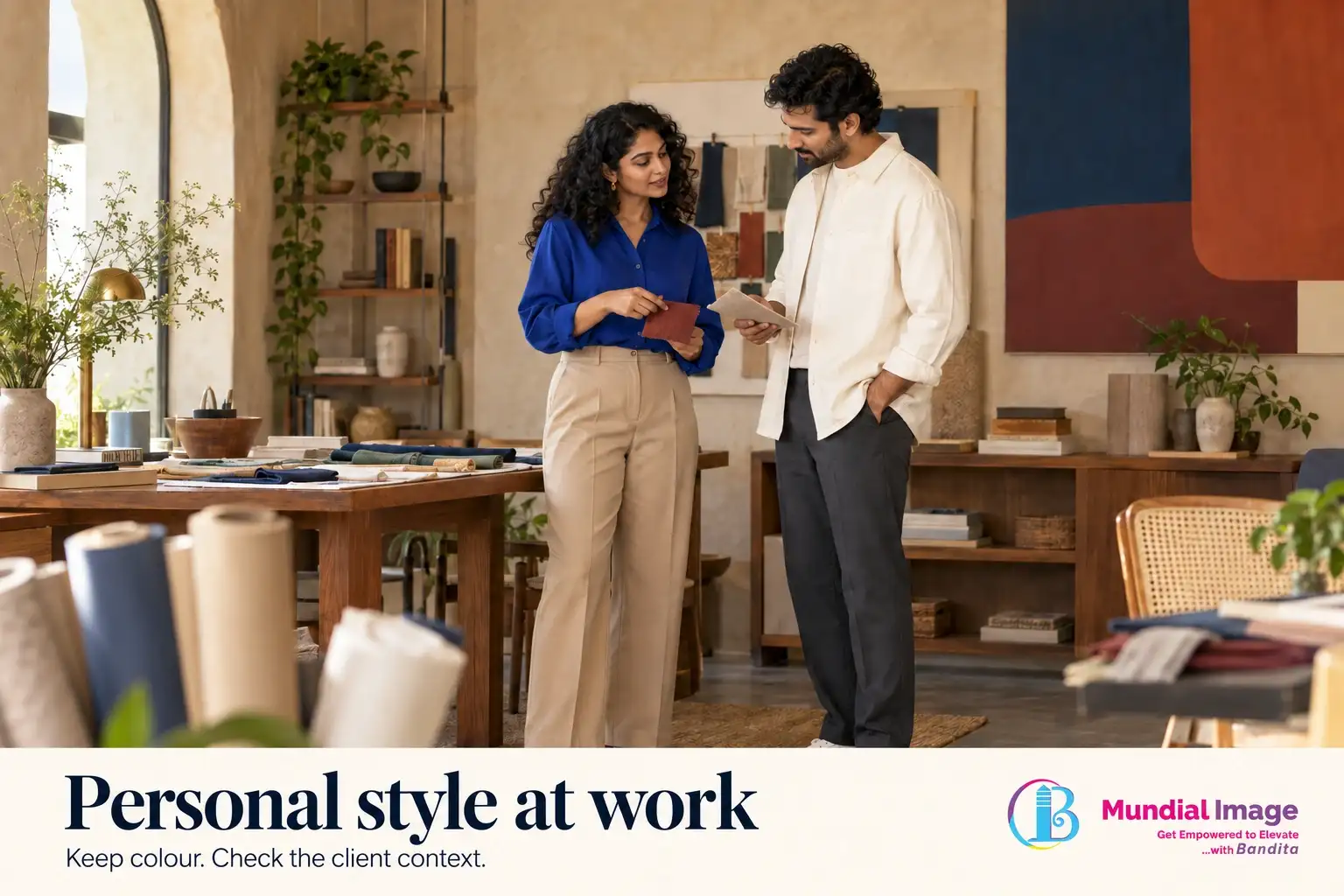
Consider a designer in a denim-friendly studio who will present to a conservative client. Tailored trousers may resolve the issue while her printed blouse and flat shoes stay. Replacing her entire style with a dark suit could be unnecessary.
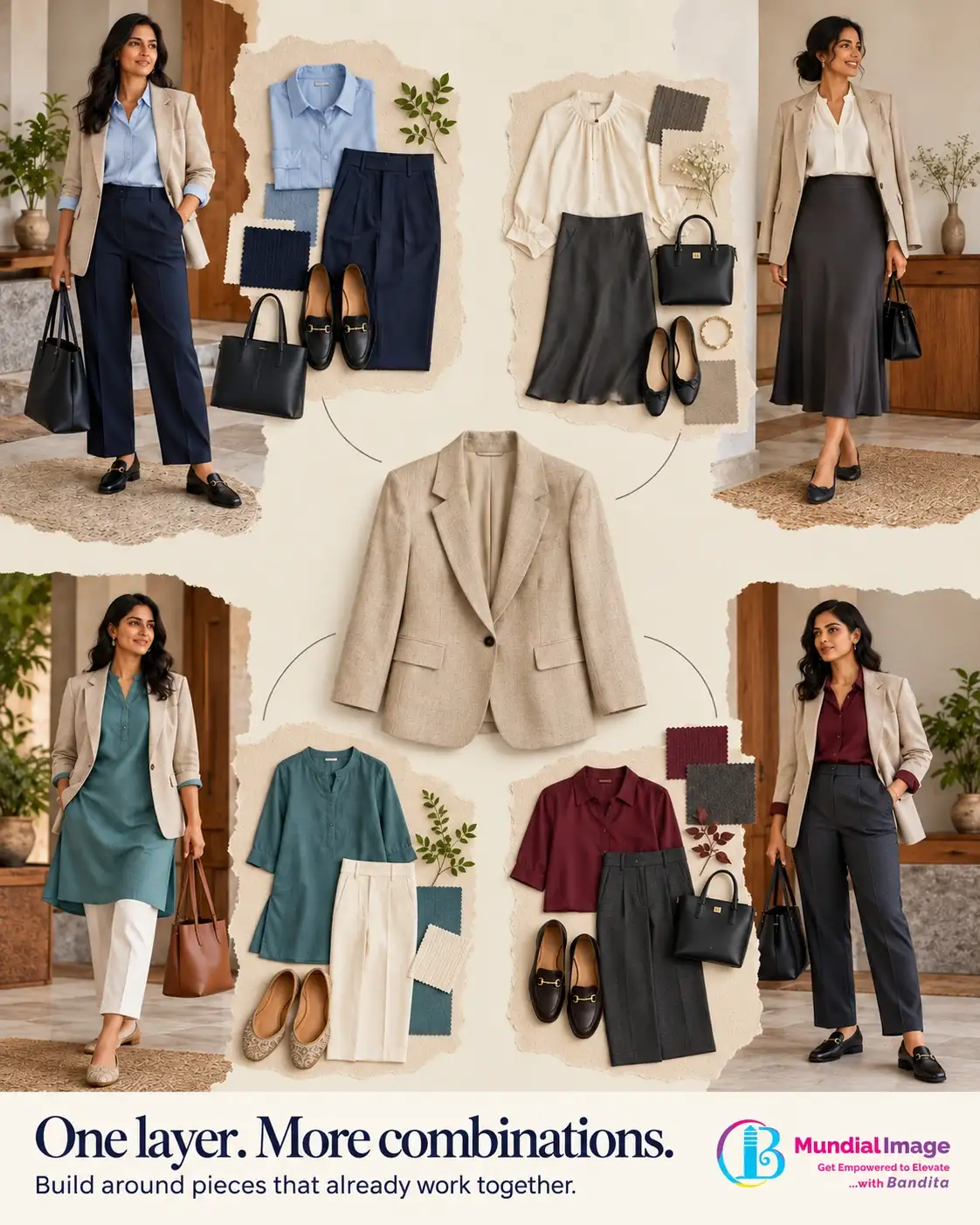
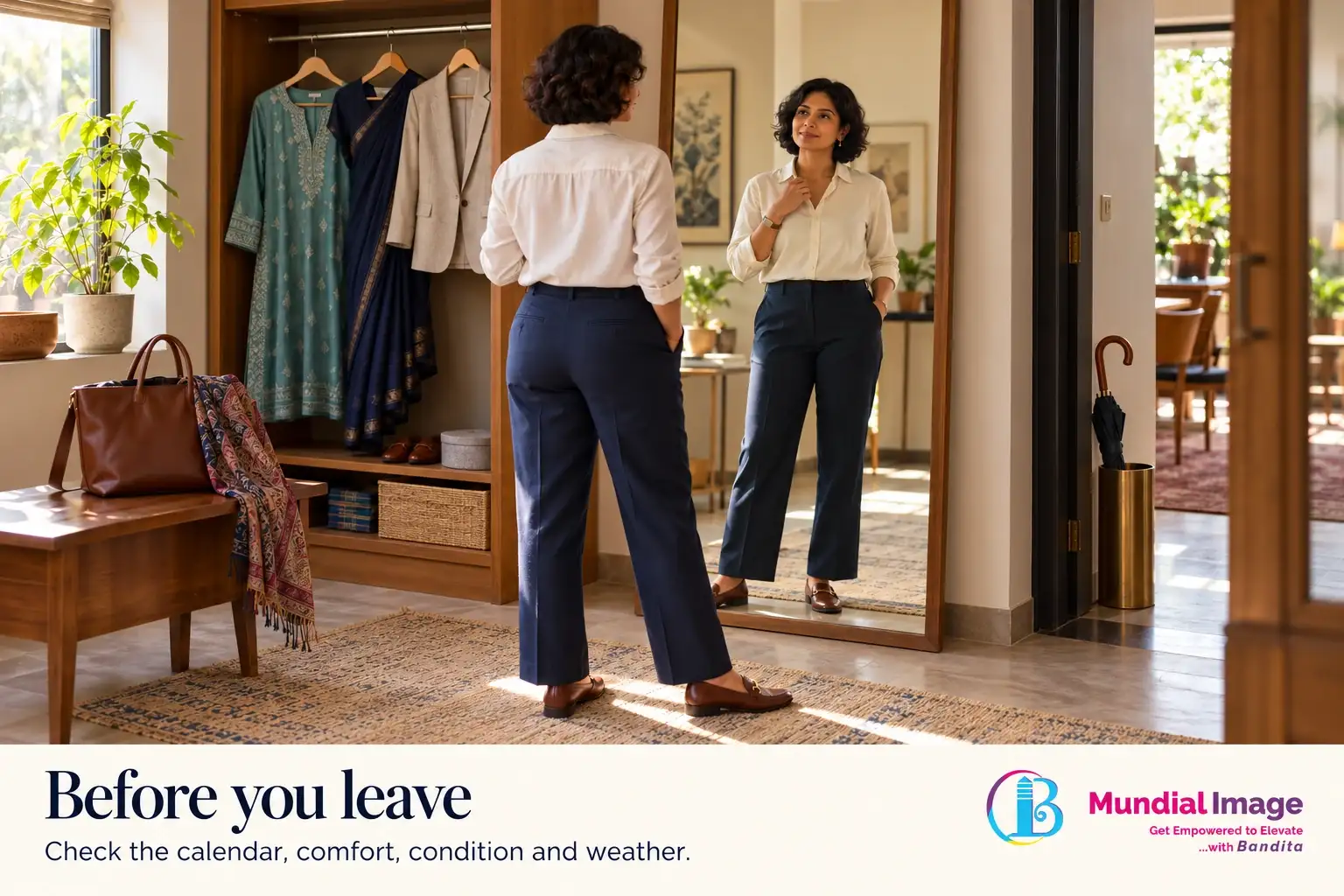
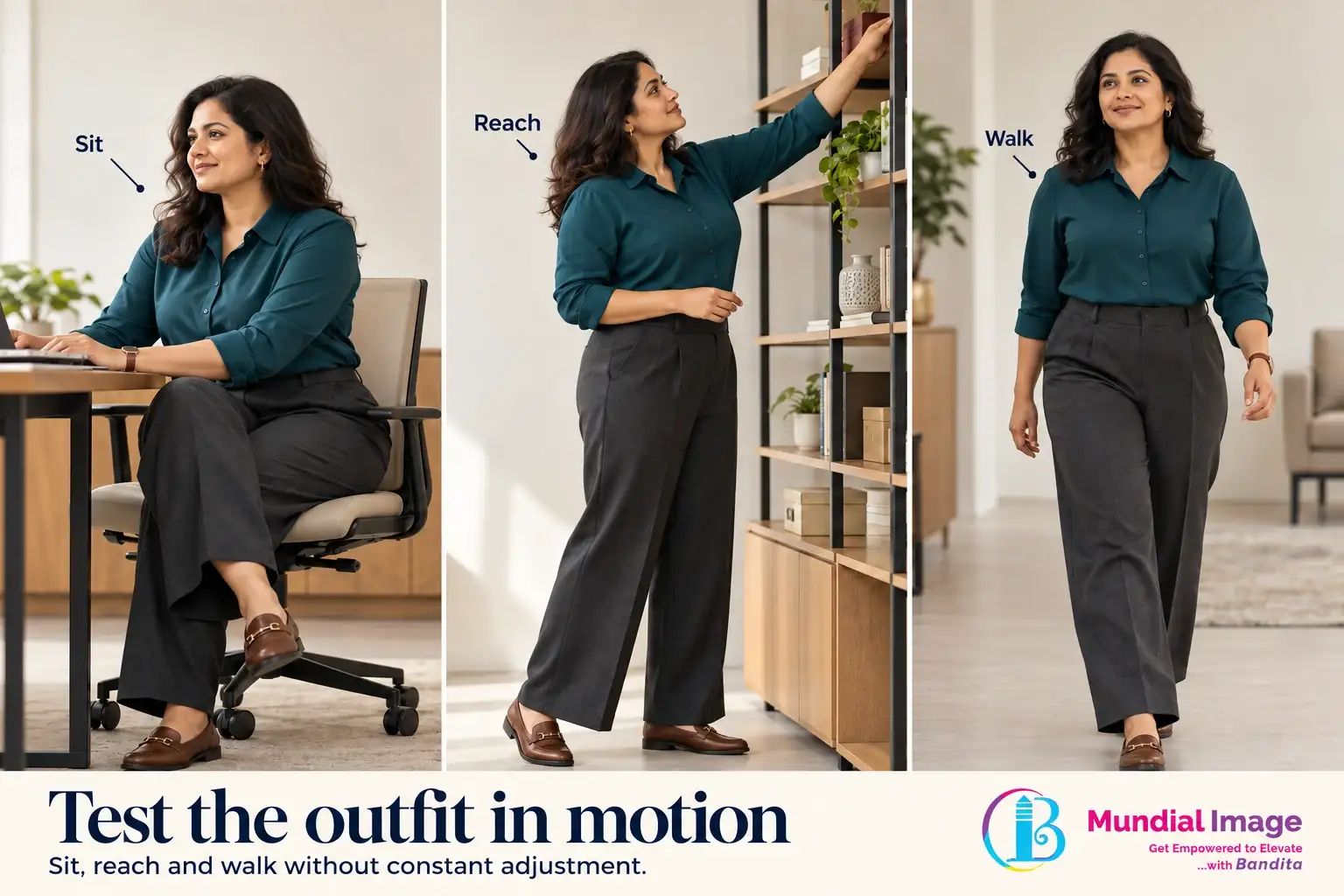
Sit, reach, walk and carry the bag. Check the commute, weather and office air-conditioning. Clothes that need constant adjustment become a distraction during actual work.
Finish with personal style: a colour, textile, silhouette or accessory that feels familiar. The objective is a suitable outfit that remains recognisably yours. Mundial’s Signature Style Quiz offers a starting point for naming those preferences.
04Six offices
These are starting points to check locally, not dress codes assigned to entire industries.
Shirt, blouse or accepted polo with chinos or trousers; kurta set
Investor meetings, enterprise clients, recruitment panels or company events
Shirt or blouse with tailored separates; workwear kurta or saree
Leadership visits, formal presentations and external representation
Establish the specific team’s rule; keep a formal option ready
A client-facing floor may differ from an internal technology team
Dress for the engagement and client site
Workshops, board presentations and site visits can require different clothes
Room for colour, unusual cuts or denim where accepted
A client’s expectations may be more restrained than the studio’s
Practical, presentable clothing suited to movement and audience
A stage, showroom, outdoor visit and hotel meeting each change the brief
A professional wardrobe needs to cover the work someone actually does. The industry label alone cannot supply that information.
05Women’s wardrobe
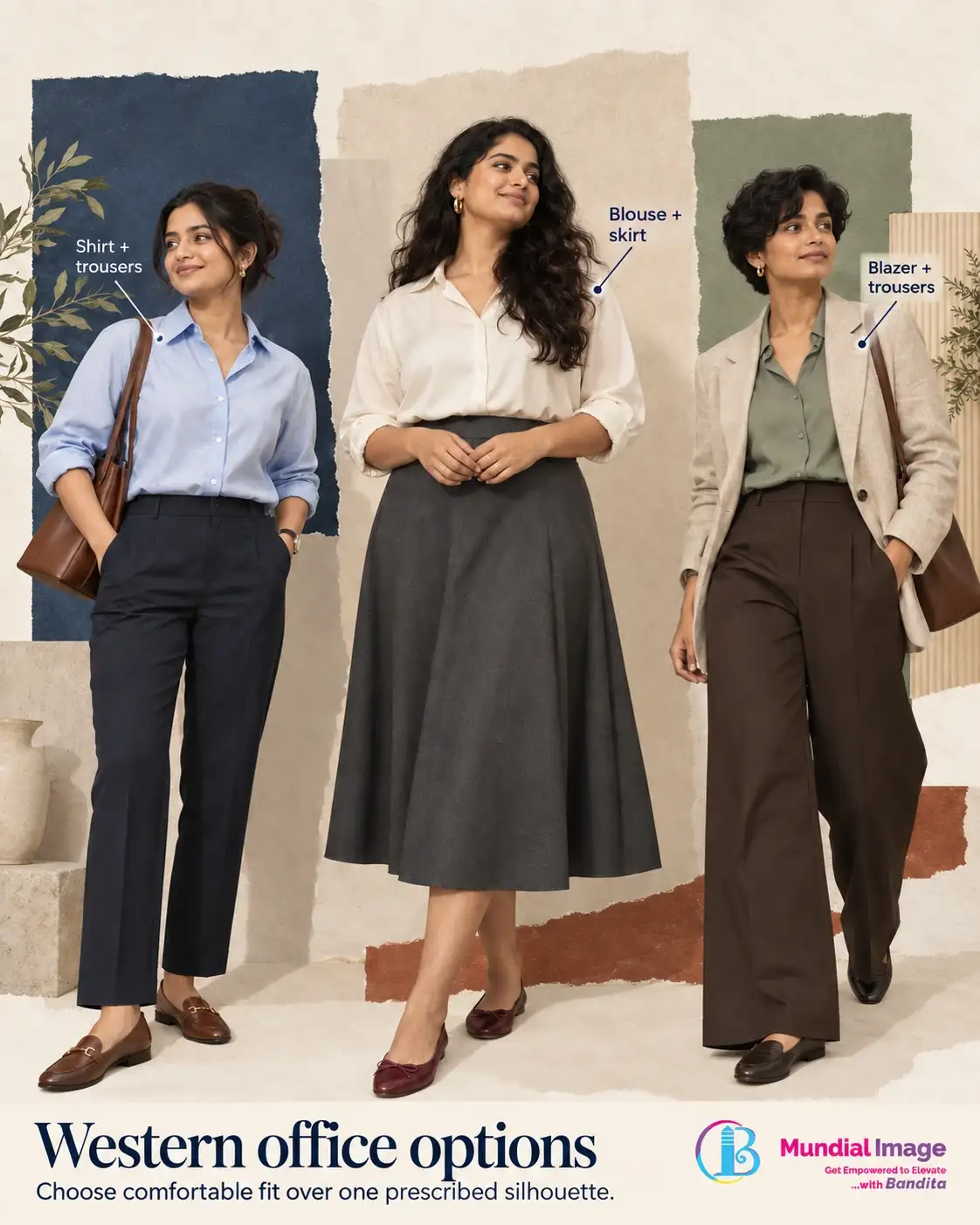
Western and Indian wardrobes offer several routes to the same level of formality. Select between them by preference, practicality and context.
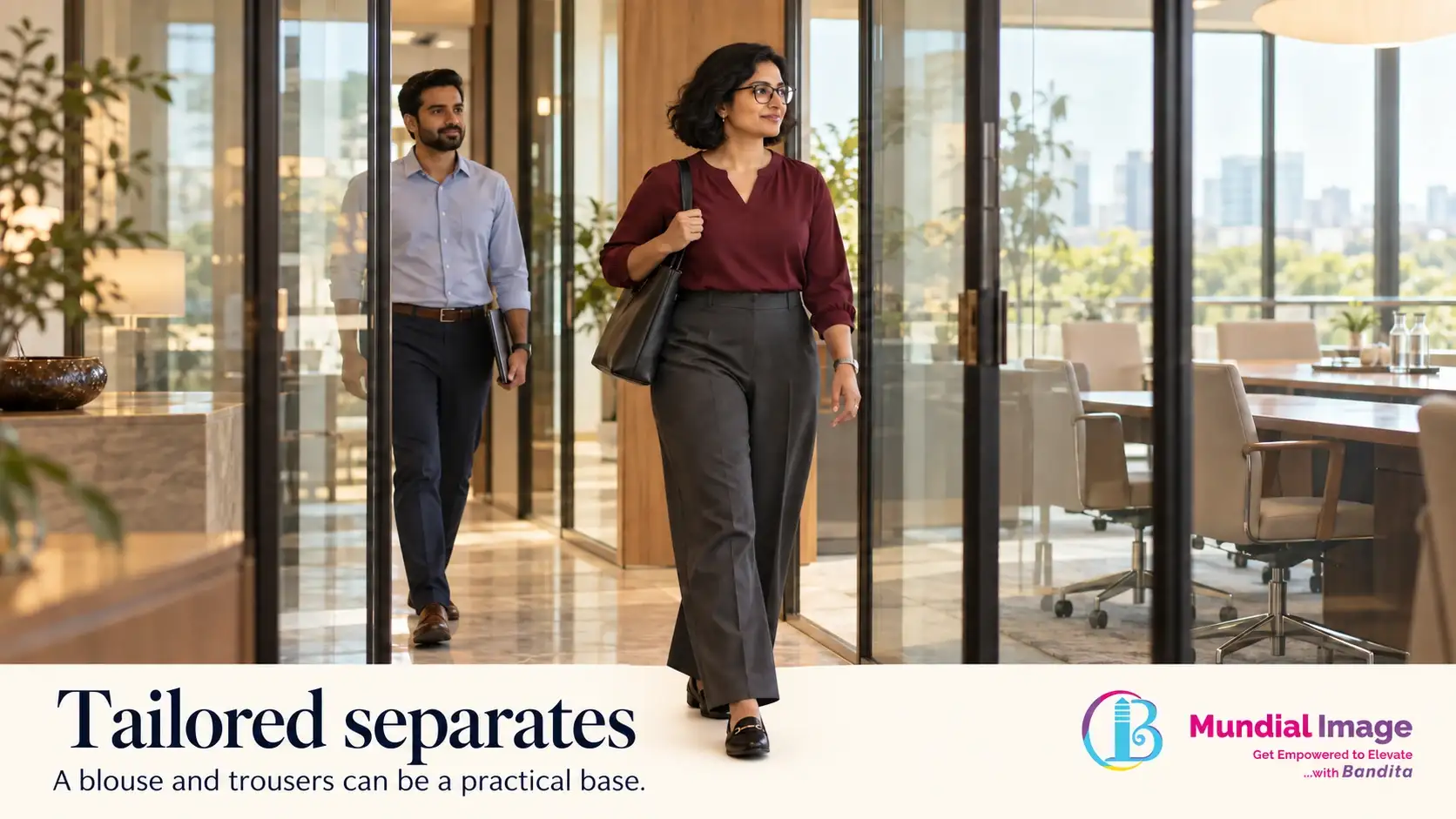
A shirt or matte blouse with tailored trousers is a flexible base. Straight, wide-leg and tapered trousers can all work. The useful test is whether the waistband remains comfortable when seated and the fabric hangs without pulling.
Skirts and dresses can work where accepted. Check the seated length, ease of movement and neckline while reaching across a table. These checks serve comfort and the workplace brief; they do not require a particular body shape.
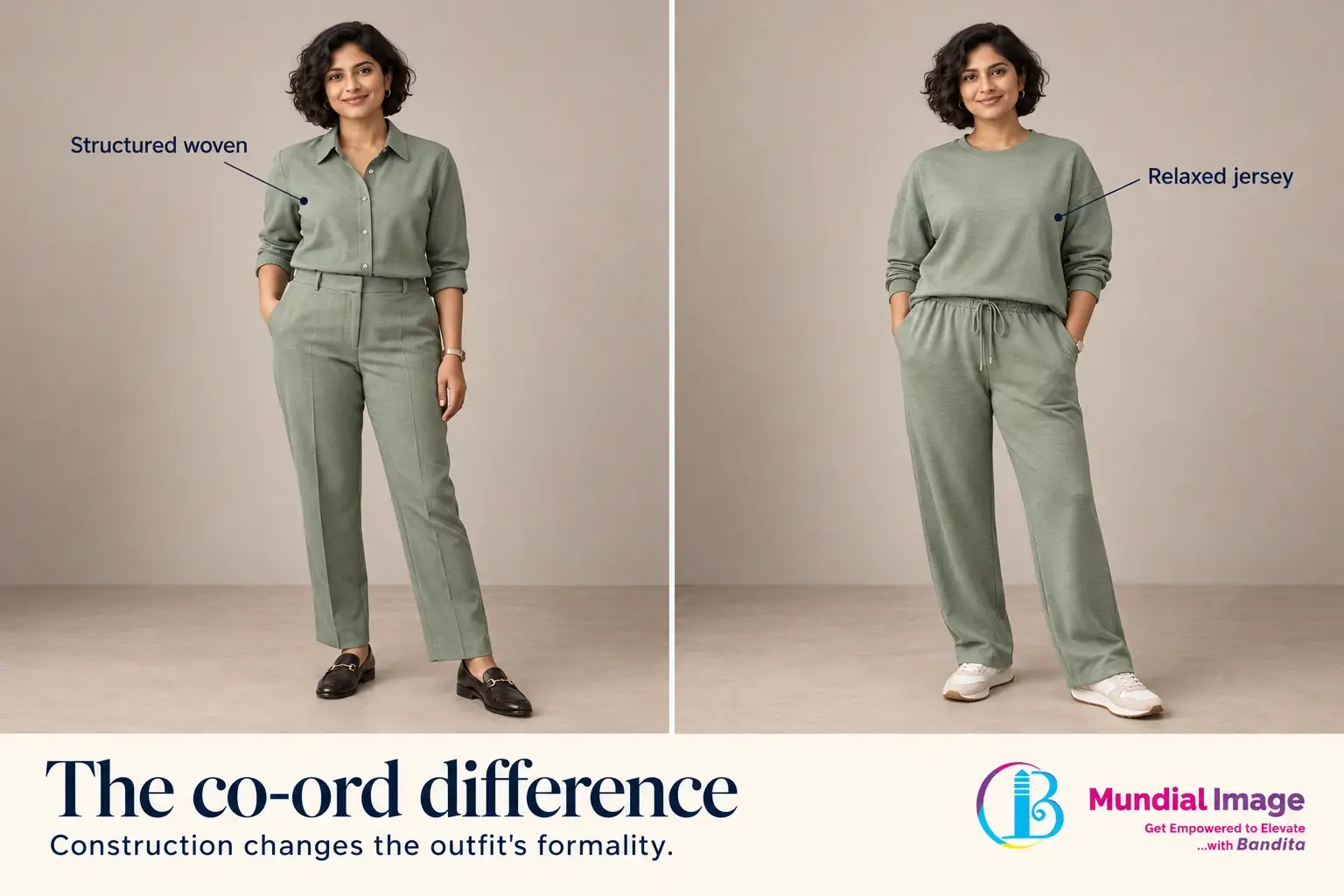
Co-ords need closer inspection than the label suggests. A substantial fabric, considered seams and a clear silhouette can suit an office. A thin jersey set with lounge-style details may not meet the same brief. A blazer is an optional layer unless the occasion calls for one.
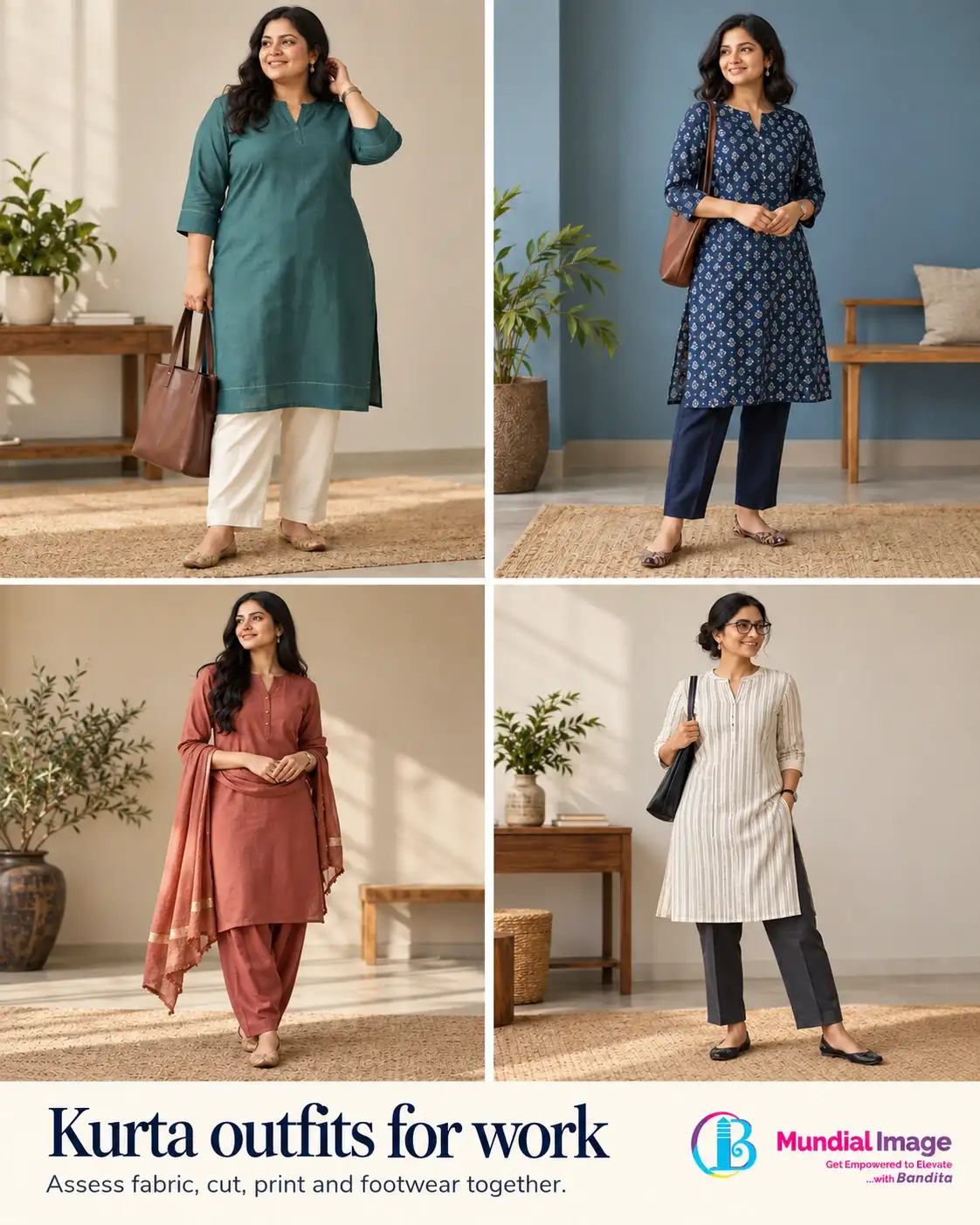
A straight or A-line kurta with comfortable trousers, salwar or other coordinated bottoms can be practical office wear. Prints and colour need not disappear. Consider their scale, the fabric’s condition and how much ornament the occasion can accommodate.
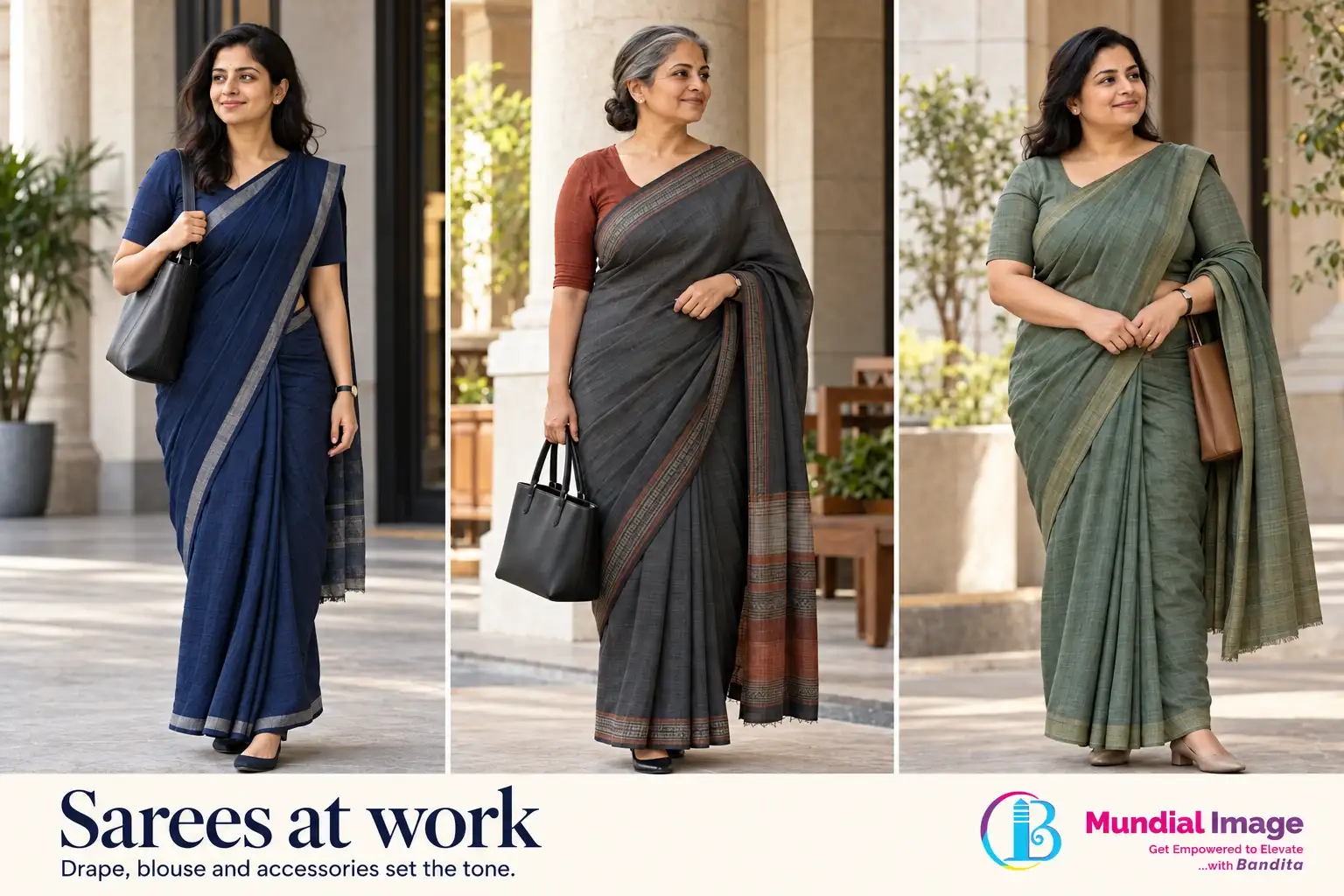
With a saree, examine the weave, border, blouse, drape and accessories together. A cotton saree can suit a regular office day; a restrained, more formal saree can suit an important meeting. Heavy bridal embroidery communicates a different occasion even when the garment is impeccably made.
Secure the drape in a way that suits the wearer’s routine. A dupatta is a choice governed by the outfit, personal preference and any applicable workplace requirement, not a universal test of professionalism.
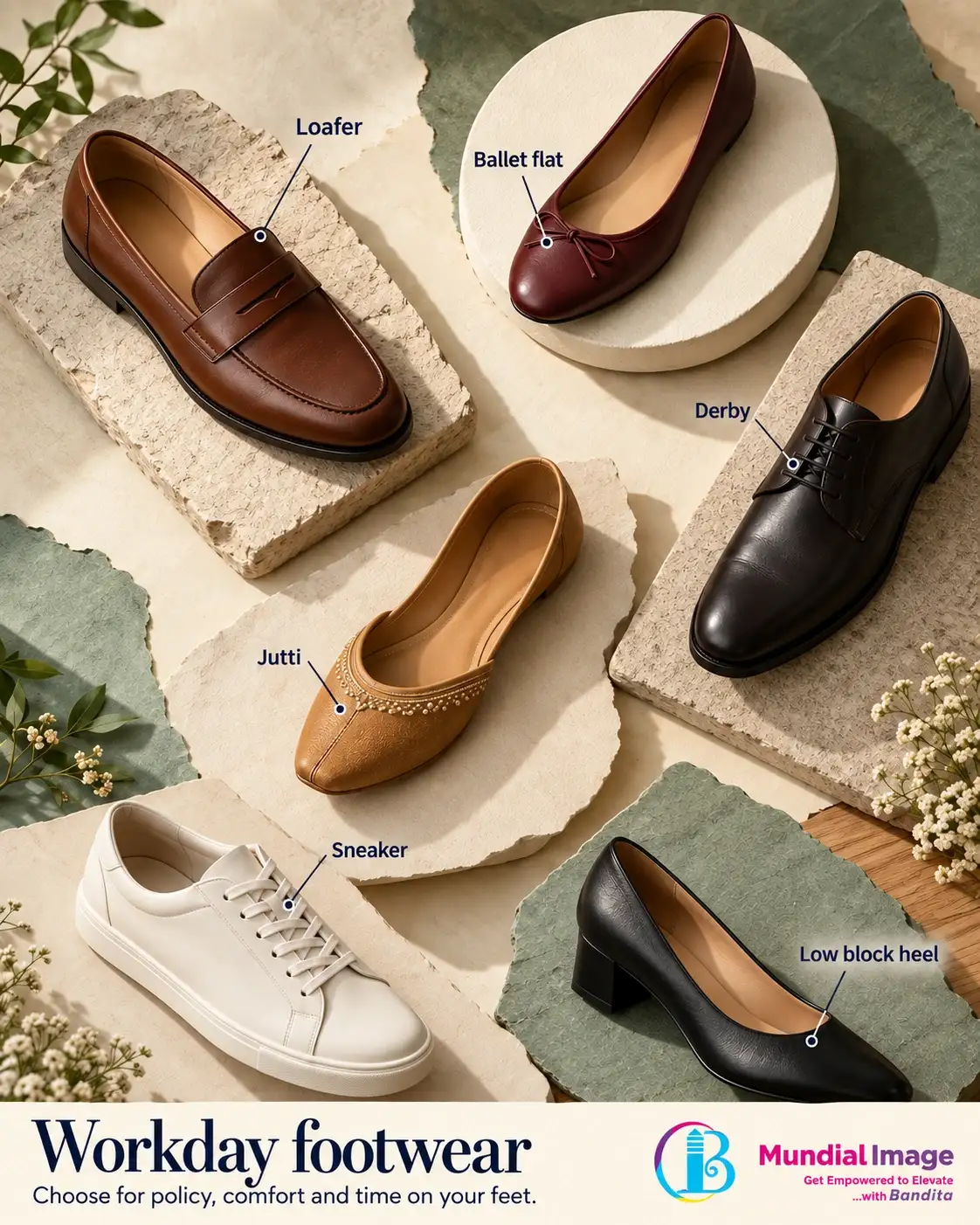
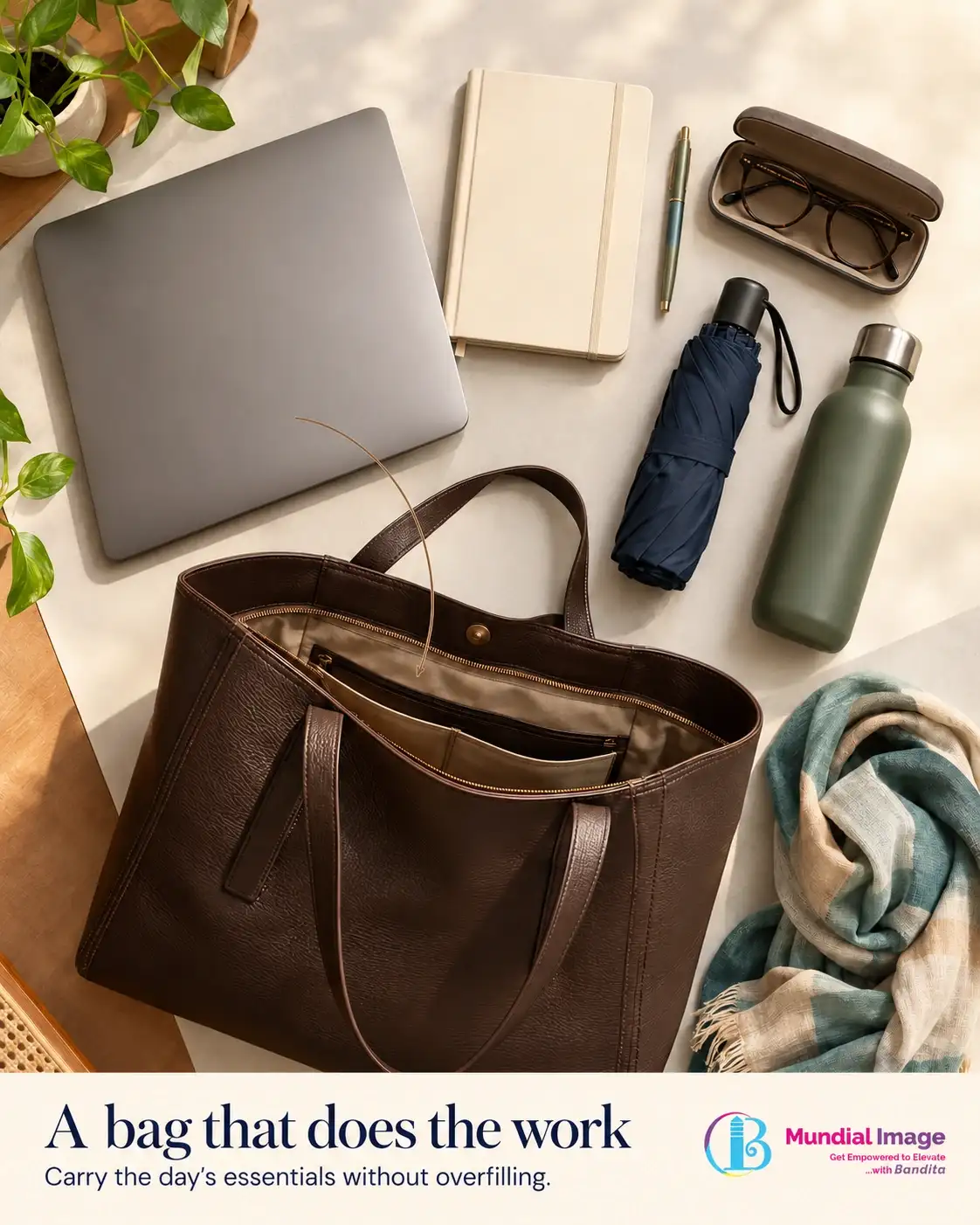
Loafers, flats, suitable juttis and low heels offer options according to policy and comfort. Heels are not a qualification for professional dressing. A bag should hold the actual laptop or documents without overflowing; a practical backpack can be entirely suitable.
Choose accessories with the task in mind. Jewellery that repeatedly hits a desk or microphone may be inconvenient during a presentation, however attractive it looks in a photograph.
06Men’s wardrobe
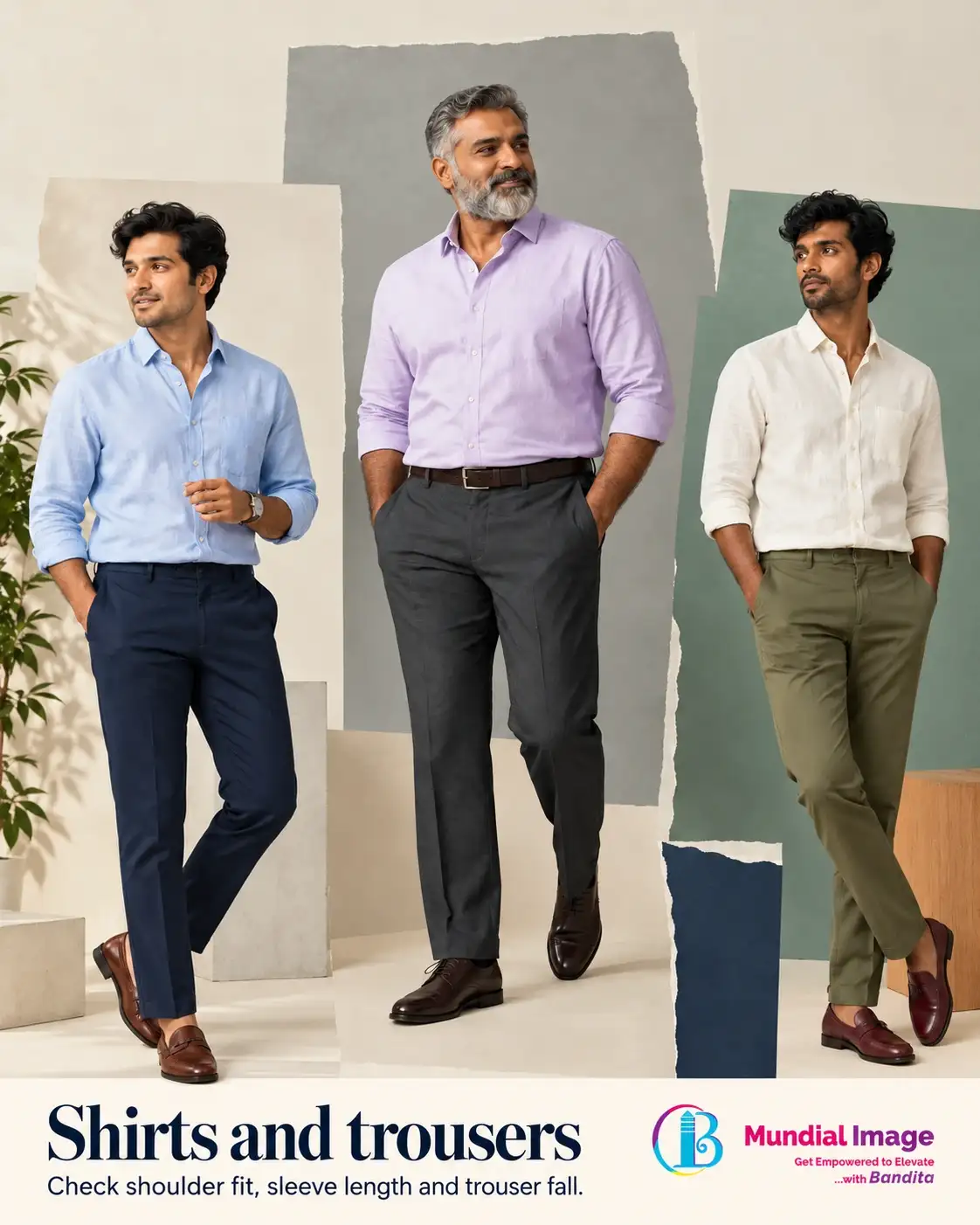
A collared shirt with chinos or tailored trousers is a reliable starting point while learning an office’s expectations. Oxford cloth gives a more relaxed finish; a smoother shirt fabric can support a more formal presentation.
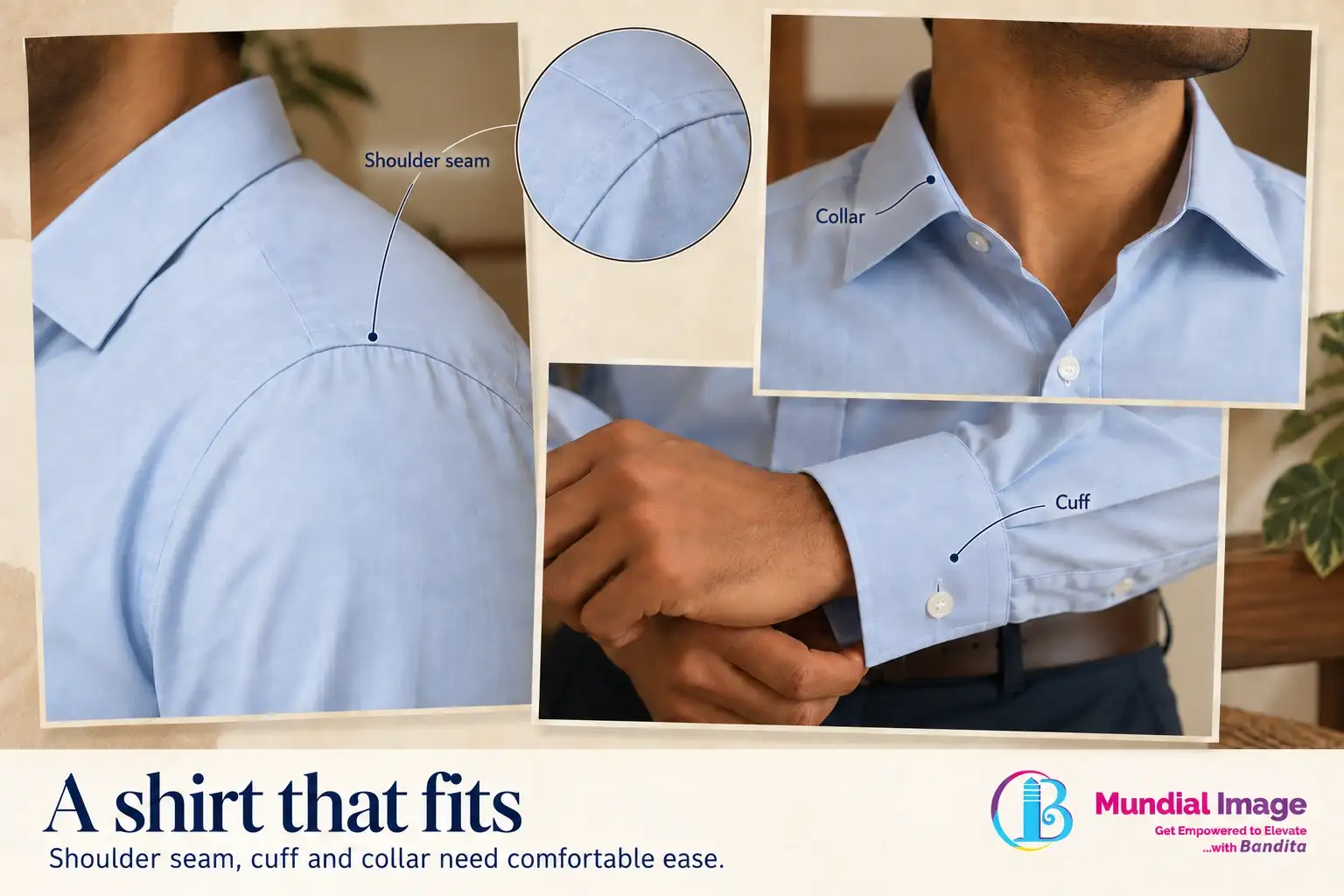
Check the shoulder seam, collar, sleeve length and the shirt front while seated. “Fitted” should leave room to move. An untucked shirt works best when its length and hem were designed for that use and the workplace accepts it.
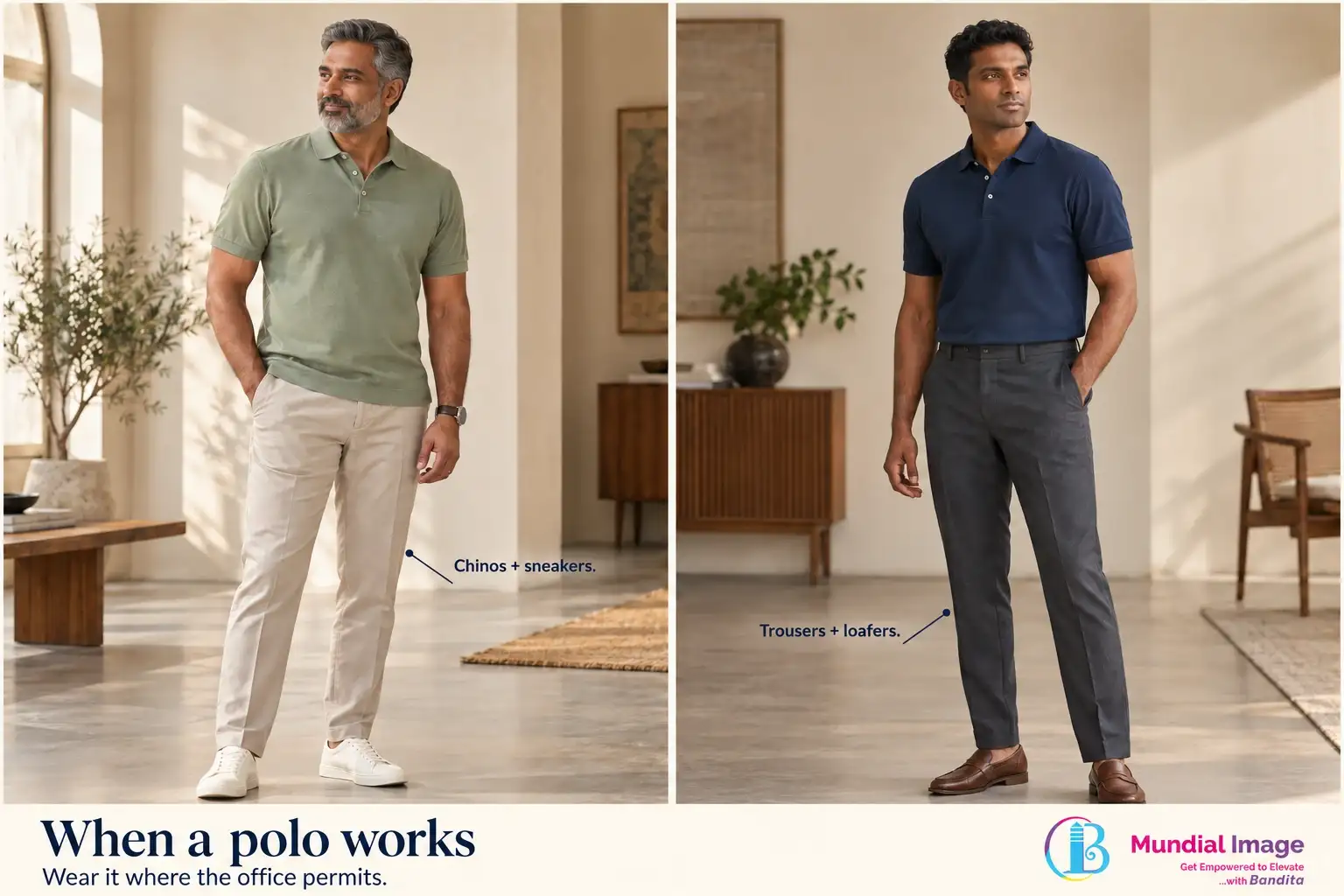
A solid polo can suit a relaxed business-casual office. Its collar should hold its shape, and the fabric should sit comfortably rather than cling. For an unfamiliar client meeting, establish whether a woven shirt is expected.
Chinos are generally more casual than dress trousers. Cargo pockets, elasticated cuffs and obvious sportswear details change the impression, even on an expensive pair. A soft jacket or blazer adds structure when useful; fine knitwear can help in a cool office or winter climate.
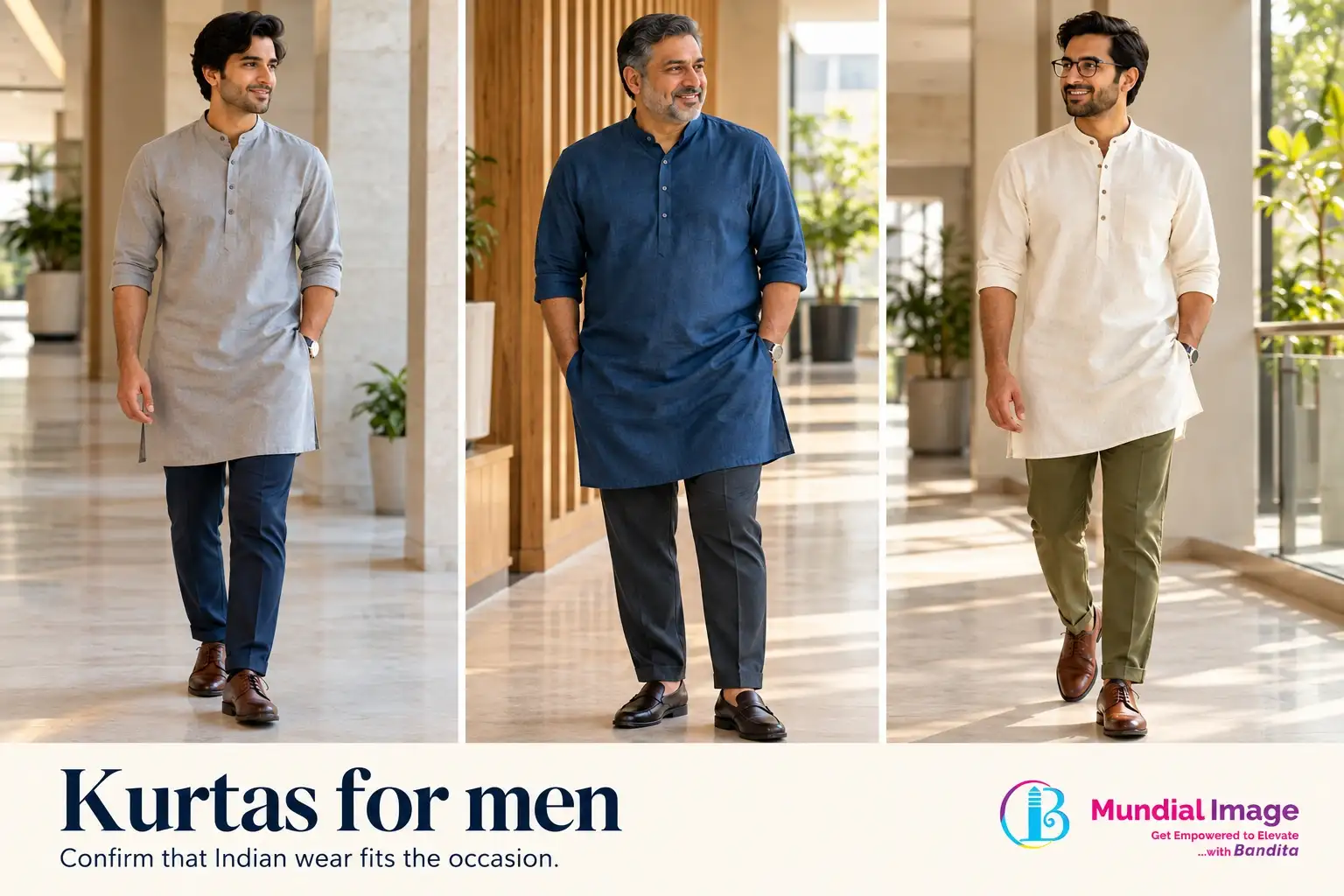
Indian options require the same attention to context. A simple kurta with tailored trousers may work where regularly worn. A bandhgala or Nehru jacket can take an outfit towards a more formal or ceremonial reading, depending on the fabric and combination. Neither is an automatic substitute for a suit at every client meeting.
For footwear, consider loafers, derbies or another supportive, well-maintained option allowed by the workplace. Match their formality to the outfit. Sneakers remain a policy-dependent choice.
07The signature sequence
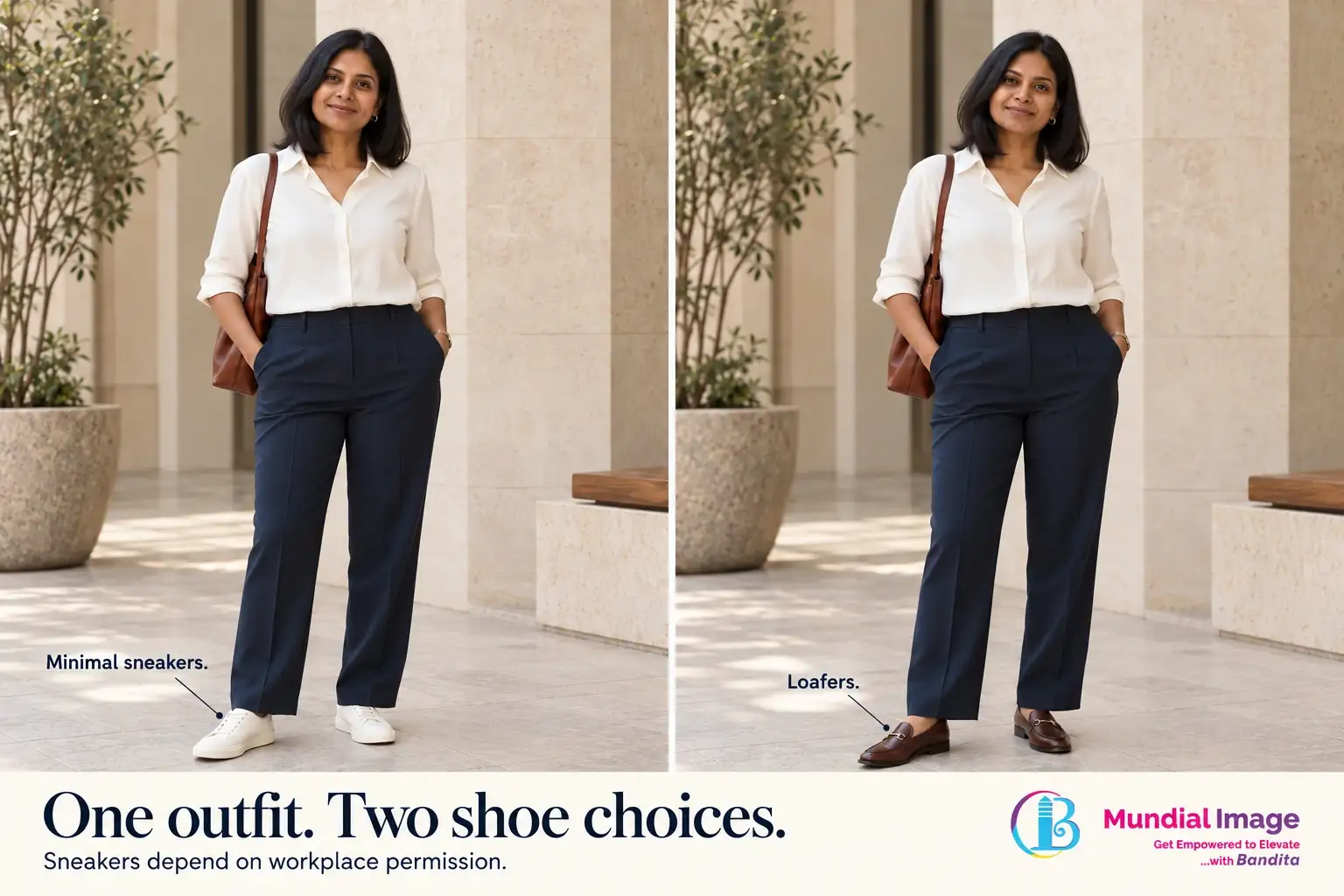
Consider an illustrative account manager whose usual outfit is an ivory blouse, navy trousers and brown loafers. Her office accepts business casual. The aim is to adapt that working base to five situations, not buy five unrelated wardrobes.
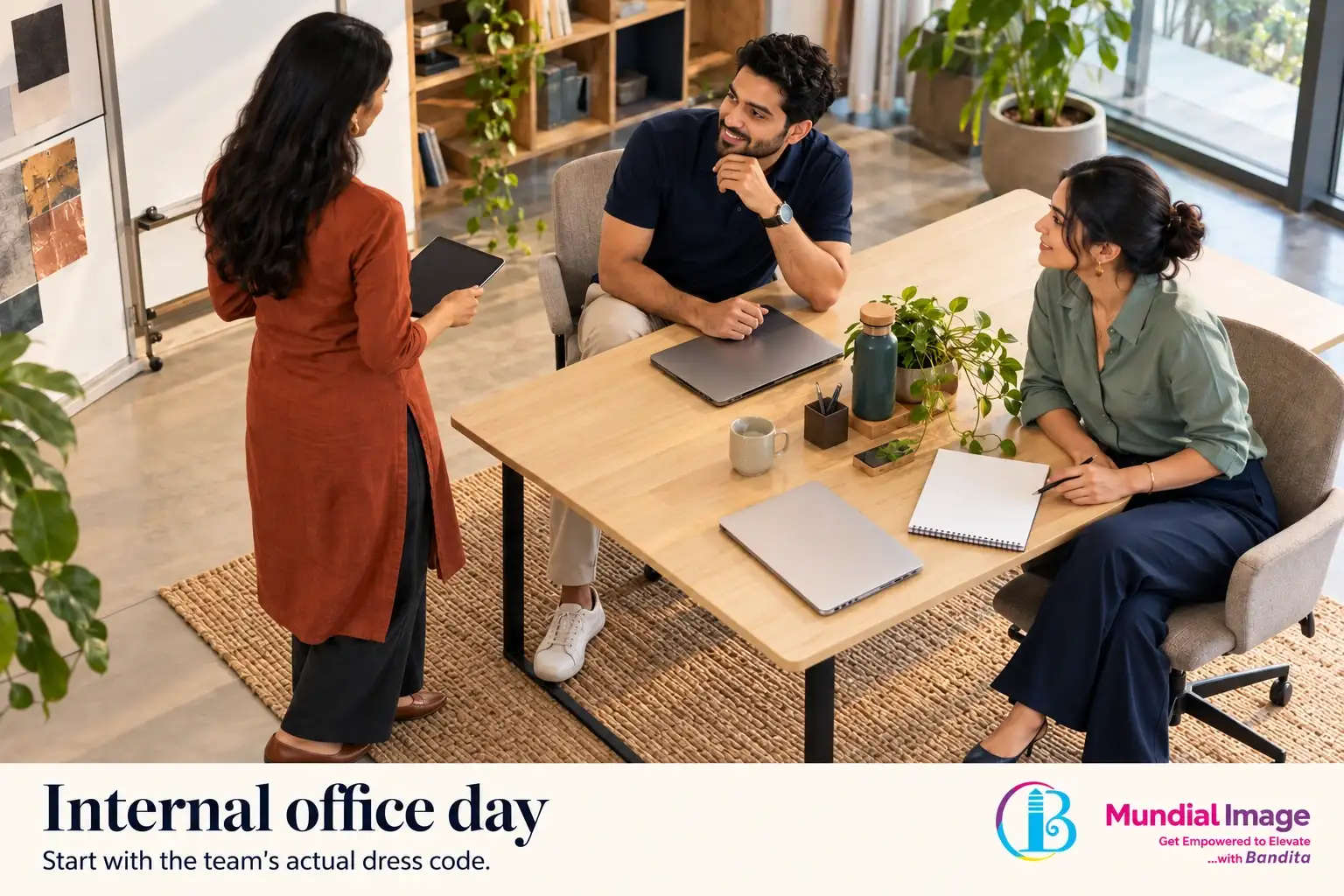
The photographs below are separate examples of each room, not the same account manager.
Walk through the day, one room at a time
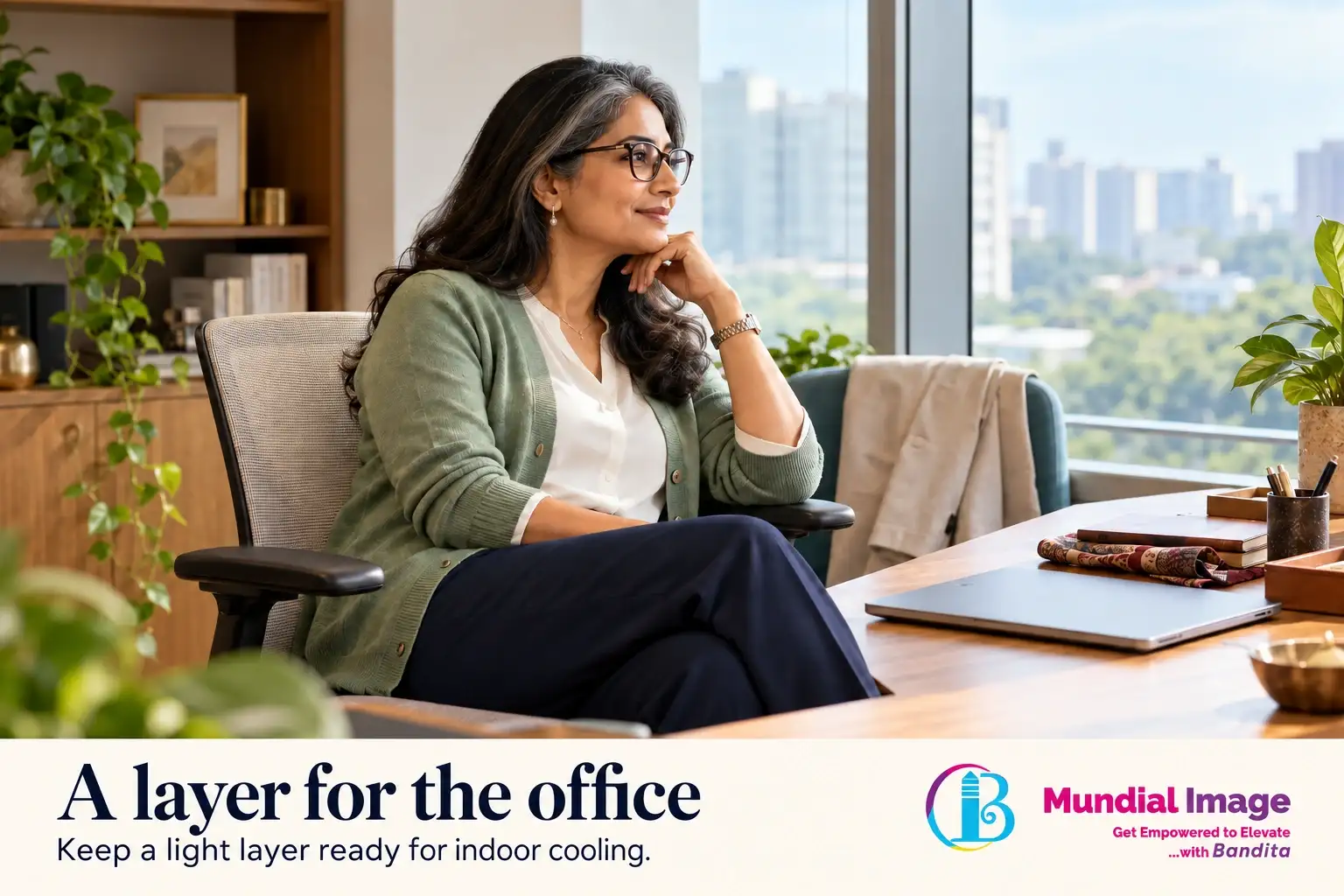
Situation: Familiar colleagues, desk work and a project check-in. The base outfit stays; a light layer is available for the air-conditioning. The common mistake is preparing for the desk while forgetting a scheduled visitor. Here, the outfit is likely to feel consistent with an ordinary working day.
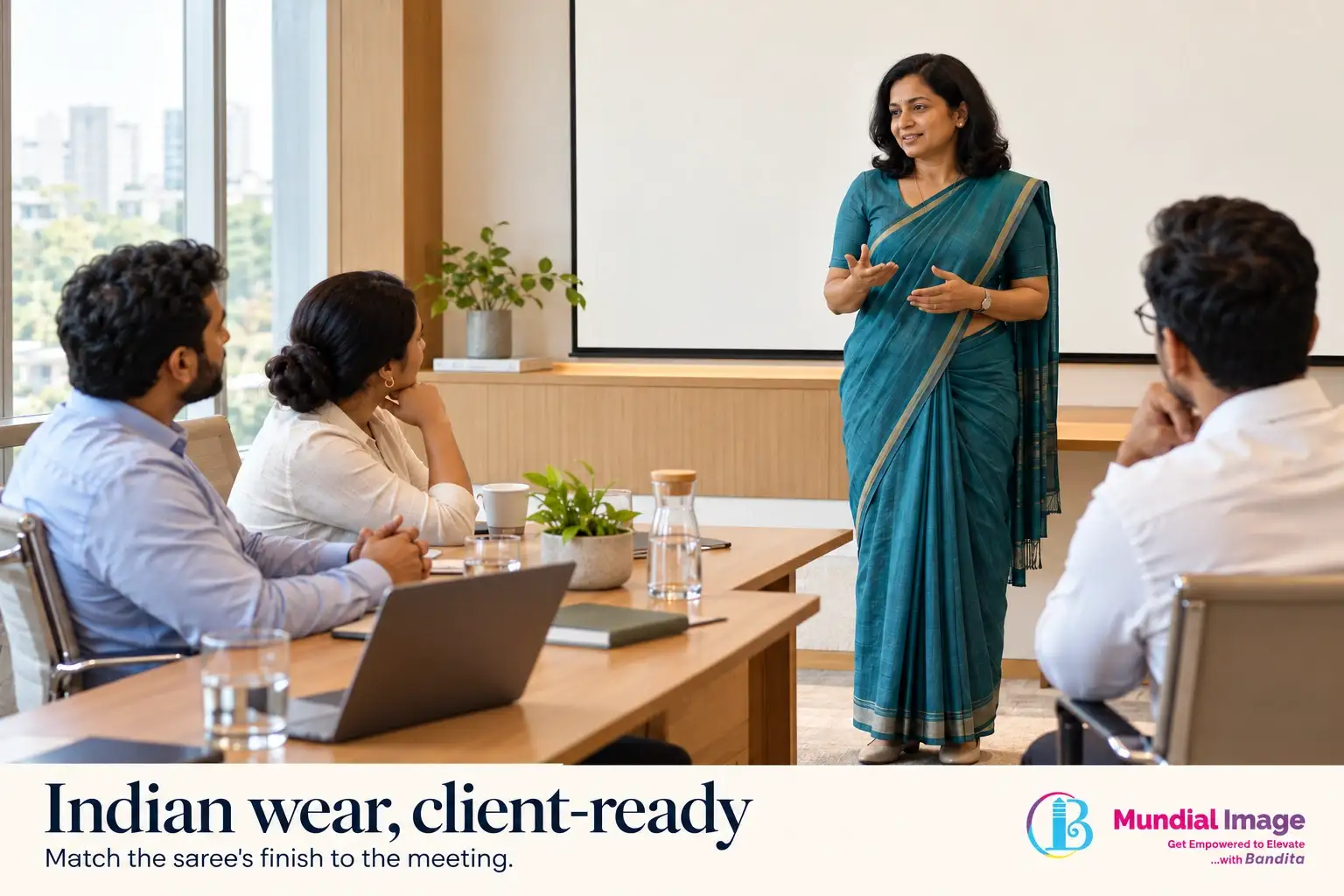
Situation: A first meeting at a client’s more formal office. She adds a suitable blazer and carries a slim folio; trousers and loafers remain. The mistake would be assuming her own office’s dress code travels with her. The added structure can make her presentation feel more aligned with the client’s setting.
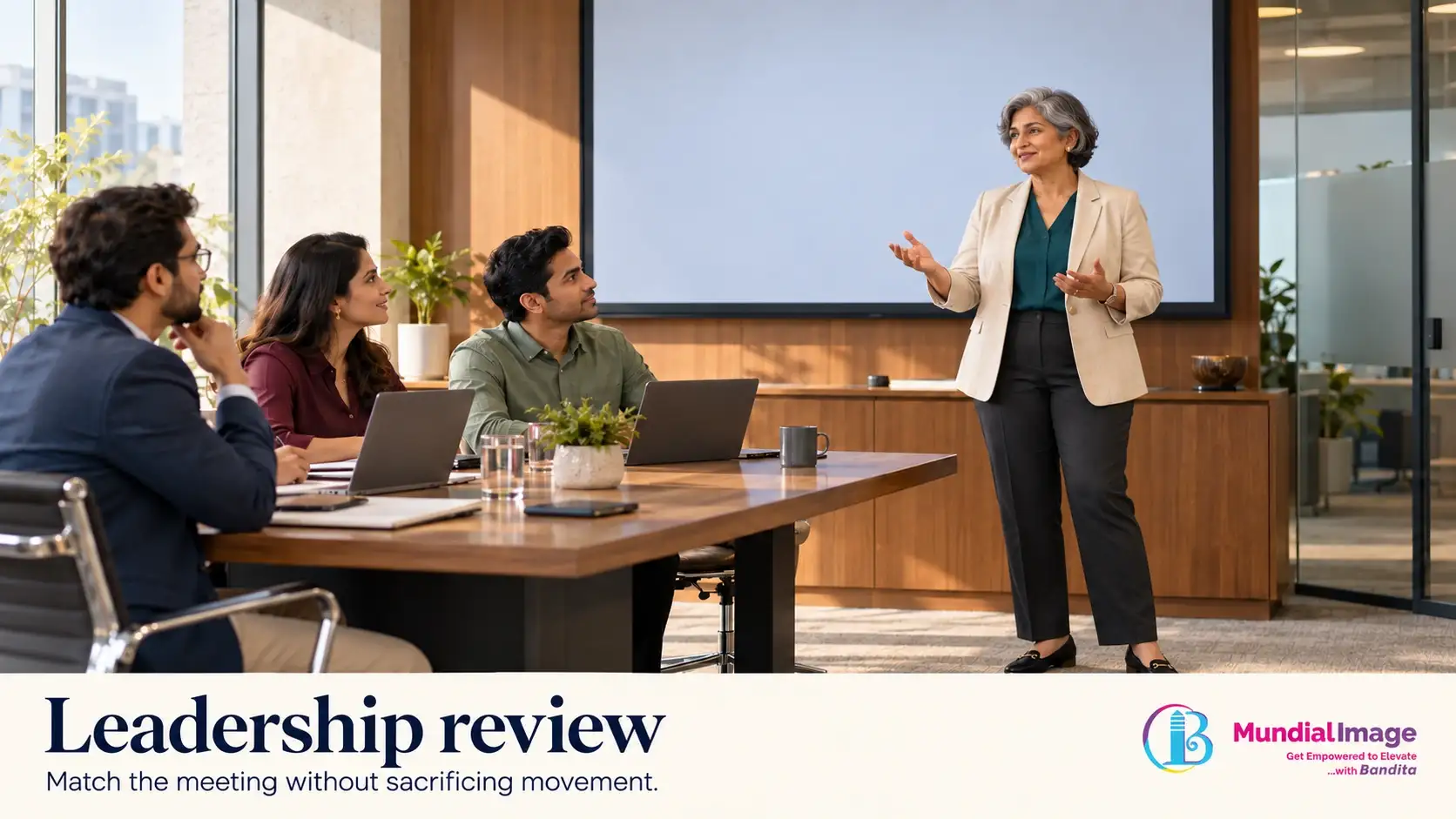
Situation: Presenting results to senior colleagues. The blazer can stay if it matches the organisation’s norm. What changes most is the preparation: checking the fit while standing, sitting and gesturing. Buying an unfamiliar “power outfit” the previous evening risks unnecessary discomfort. The intended reading is readiness to represent the work, not theatrical seniority.

Situation: An industry gathering with a smart-casual invitation. She keeps the blouse and trousers, removes the blazer and adds a scarf or different earrings. A smaller bag may be easier to manage while standing. The mistake is treating every evening event as either a board meeting or a party. The outfit should support conversation. A business-formal invitation would require a different decision.
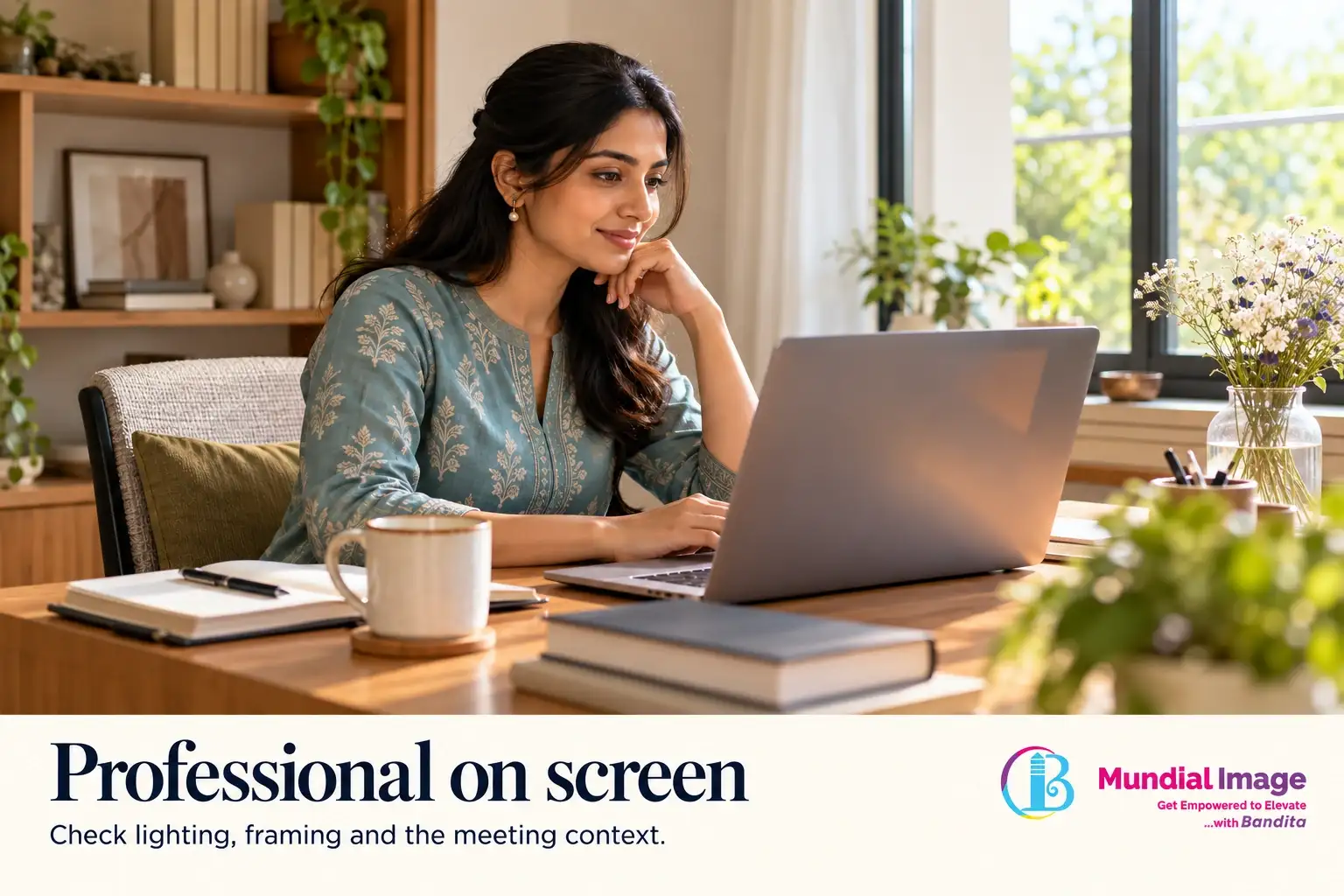
Situation: A video presentation to an unfamiliar international team. She tests the blouse and jacket on camera; tiny patterns, strong glare and a background of the same colour can be distracting. The trousers can remain. Assuming “global” means one Western dress code is the error. Clear framing and clothing appropriate to the participants help the meeting feel considered; Indian wear can serve that brief equally well.
These readings are contextual possibilities, not promises about how every person will judge an outfit. Clothing does not establish competence or determine someone’s right to be heard.
08It depends, and here is on what
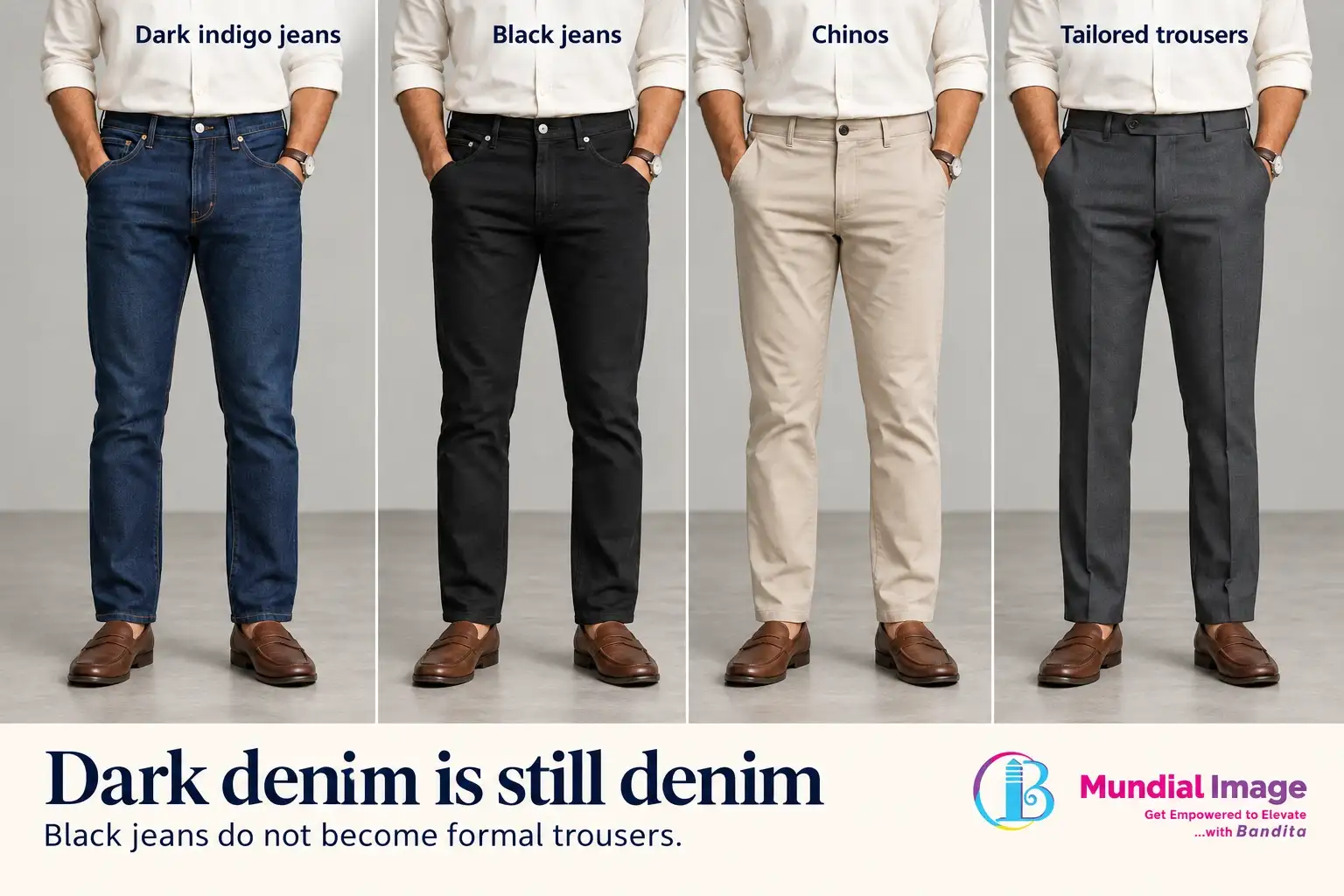
Sometimes. Confirm that denim is allowed, then choose an intact pair with a clean finish. Dark, undistressed jeans are usually easier to combine with business-casual pieces.
Only where denim is accepted. Black does not turn jeans into formal trousers; fading, rivets and the cut still matter.
In workplaces that allow them. Minimal, clean sneakers can work; a chunky running shoe is a different styling choice. Comfort or accessibility needs may require another solution.
Ask the host or account lead about the setting. If business casual is confirmed, tailored separates or appropriate Indian wear are useful starting points. Follow a formal brief when specified.
It can be. Fabric, cut, embellishment, bottoms and footwear determine the overall effect, alongside local practice.
A saree can serve casual, business-casual or formal situations. Judge the whole ensemble rather than assigning one level to the garment.
Often in relaxed offices that permit polos. Choose a stable collar and comfortable fit; check expectations before a first client meeting.
Both pictures show choices, not permissions. Denim and sneakers depend on employer policy and the day’s meetings.
09Fix the interruption
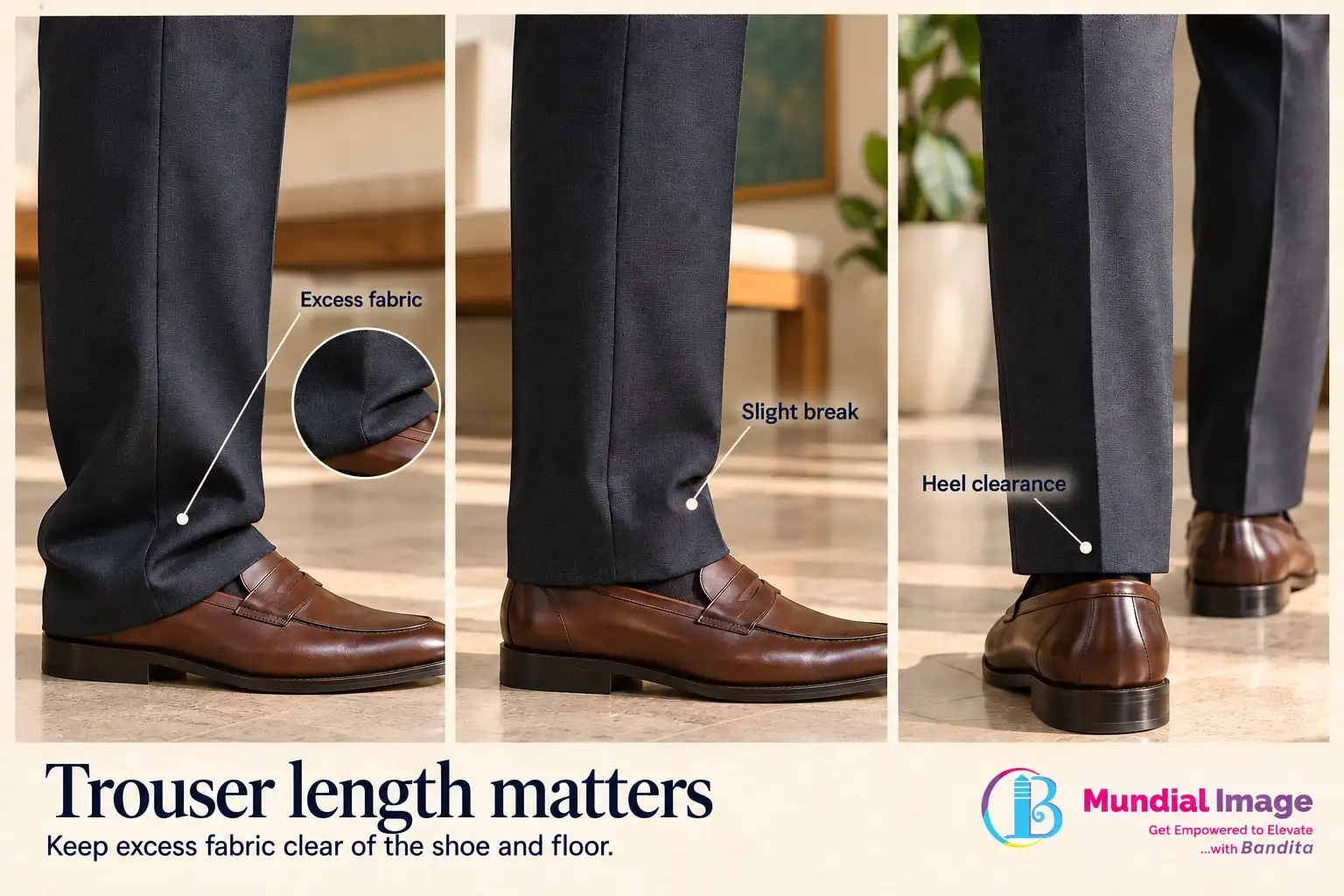
Clothes that interrupt the work. A shirt that pulls across the buttons, sleeves that need constant pushing up or a hem that catches under a shoe deserve alteration or replacement. Check movement before judging the mirror image.
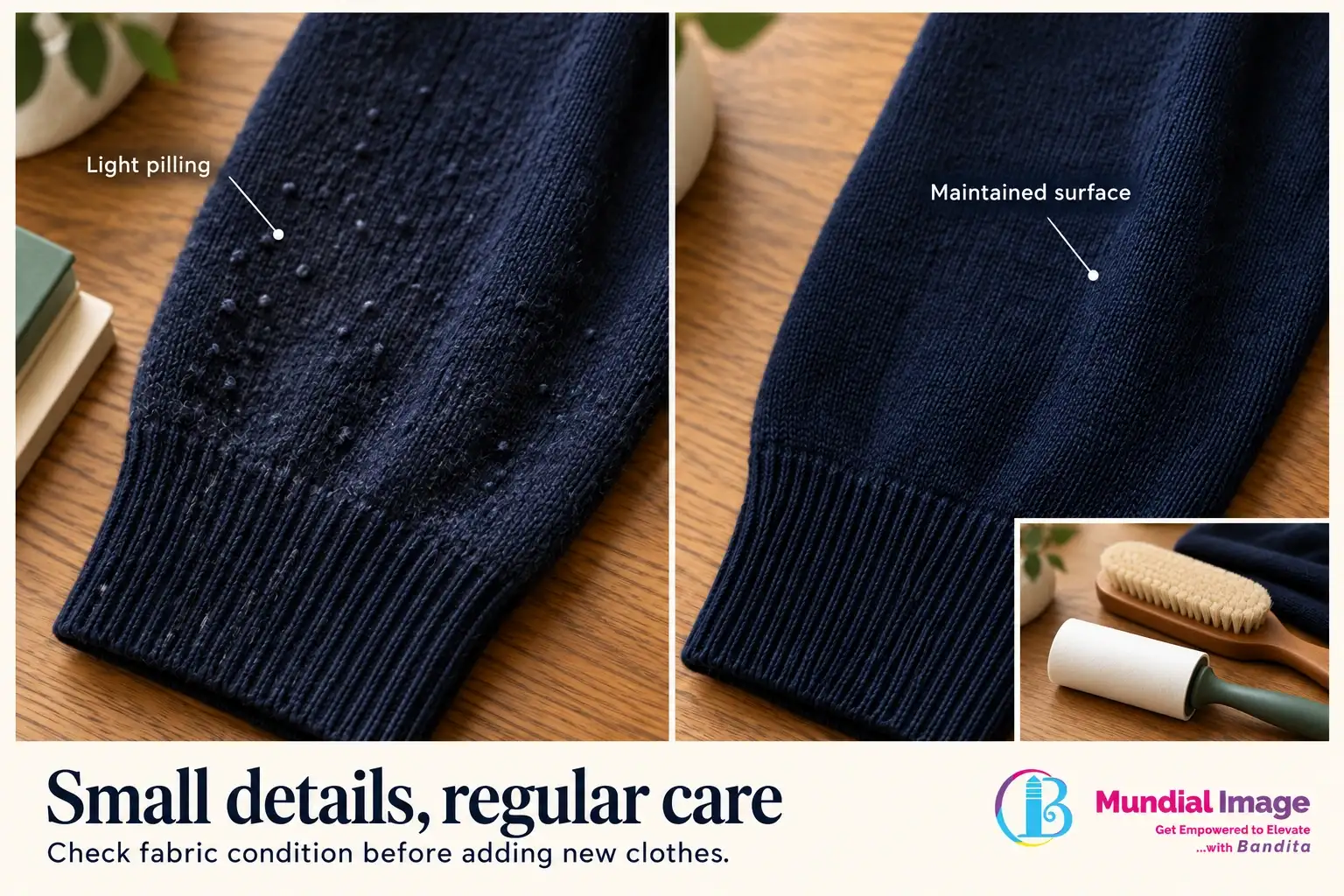
Visible wear mistaken for relaxed styling. Pilling, loose threads and collapsed collars can make otherwise suitable garments look neglected. Normal linen creasing is different from a shirt that was put away damp and crushed.
Shoes chosen only for the photograph. An uncomfortable pair can make a long presentation or site visit harder. Maintenance and a usable sole matter; a higher price does not solve either issue.
Too many competing details for the occasion. A bold print, striking bag and large jewellery may work together socially. For a restrained client meeting, keeping the most meaningful element can be a more suitable choice.
Borrowing someone else’s exceptions. The creative director’s outfit, a celebrity’s airport look and a trend called “office siren” are not evidence of what a specific workplace accepts.
Grooming should support comfort and considerate proximity. Keep fragrance restrained, attend to hygiene and follow relevant safety requirements. Natural hair texture, grey hair, religious dress and disability-related choices are not styling failures.
10Nine formulas
Use these combinations as a starting point, with employer policy taking priority.
Check before wearingComfortable seated fit and an opaque shirt
Check before wearingMovement, secure drape if worn, and local footwear rules
Check before wearingPleats, hem and ease through the commute
Check before wearingShirt length and trouser break
Check before wearingThe office accepts both polo and sneakers
Check before wearingThe client’s actual brief; formal may be required
Check before wearingIndian wear is accepted for that situation
Check before wearingFabric weight, airflow and an optional indoor layer
Check before wearingDry footwear at arrival; pack a change where practical
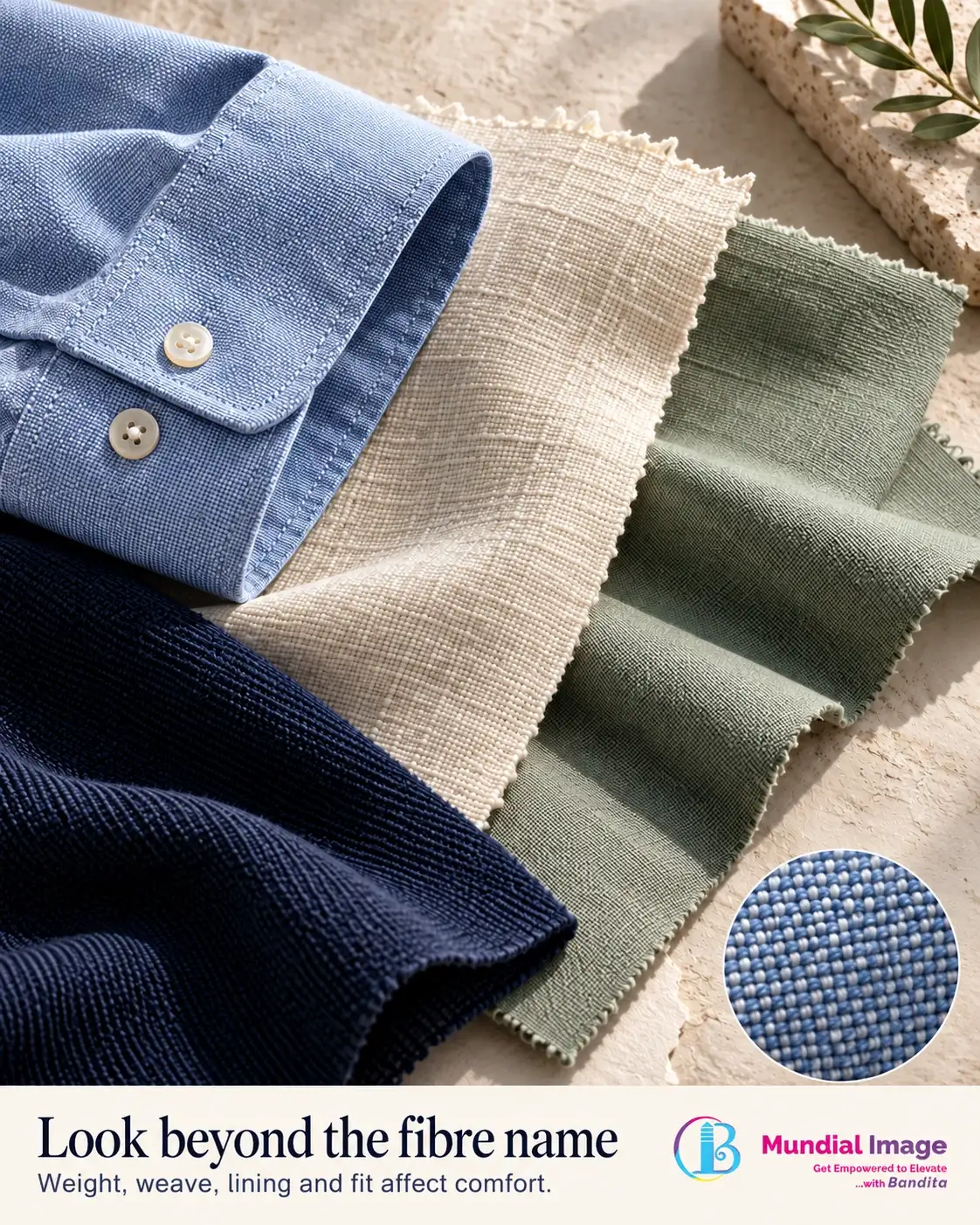
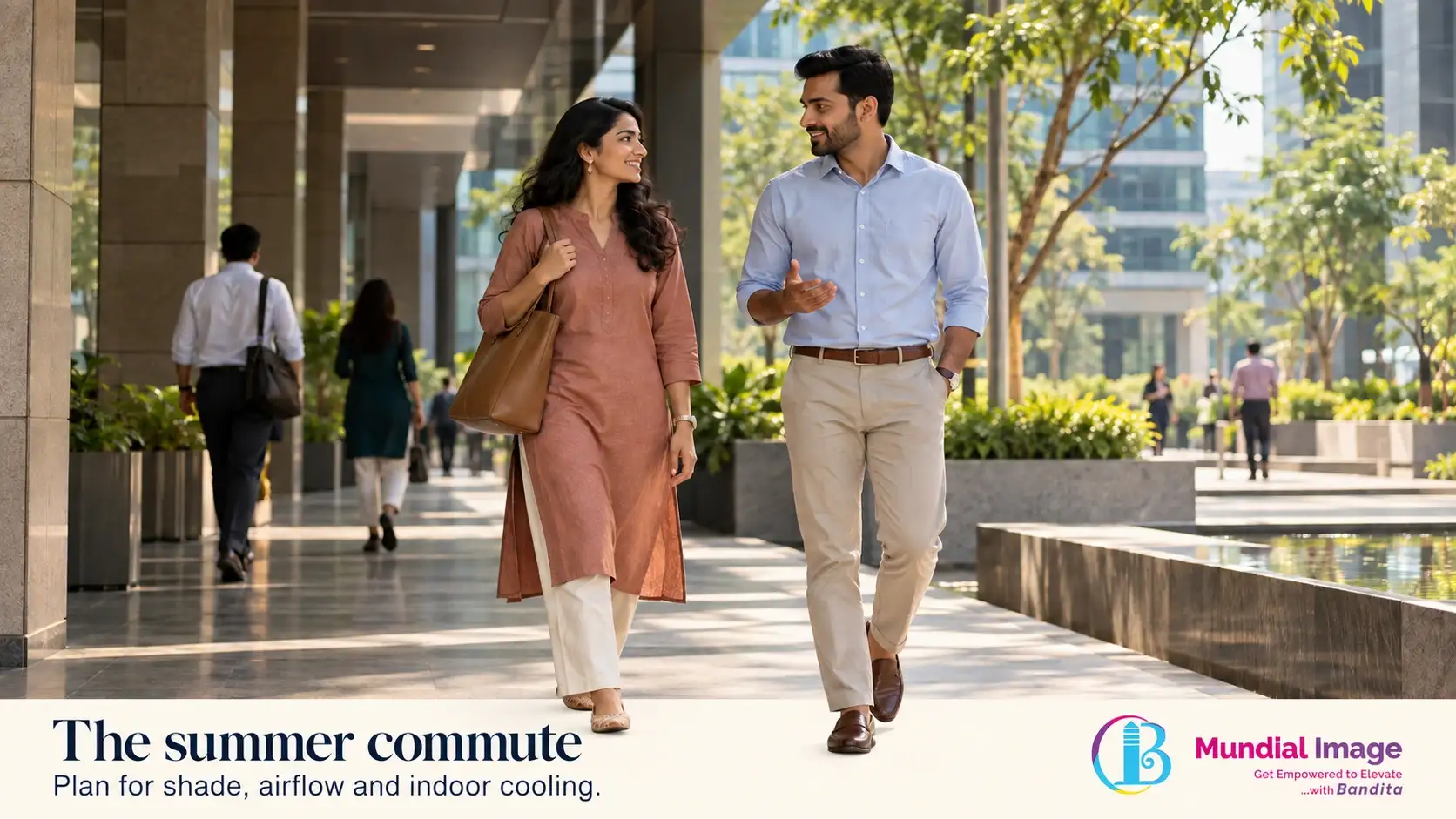
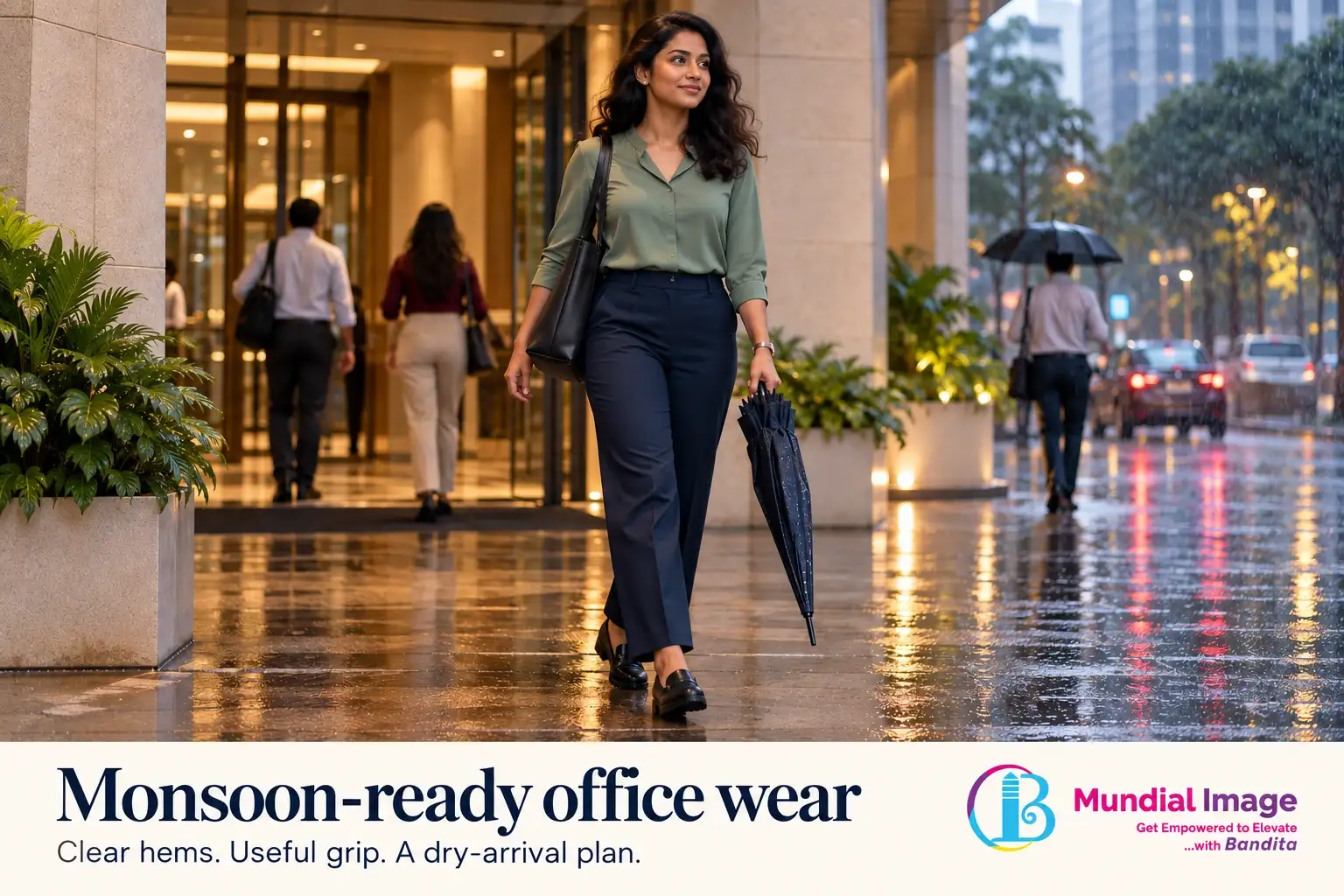
In hot weather, test the garment rather than trusting a fibre name. Weight, weave, lining and fit affect how it feels. In the monsoon, avoid making a pale trailing hem or water-sensitive shoe carry the whole day. A commute shoe and a dry office pair can be a practical arrangement.
11The final mirror check
Six questions. Tap each one as you answer it.
FreeThe 50-page visual guide
Every idea on this page, drawn as fifty pages. It lands in your email the moment you ask, so it is there before the next client day.
Where should we send it?
Free. The PDF reaches your inbox within moments. Inside, the next step is the Executive Presence Blueprint.
12Before you ask
First day and still unsure? Ask HR for examples, then start with a shirt or blouse and trousers, or a restrained kurta set.
It can include shirts, blouses, tailored trousers, suitable skirts or dresses, kurta sets and sarees. Choose the ensemble for the workplace and occasion. No single silhouette, heel height or Western garment is compulsory across all offices.
Common starting points are collared shirts with chinos or tailored trousers and appropriate shoes. Polos, sneakers, jeans and Indian options depend on policy and local practice. A full suit is generally outside the usual business-casual requirement unless the occasion changes.
Ask HR for examples or a dress-code document. If the answer remains vague, choose a shirt or blouse with trousers, or a restrained kurta set where accepted, and suitable footwear. Observe colleagues in comparable roles before expanding the options.
Usually no. A blazer is useful when the meeting, workplace or temperature calls for it. It does not override a rule against denim or compensate for clothes that fit poorly.
Yes, where the workplace permits them. Colour alone does not establish formality. Consider the fabric, silhouette, print, accessories and occasion together. An all-neutral wardrobe is an option, not a universal professional requirement.
No. Employer rules and client expectations still apply. A relaxed internal day can include different clothes from a Friday spent representing the company elsewhere.
NextYour own plan
Look at the last month’s calendar before buying anything. Identify the situations in which getting dressed was difficult, then put together one workable outfit for each using what is already in the wardrobe. Photograph those combinations. Any missing piece will have a specific purpose.
For help connecting those choices with your role, lifestyle, personal style and image goals, explore Mundial Image’s one-to-one image consulting. The starting point is the life the wardrobe needs to serve.
SourcesIndeed India, Business Casual Attire Tips · Moneycontrol, office dressing and relaxed tailoring, July 2025. Photographic illustrations on this page are AI-generated and do not show real clients.
Free · straight to your inbox
Same outfit, different room, drawn page by page. Sent to your email instantly, ready for the next client day.
Free. One email with the PDF, and the Executive Presence Blueprint as your next step.