5situations where one missing detail changes the outfit
14decision factors, AI beside a human consultant
5prompts for real wardrobe decisions
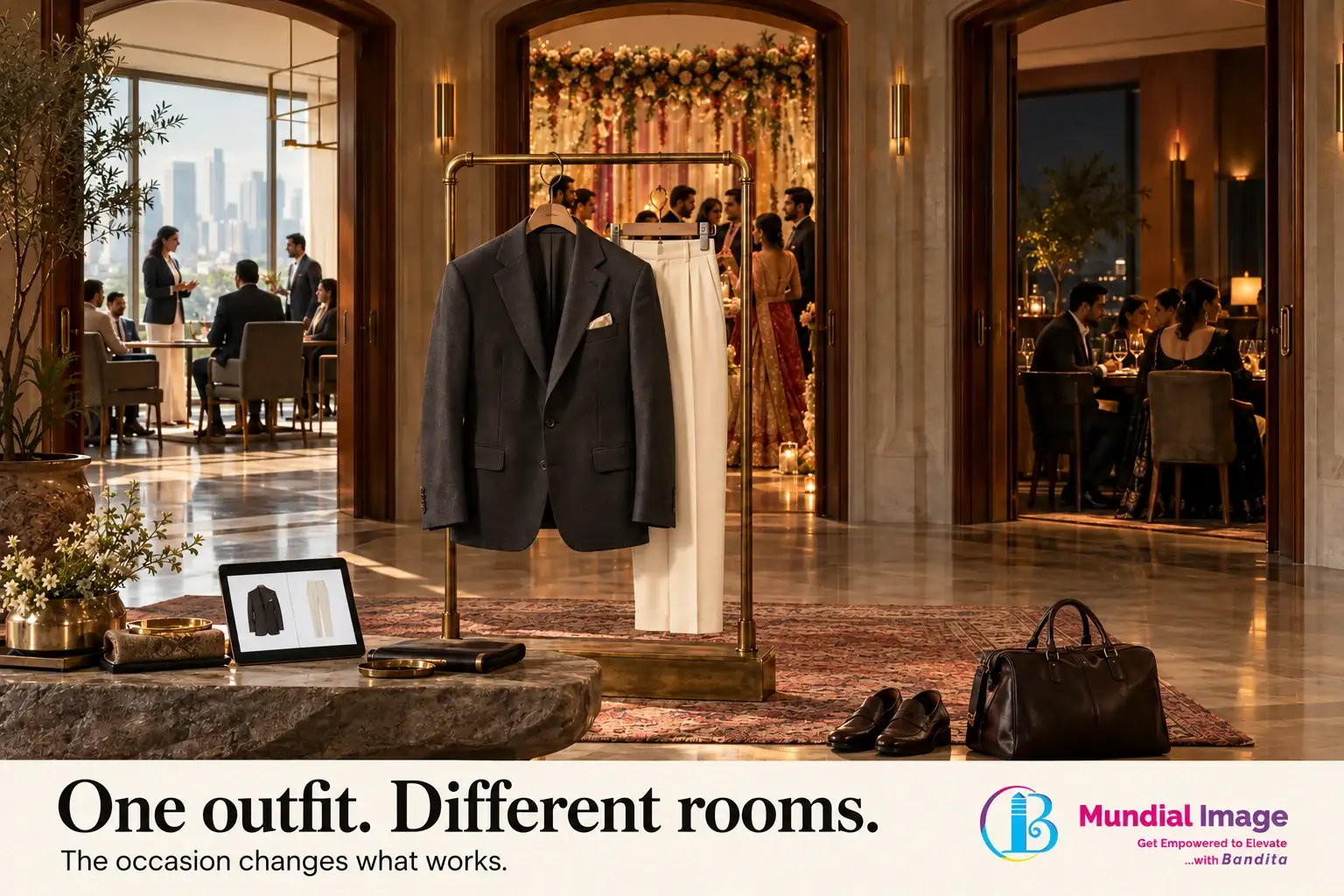
01One outfit. Different rooms.The occasion changes what works.
Fig. 01One outfit. Different rooms.
AI can put a charcoal blazer with cream trousers in seconds. Tell it you have a promotion review and it can adjust the recommendation. Tell it the review includes a factory visit, you will be standing for two hours, and your usual blazer pulls when you reach forward. Now it has a different problem to solve.
Each detail changes what “a good outfit” means.
That is the useful question behind an AI personal stylist: how much of your life has reached the recommendation? A photograph can show a jacket. It cannot, on its own, explain why you stopped wearing it.
Try it on one outfit
Describe tomorrow, not only the clothes. Where you will stand, sit, walk and eat belongs in the brief.
01
Act I · ExploreThe short answer1 min
Can AI be your personal stylist?
The answer, in fifty words
Yes. AI can suggest outfits, organise wardrobe information, find products and generate try-on previews. Its usefulness depends on the tool and the brief. Fit, comfort and social suitability still need checking. Give it your actual clothes, occasion, preferences and constraints before treating a recommendation as something to wear or buy.
For everyday experimentation, that may be enough. For a consequential occasion, the missing information deserves more attention.
02
Act I · ExploreSeven jobs, one label2 min
What an AI personal stylist actually does in 2026
The label covers several different jobs. An AI outfit generator might assemble pieces from your wardrobe, generate an imaginary fashion image or search a retailer’s catalogue. Those outputs answer different questions.
01 / 07
Recommendation engine
Ranks items using preferences, behaviour or catalogue information
What to checkWhich products and preferences it knows
02 / 07
Computer vision
Identifies visible garments and attributes in photographs
What to checkWhether the item, colour and details were recognised correctly
03 / 07
Generative styling
Produces outfit ideas, descriptions or images
What to checkWhether the depicted clothes exist
04 / 07
Virtual try-on
Generates a preview of clothing on a person
What to checkWhat the provider says about fit accuracy
05 / 07
Wardrobe organisation
Catalogues owned pieces and helps plan combinations
What to checkWhether the inventory is complete and current
06 / 07
Shopping assistance
Finds and compares products
What to checkSeller, price, size, stock and returns
07 / 07
Conversational AI
Develops suggestions through questions and feedback
What to checkWhich parts of the brief it has assumed
The categories overlap. A useful app can do several without doing all of them equally well. OpenAI’s image-input guidance confirms that ChatGPT can interpret uploaded photographs, while warning that image descriptions can be wrong.
03Your wardrobe, made visibleStart with the clothes you actually own.
Fig. 03Your wardrobe, made visible
Dispatch
Google, Gemini, ChatGPT and wardrobe apps: what has changed
Apr 2026 · Google India
Google’s April 2026 India announcement describes shoppable listings and comparison tables in Gemini, alongside conversational shopping in Search’s AI Mode. Google also says its upgraded Circle to Search can identify several pieces in an outfit on supported devices. These are practical ways to move from a look you like to possible purchases. Google India’s announcement specifies the rollout and language differences.
06Find a similar pieceVisual matching helps narrow the search.
Fig. 06Find a similar piece
Apr 2026 · Google Photos
Google separately announced a Photos wardrobe feature in April 2026: clothing catalogued from photographs, outfit moodboards and virtual previews, with rollout starting on Android before iOS. An announcement does not establish availability on every account.
Nov 2025 · ChatGPT · Daydream
ChatGPT shopping research, introduced in November 2025, asks clarifying questions and researches products across the web. Daydream is a fashion-focused conversational shopping service. Neither should be confused with a complete record of what is hanging in your cupboard.
Jul 2026 · Acloset
Acloset centres its recommendations on a digital wardrobe. Its July 2026 update describes location- and weather-aware outfit suggestions and the ability to complete selected outfit categories. The claim that AI simply cannot consider weather or occasion is already too broad.
03
Act I · ExploreThe strong cases1 min
Where AI styling earns its place
i
Remix what you own
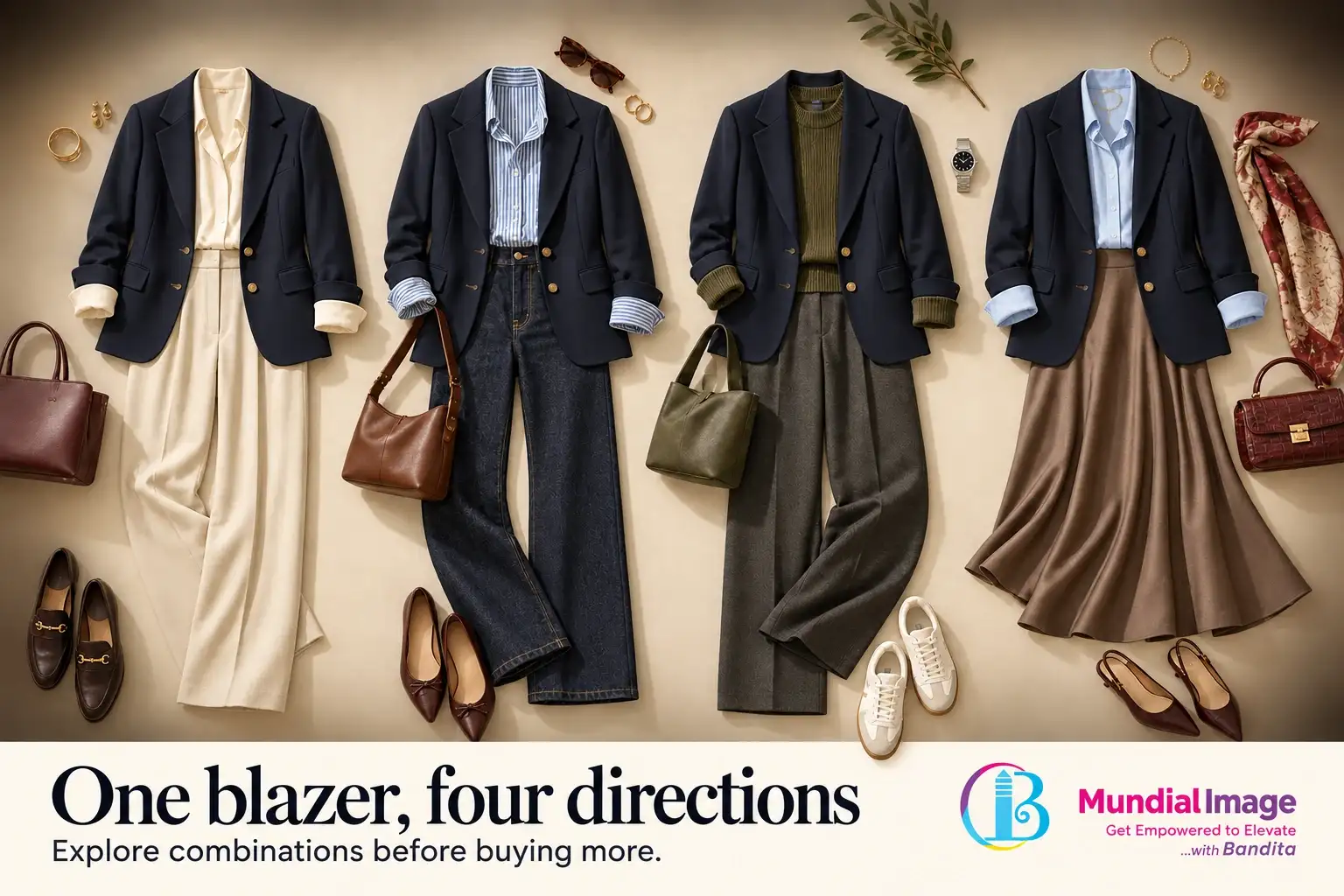
Exploring combinations is a strong starting point. Give a tool your actual navy trousers, printed shirt and shoes, and ask for alternatives built around one piece. The result can interrupt a habit without requiring a purchase.
A Reddit wardrobe discussion describes precisely that use: uploading owned pieces and trying combinations the poster would otherwise overlook. It is one person’s experience, not evidence of a typical result.
02One blazer, four directionsExplore combinations before buying more.
Fig. 02One blazer, four directions
ii
Discover and preview
Product discovery is another useful application. Finding a similar neckline, comparing available colours or translating a reference image into searchable garment descriptions can save browsing. A generated outfit image can also help someone decide whether they like a silhouette enough to investigate it.
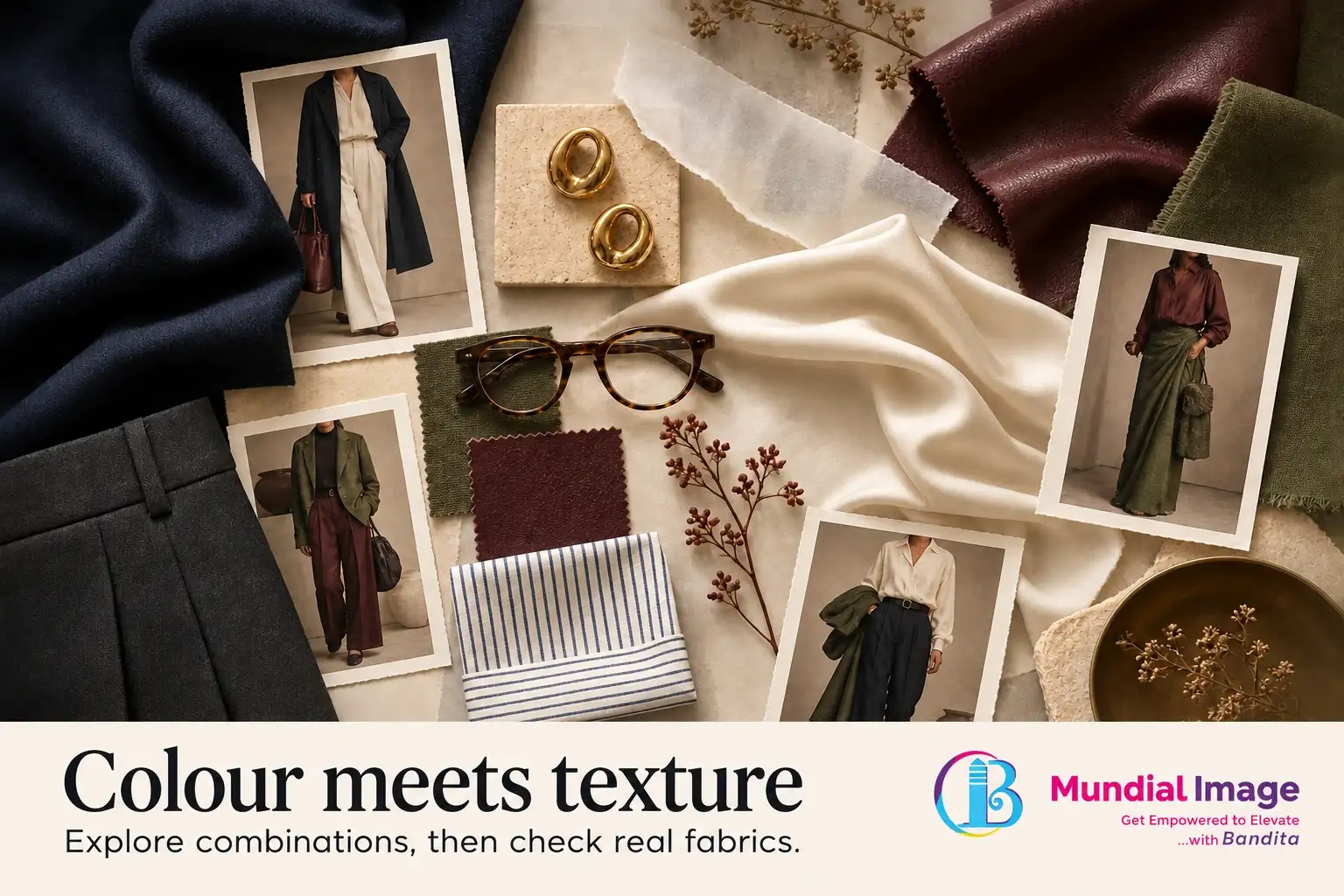
05Colour meets textureExplore combinations, then check real fabrics.
Fig. 05Colour meets texture
iii
Keep the record honest
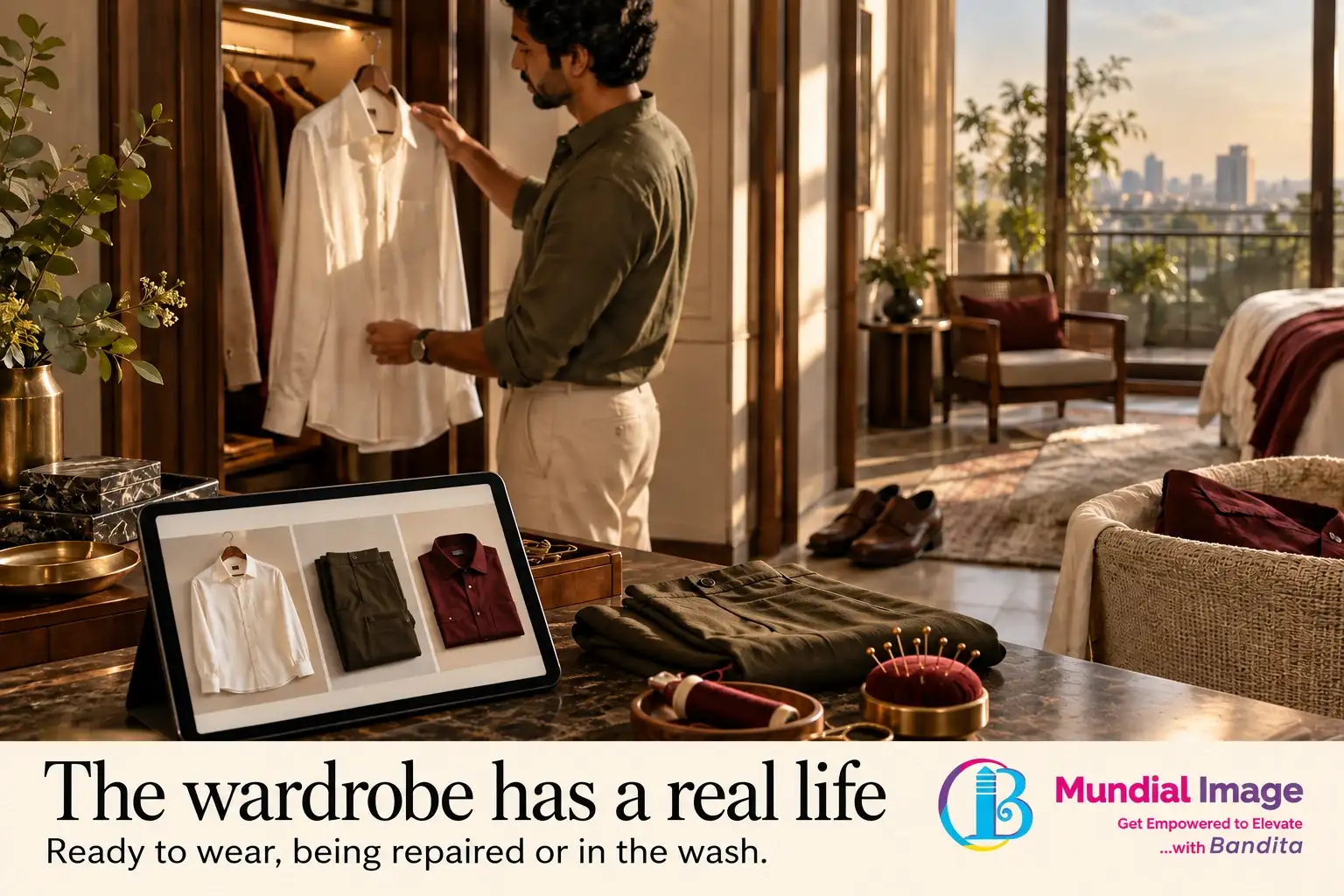
Wardrobe planning becomes more valuable when the records include ordinary details: which trousers are at the tailor, which shoes can handle a commute, what needs washing. A virtual wardrobe needs maintenance, just as a physical one does.
08The wardrobe has a real lifeReady to wear, being repaired or in the wash.
Fig. 08The wardrobe has a real life
iv
The broader shift
The broader shift is visible in McKinsey’s February 2026 fashion commentary, which describes shoppers using language models for comparisons and recommendations. That supports treating conversational discovery seriously. It does not establish that most shoppers want an algorithm to make their final clothing decision.
04
Act II · Add contextWhat the photograph leaves out1 min
Where an outfit becomes a judgment problem
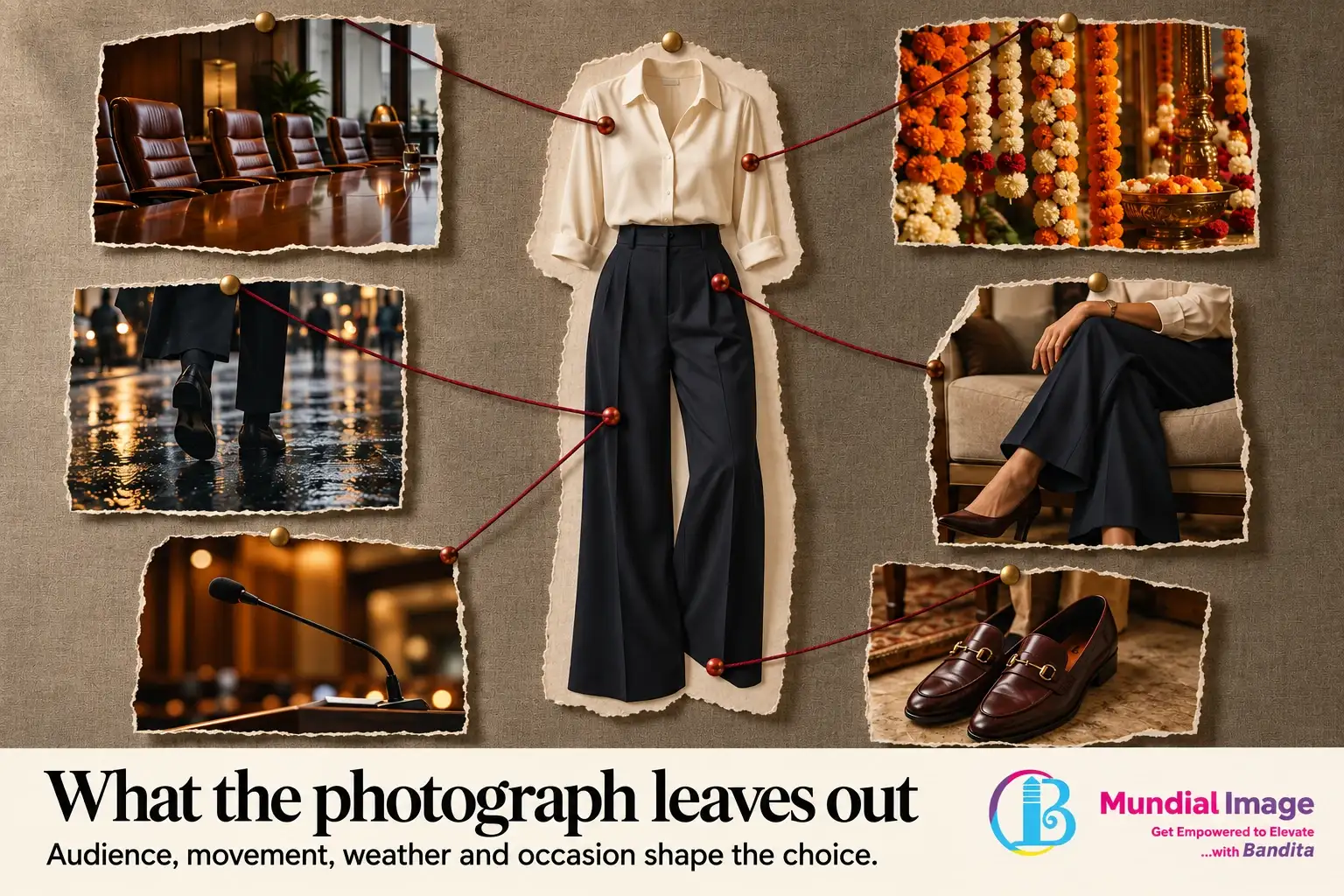
A cream silk blouse and navy trousers may coordinate beautifully. Whether they work for tomorrow depends on what tomorrow involves.
09What the photograph leaves outAudience, movement, weather and occasion shape the choice.
Fig. 09What the photograph leaves out
There are different kinds of missing information:
Unsaidthe meeting is with a new reporting manager, rather than familiar colleagues.
Unrecordedthe blouse gapes when you sit, although the standing photograph looks fine.
Unconfirmedthe invitation says “festive”, but the family has specific ceremony expectations.
Conflictingyou want a dramatic sleeve and need to eat comfortably across a crowded table.
These gaps can affect a human adviser too. A consultant who assumes your goals or treats their own taste as universal has also missed the brief.
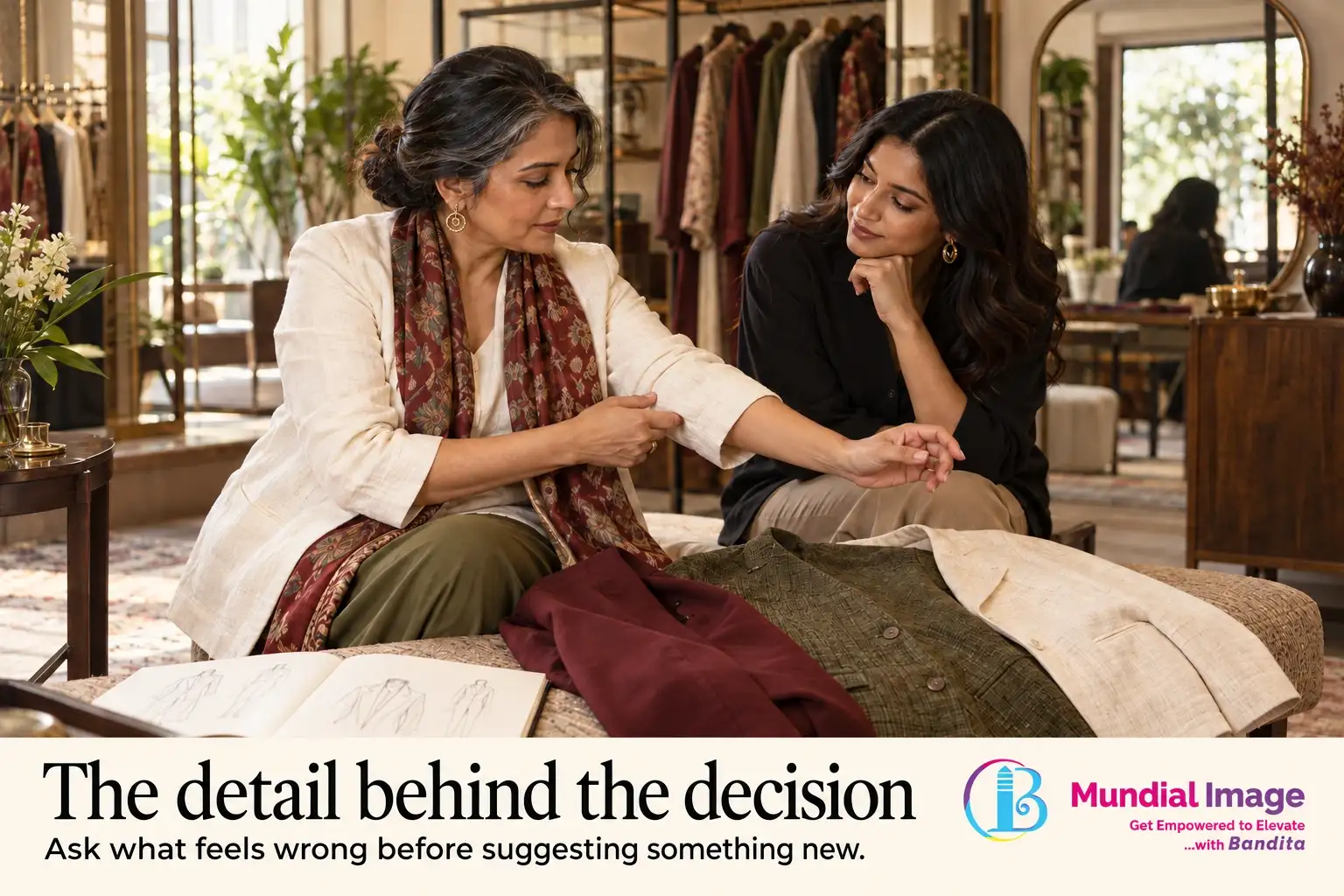
10The detail behind the decisionAsk what feels wrong before suggesting something new.
Fig. 10The detail behind the decision
Useful judgment has a visible mechanism: gather the missing input, establish its importance, explain the trade-off, then check the result. You might keep the dramatic sleeve for photographs and choose a less voluminous version for dinner. You might retain a familiar saree for a leadership review because you already move comfortably in it.
The same applies to identity. Someone who dislikes a minimalist wardrobe will not necessarily enjoy a technically coordinated beige capsule. A past purchase left unworn can be more informative than a moodboard full of things they admire on other people.
A quick test
Pick one piece you own and never wear. Write down why in one sentence. That sentence is the detail no photograph can give a stylist.
05
Act II · Add contextFive case files3 min
The same brief: AI vs image consultant
These five situations are illustrative workflow comparisons, not product tests or client case studies. The AI column describes possible assistance. The consultant questions describe a careful consultation. Either can improve its recommendation when it receives the additional information.
1
1. A promotion review followed by a site visit
The brief
A project manager wants a polished outfit for an internal promotion review. They own a navy blazer, grey trousers, shirts and leather shoes.
11Ready for the reviewDress for the meeting and the day around it.
Fig. 11Ready for the review
What an AI tool may do well
Suggest combinations from those pieces and explain differences in formality.
What changes the decision
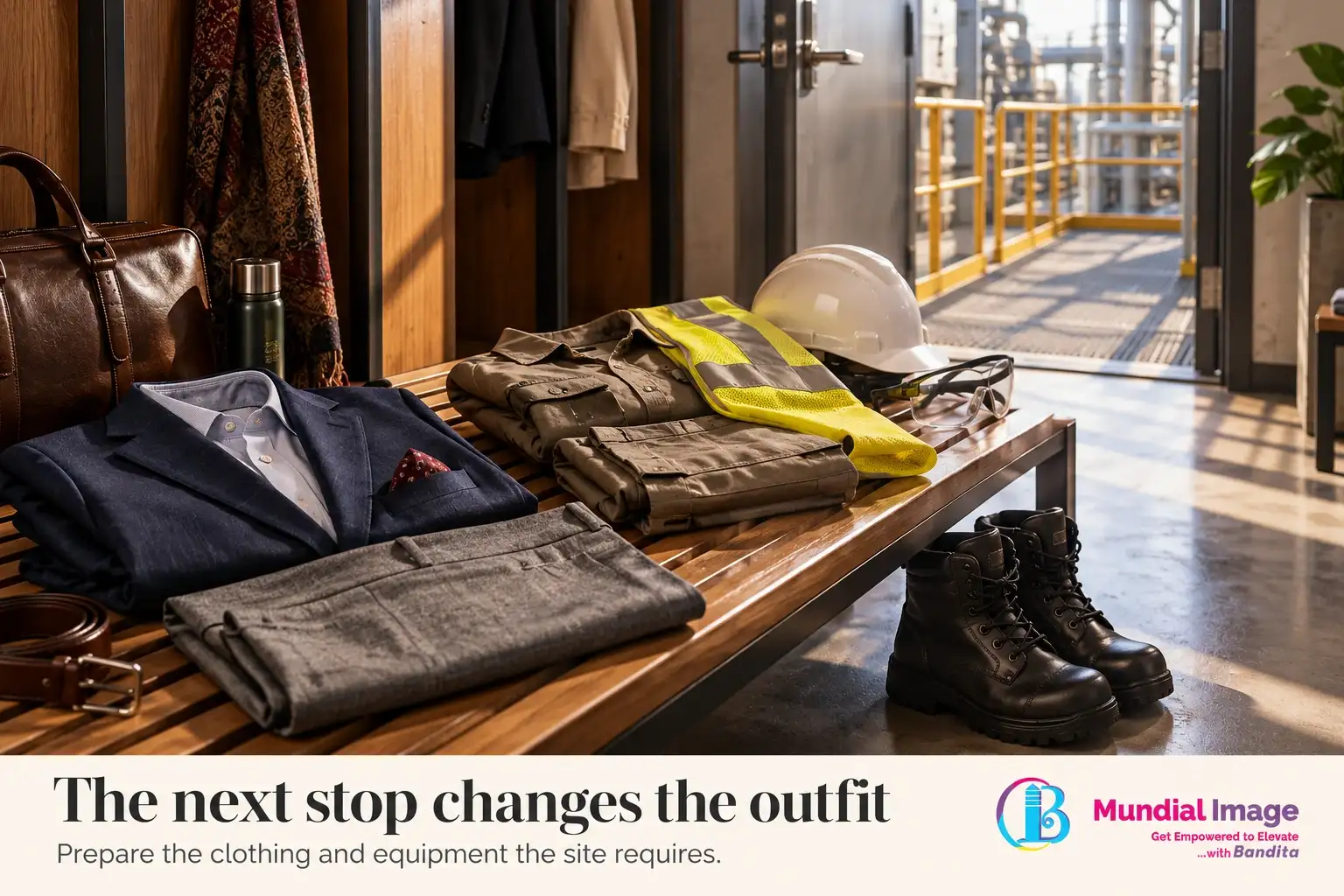
The day includes a factory-floor visit with protective-equipment requirements. The blazer restricts arm movement.
What a consultant would ask
What does the site require? Will there be time to change? Which clothes have you already worn comfortably for a full day?
Styling consequence
Keep the familiar meeting outfit only where it works. Arrange site-approved clothing and footwear with the host, allow changing time, and address the restrictive jacket. A smarter-looking shoe does not override a site rule.
12The next stop changes the outfitPrepare the clothing and equipment the site requires.
Fig. 12The next stop changes the outfit
2
2. An important client pitch
The brief
A creative-agency founder wants to look credible while presenting to a prospective financial-services client.
13Style that supports the pitchLet the outfit work while you present.
Fig. 13Style that supports the pitch
What an AI tool may do well
Offer a restrained option and a more expressive one, using a reference palette and existing wardrobe.
What changes the decision
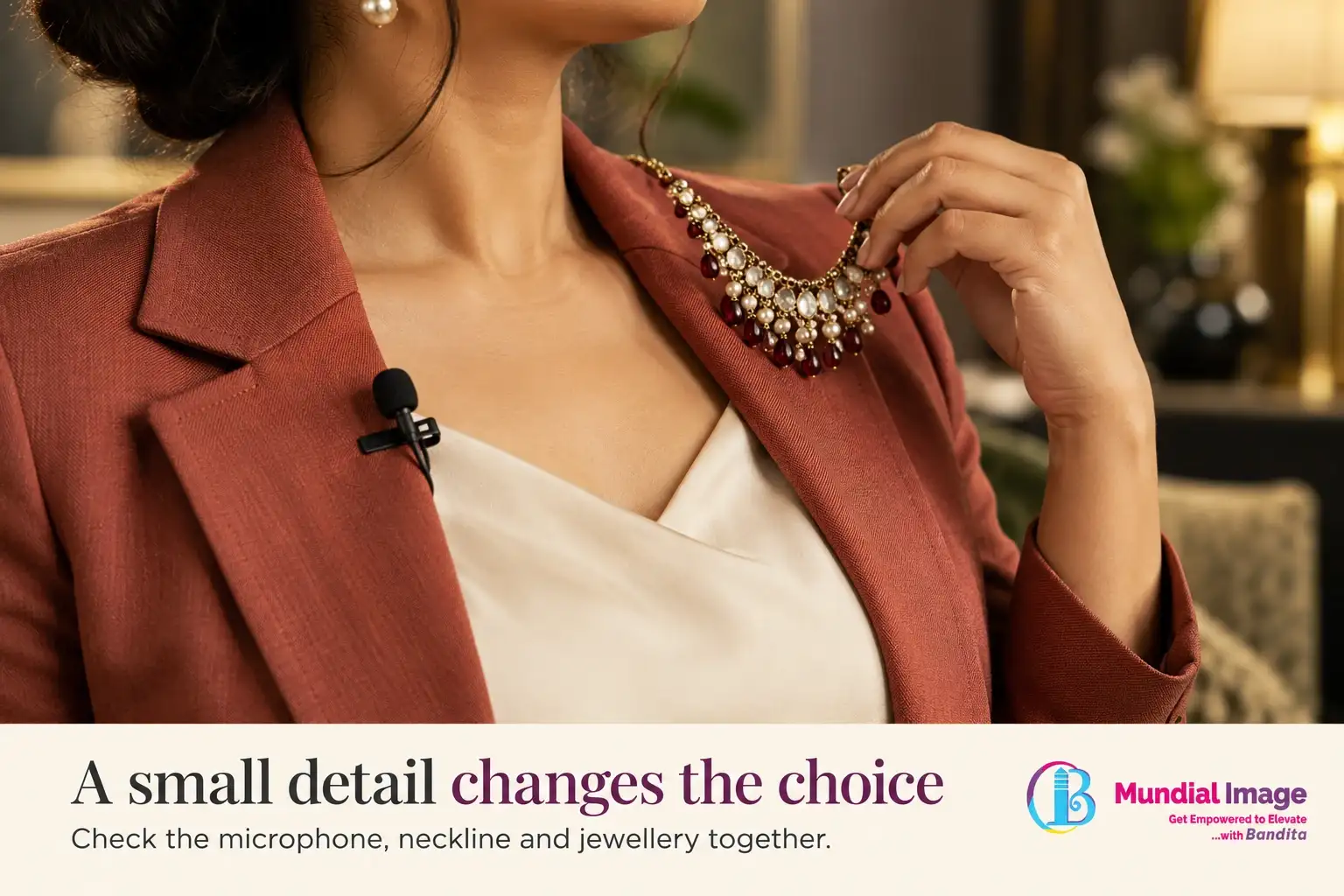
The founder is presenting alongside colleagues, using a lapel microphone and demonstrating material on a table. The client’s actual dress norms matter more than a stereotype about their industry.
What a consultant would ask
Who will attend? What have comparable meetings looked like? Where will the microphone attach? Which element of your usual style do you want to retain?
Styling consequence
Choose a neckline or lapel that accommodates the microphone, remove jewellery that knocks against it, and keep a deliberate signature detail. Test the outfit while presenting, including the reach across the table.
14A small detail changes the choiceCheck the microphone, neckline and jewellery together.
Fig. 14A small detail changes the choice
3
3. An Indian wedding and reception
The brief
A guest wants to wear an existing silk saree to a wedding and evening reception, with a limited accessories budget.
15Dress for this weddingThe host, ceremony and venue complete the brief.
Fig. 15Dress for this wedding
What an AI tool may do well
Explore blouse, jewellery and bag combinations, or suggest ways to change the look between events.
What changes the decision
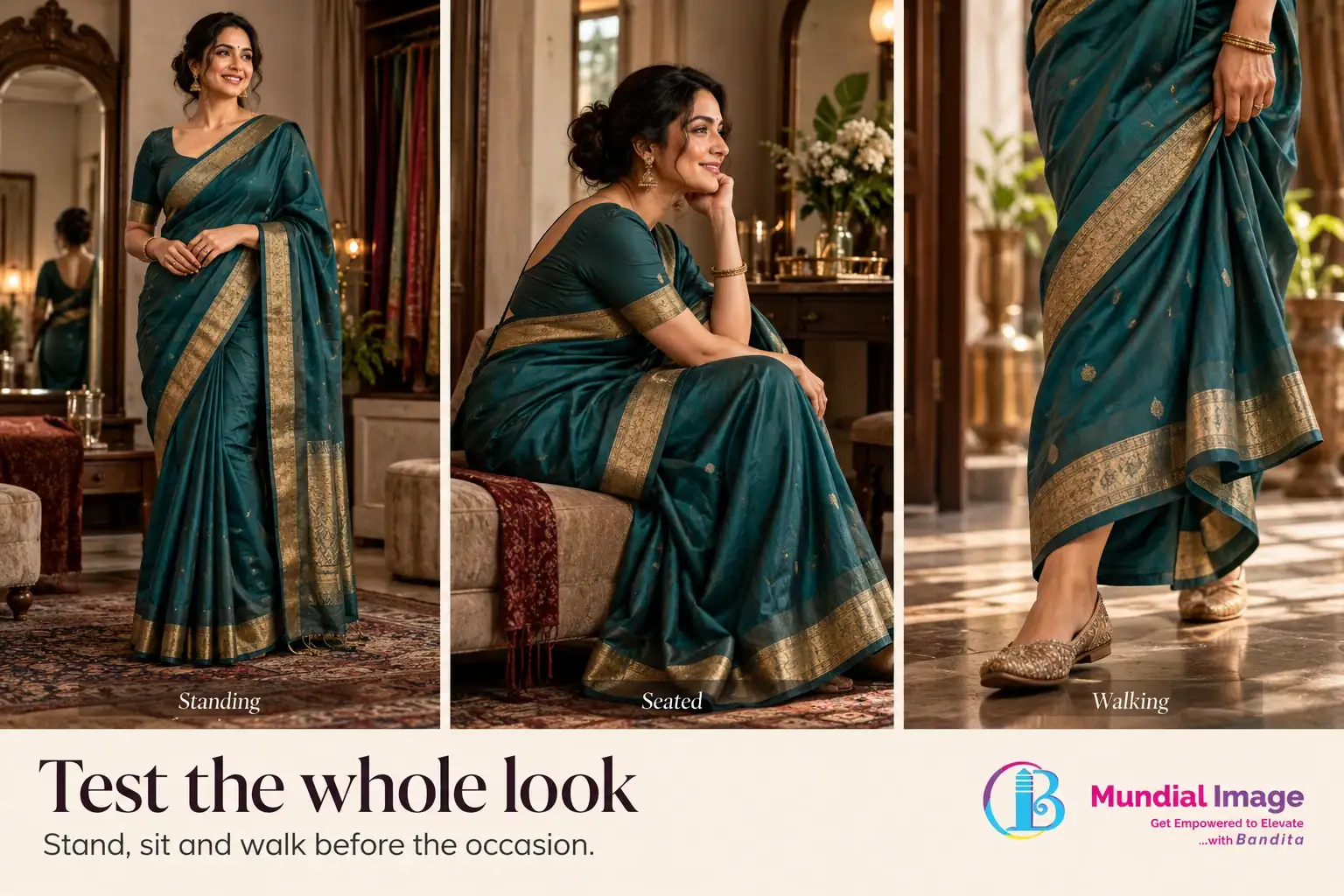
The ceremony, family preferences, venue and guest’s role are unspecified. There is an outdoor walk and several hours of standing.
What a consultant would ask
What has the host requested? Are there ceremony-specific expectations? Does the blouse remain comfortable when seated? Can the wearer manage the drape without repeated adjustment?
Styling consequence
Confirm the host’s guidance before choosing colours or coverage. Test the blouse and drape, select footwear for the actual route, and change accessories for the reception if desired. “Indian wedding” is too broad to prescribe one correct outfit.
16Test the whole lookStand, sit and walk before the occasion.
Fig. 16Test the whole look
4
4. A first meeting with a conservative senior stakeholder
The brief
A newly appointed department head wants an outfit that feels appropriate for a first meeting with a senior stakeholder described as conservative.
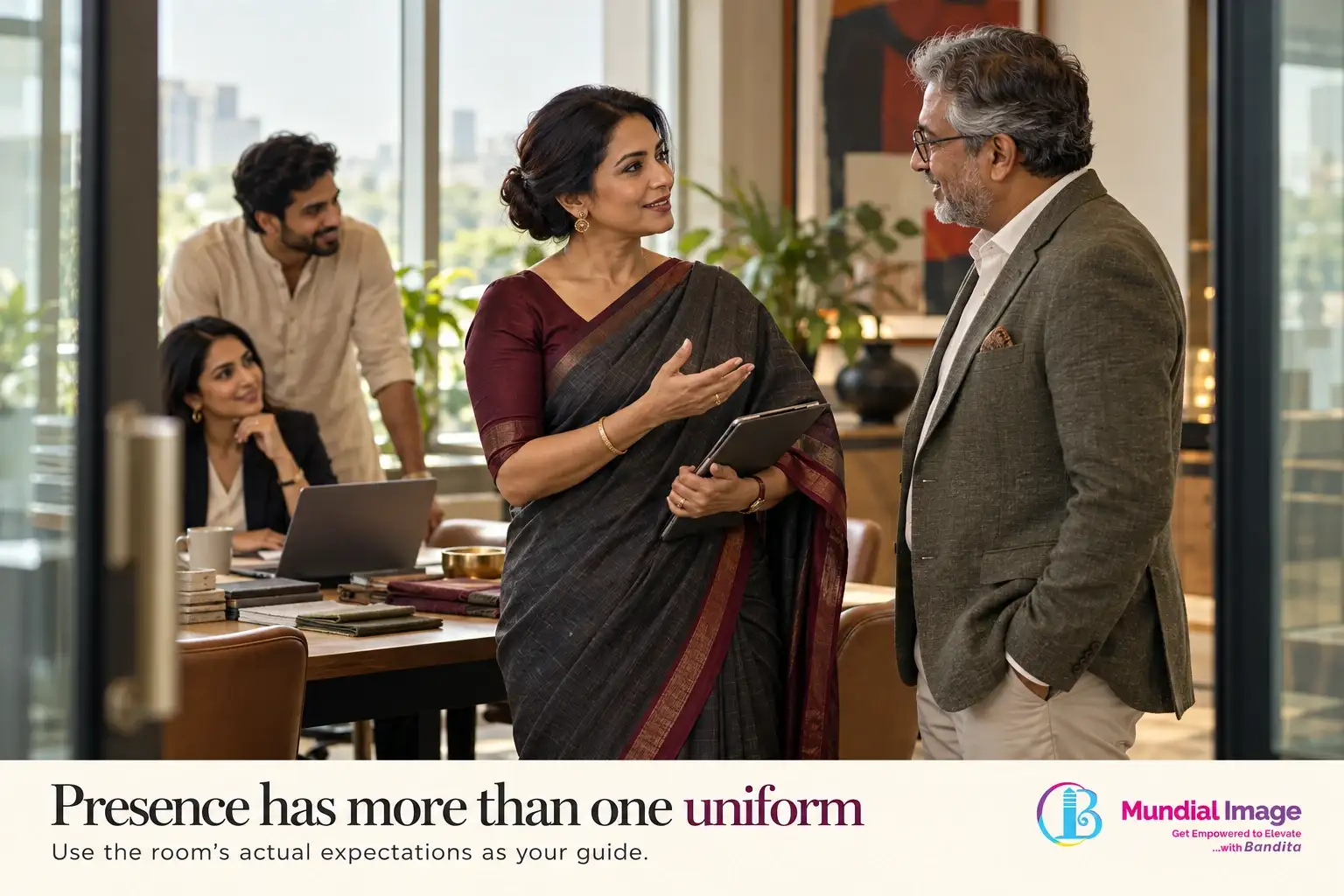
17Presence has more than one uniformUse the room’s actual expectations as your guide.
Fig. 17Presence has more than one uniform
What an AI tool may do well
Suggest less conspicuous combinations and ask for workplace references.
What changes the decision
“Conservative” might describe business decisions, communication style or clothing. It says little about what the person expects someone else to wear.
What a consultant would ask
What have you actually observed? Is there a dress code? How do peers in your role dress? Which adjustments feel reasonable to you?
Styling consequence
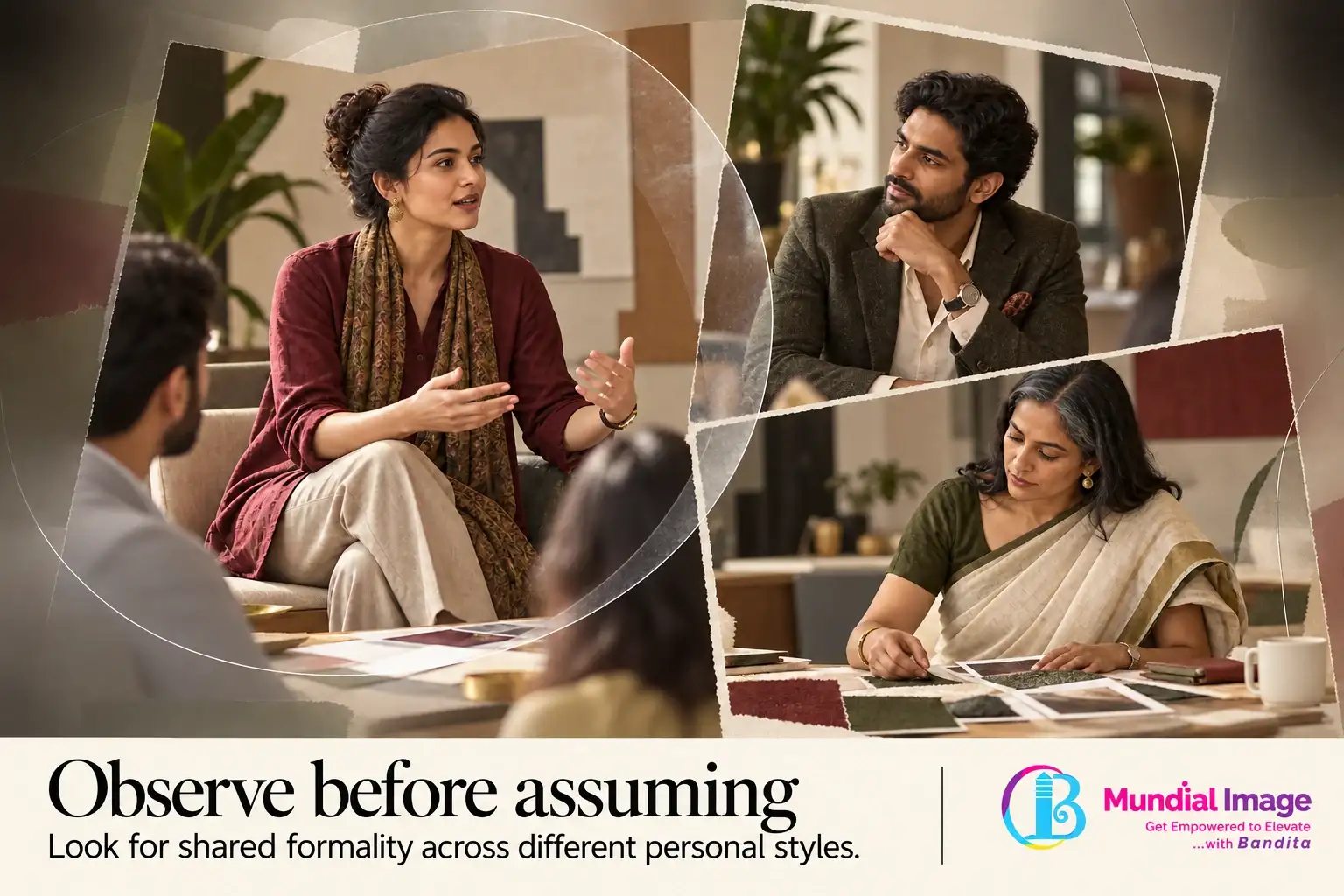
Use the observed standard of formality, with well-maintained clothes that fit comfortably. Keep chosen cultural or personal expression. A saree, kurta or suit can be appropriate; seniority alone does not settle the choice.
18Observe before assumingLook for shared formality across different personal styles.
Fig. 18Observe before assuming
5
5. A business dinner with substantial networking
The brief
A professional wants an elegant look for a hotel dinner where they will meet potential collaborators.
19The dinner starts on your feetPlan for the reception as well as the table.
Fig. 19The dinner starts on your feet
What an AI tool may do well
Coordinate evening pieces and accessories around the venue and stated dress code.
What changes the decision
There is a long standing reception before dinner, followed by shared platters. The proposed shoes have only been worn briefly indoors.
What a consultant would ask
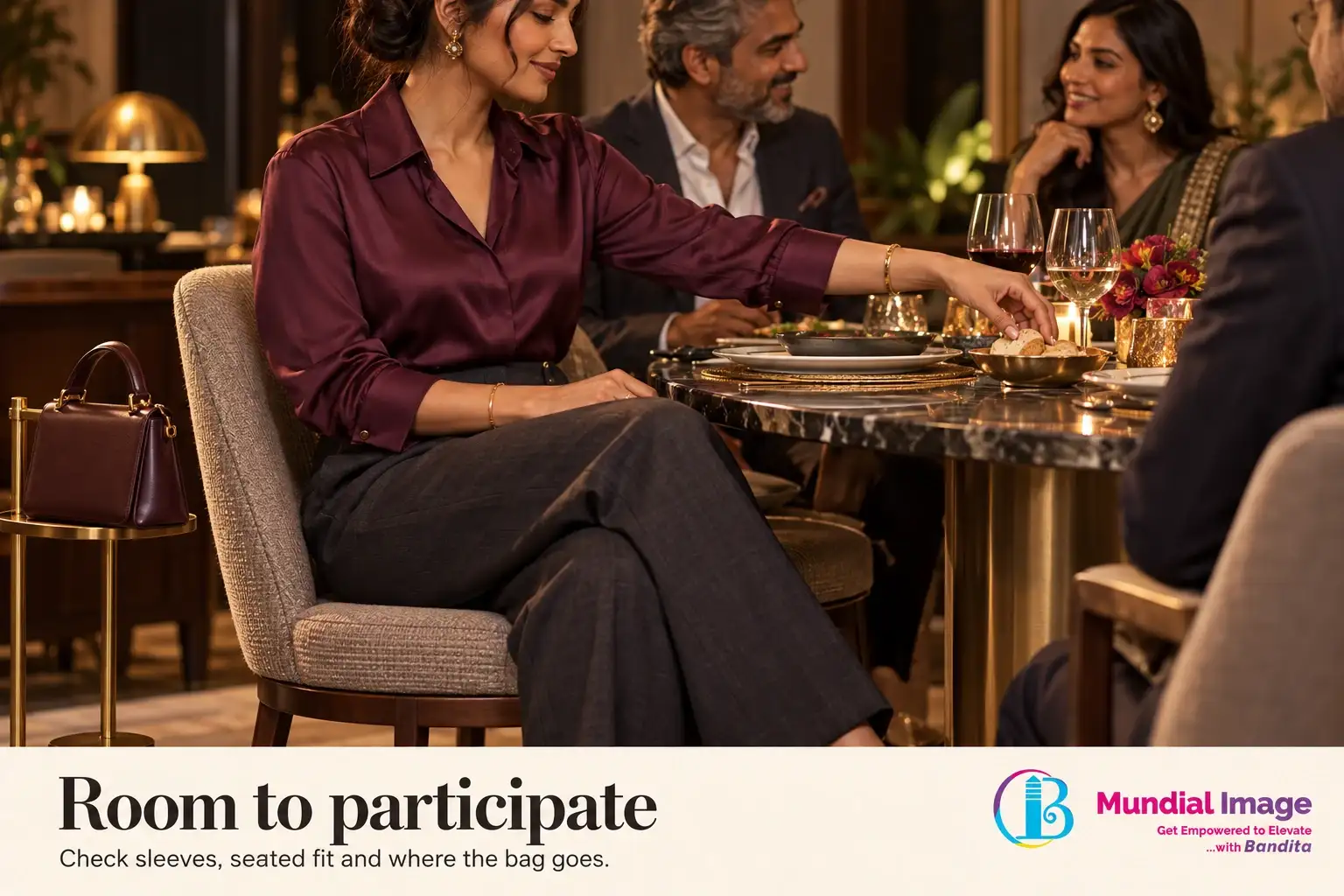
How much standing is involved? Can you reach comfortably? Where will your bag go? Have you tested the shoes for that duration?
Styling consequence
Choose proven footwear, sleeves that clear the table and a manageable bag. Check seated fit and rehearse the greeting. Your wardrobe should allow you to participate without constant adjustments.
20Room to participateCheck sleeves, seated fit and where the bag goes.
Fig. 20Room to participate
06
Act II · Add contextSide by side1 min
AI vs human styling: compare the work you need
Capabilities depend on the product, the consultant and the service scope.
There is no universal winner.
Highlight
AI vs human styling comparison matrix
Decision factor
AI styling tools
Human stylist or image consultant
Speed
Rapid iterations after setup
Requires consultation time; can narrow choices in conversation
Scale
Can work across large inventories
More attention per item; time is finite
Cost
Free and paid options; limits vary
Fees vary by scope and follow-up
Visual experimentation
Generates many directions quickly
Can edit options against observed preferences
Product discovery
Searches connected or accessible catalogues
May add local shops, tailoring and specialist sourcing
Body fit
Depends on measurements and product data; previews have limits
In-person assessment can check movement and alterations
Wardrobe context
Uses supplied or connected inventory
Can inspect wear, condition and why items are avoided
Professional stakes
Needs accurate role and audience information
Can investigate the occasion and rehearse with the wearer
Cultural sensitivity
Depends on specific context and reliable information
Depends on relevant experience and willingness to ask
Identity
Uses stated preferences and feedback
Can discuss conflicting preferences and changing priorities
Decision explanation
Can give reasons; those reasons need scrutiny
Can explain trade-offs and revise them with you
Ongoing strategy
Useful with updated records and feedback
Useful with follow-up and a realistic purchase plan
Privacy
Check provider settings and data practices
Agree consent, photo storage and confidentiality
Convenience
Available on demand; uploads take effort
Appointments take planning; hands-on help may reduce your work
07
Act III · Check realityPreview is not fit2 min
Are AI outfit generators and virtual try-on accurate?
Accuracy needs a definition. Recognising a blue shirt, rendering an appealing outfit and predicting the shirt’s fit are separate tasks.
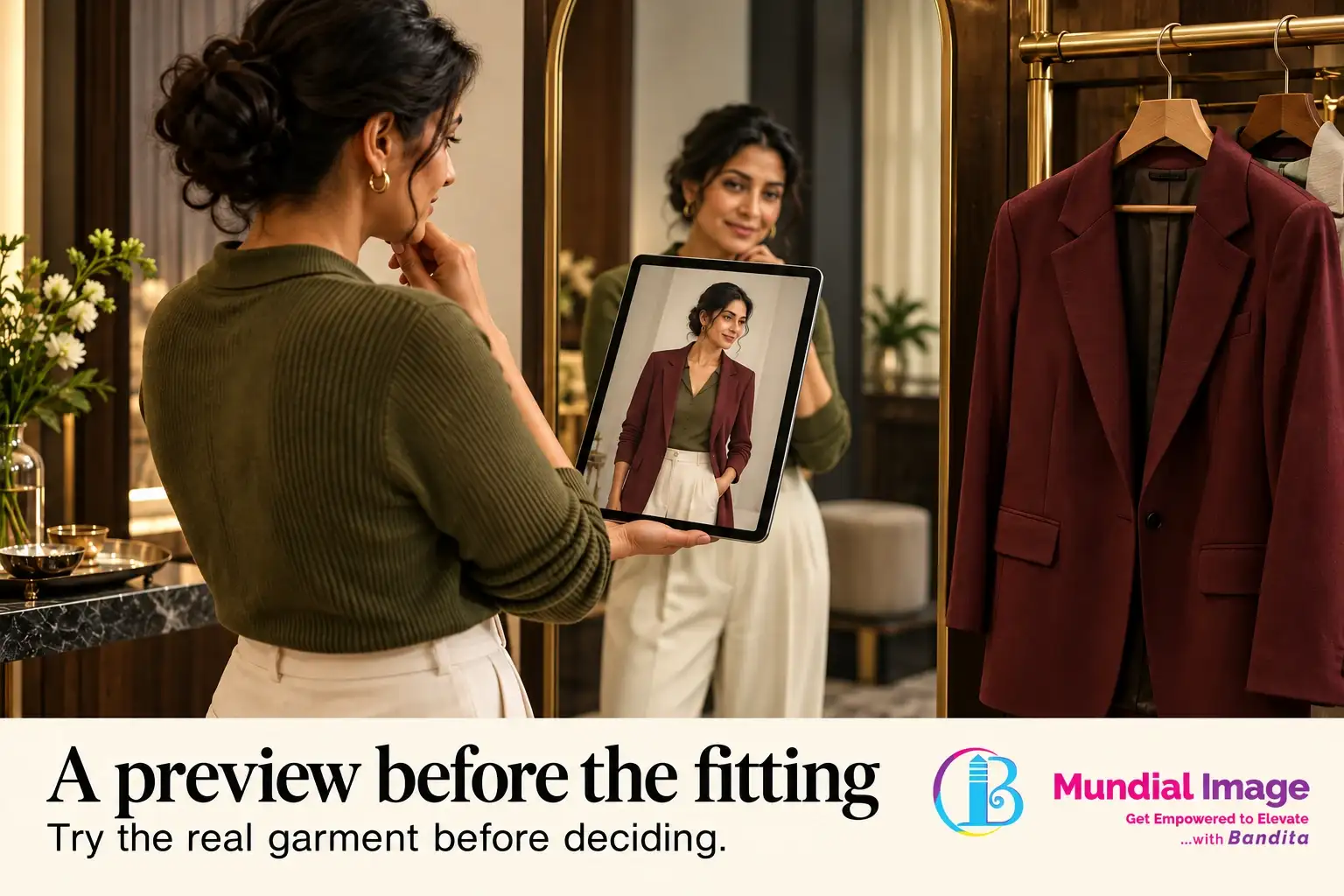
Google’s try-on documentation says generated images can contain errors in bodies and garment details. Its preview does not determine fit or recommend a size.
07A preview before the fittingTry the real garment before deciding.
Fig. 07A preview before the fitting
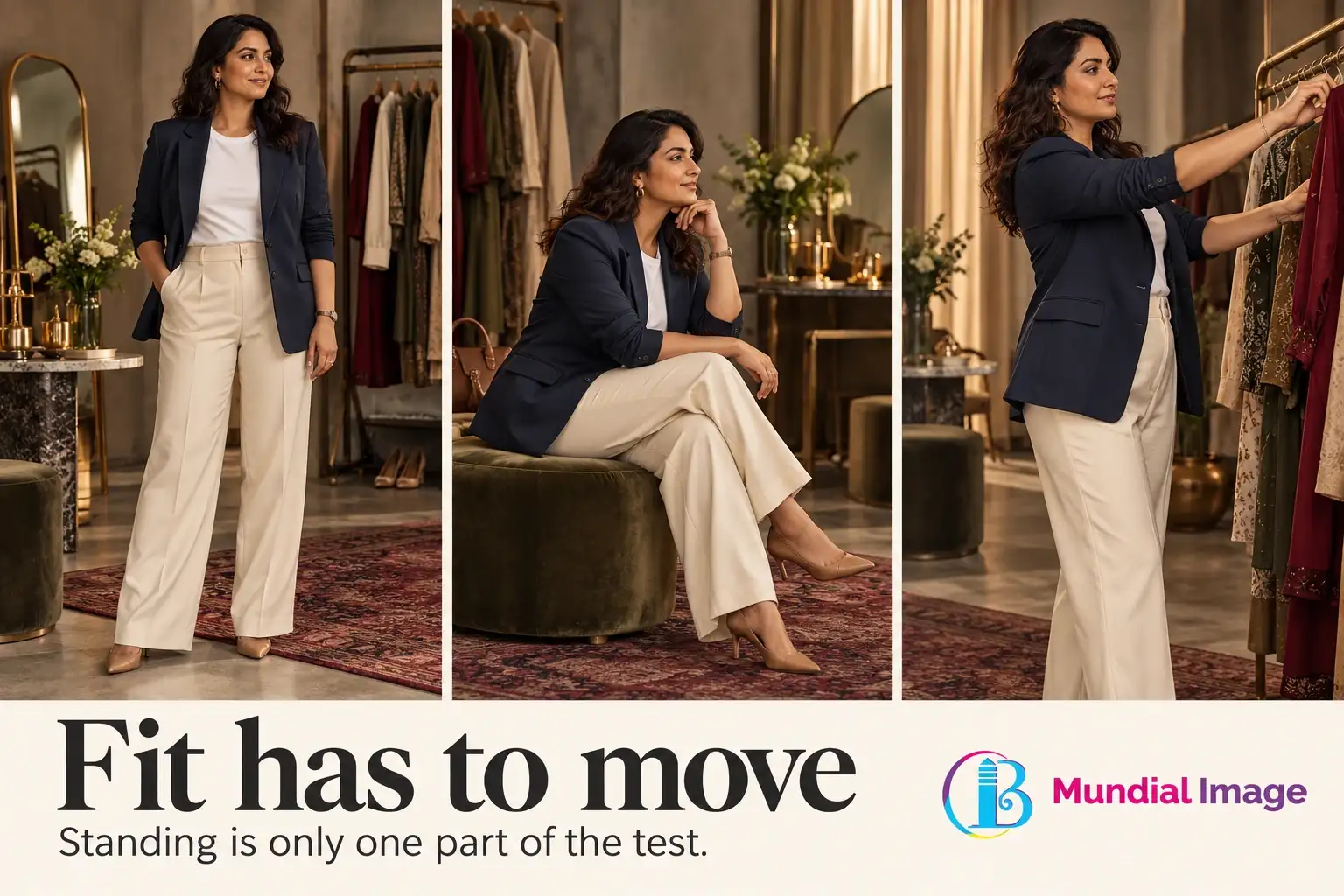
A convincing image cannot tell you whether a waistband will dig in after lunch.
Swipe for the second image
21Fit has to moveStanding is only one part of the test.
Fig. 21Fit has to move
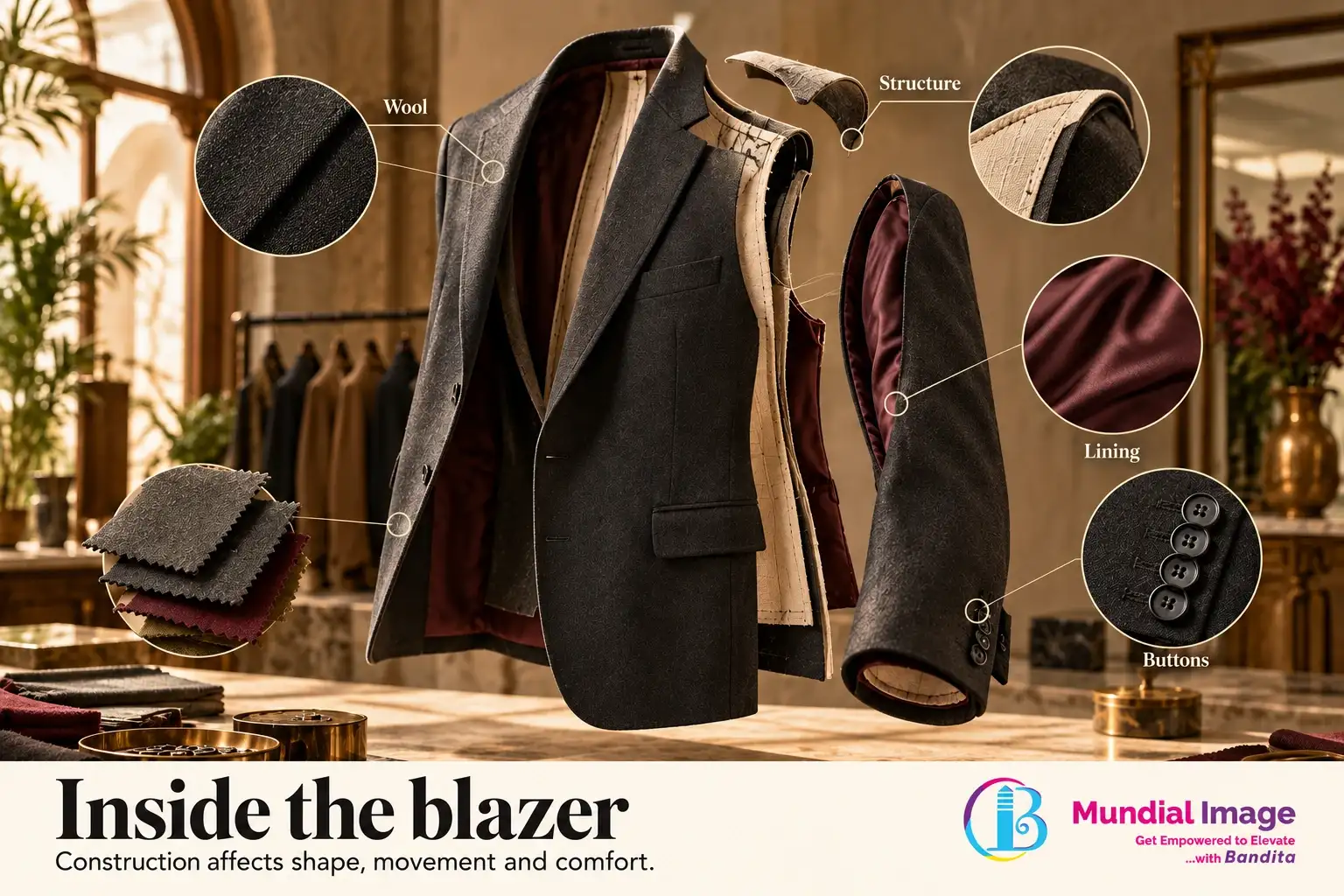
04Inside the blazerConstruction affects shape, movement and comfort.
Fig. 04Inside the blazer
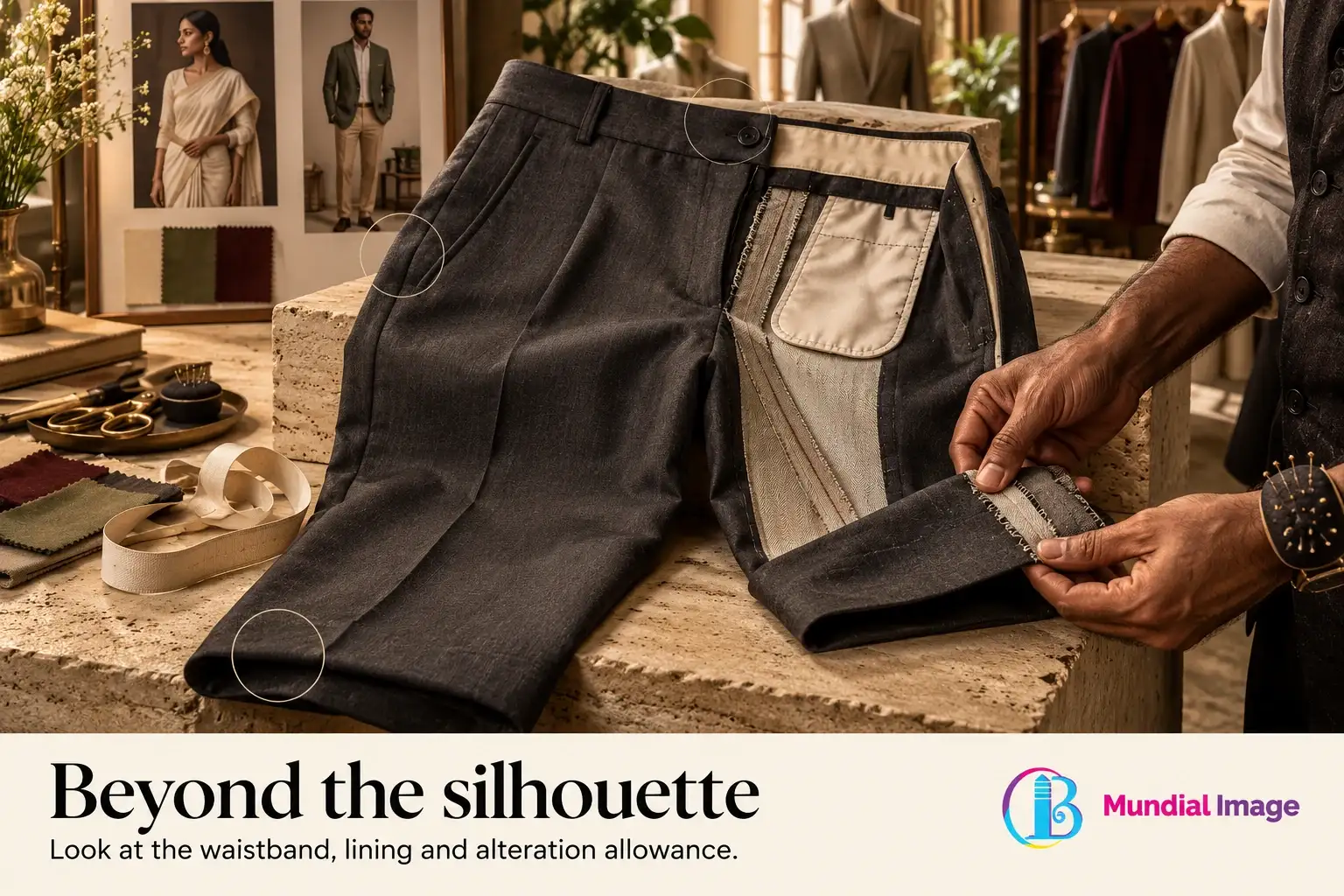
Check the product’s measurements against a garment you wear comfortably. For expensive purchases, examine fabric, fastening, lining and alteration options, and verify the return conditions.
22Beyond the silhouetteLook at the waistband, lining and alteration allowance.
Fig. 22Beyond the silhouette
Four failure points to check
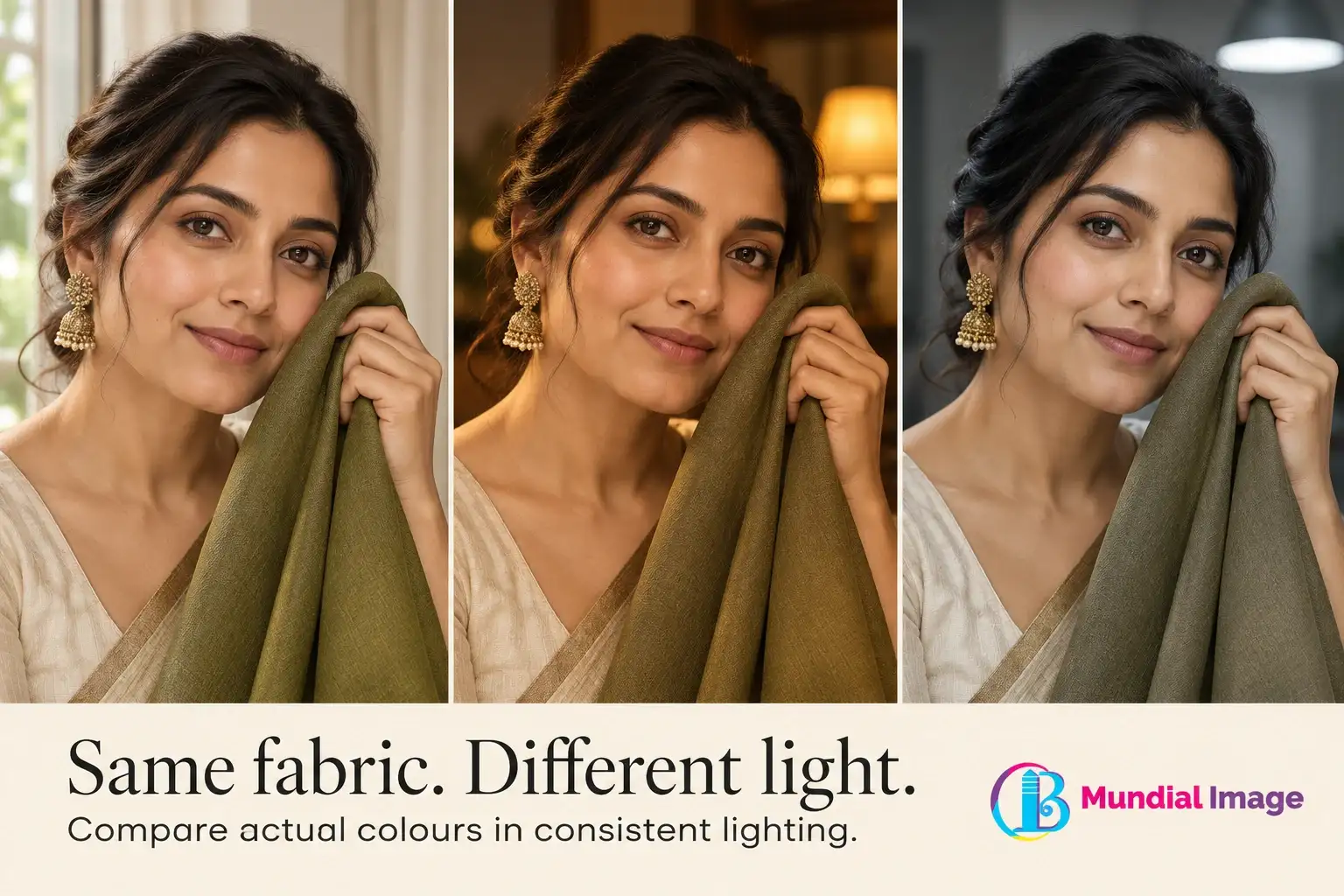
Colour can shift before AI sees the photograph. Lighting and camera processing affect the input; screens affect the output. Adobe’s colour-management guidance explains why colours can differ between devices. Treat a photo-based colour palette as a starting hypothesis. Compare actual fabrics near your face in consistent lighting before making a wardrobe-wide commitment.
Recommendations can become repetitive. A Reddit user reporting on daily work outfits described repeated items and ignored rotation restrictions. That anecdote is a reason to maintain an explicit wear log, not a verdict on every tool or current model.
Shopping results need checking. OpenAI acknowledges that shopping research can get details such as price and availability wrong. Open the retailer’s page before buying. A beautifully generated garment without a matching product listing is inspiration, not inventory.
The available catalogue shapes the answer. Check which retailers a service covers and whether links involve commercial relationships. Even a clearly disclosed, relevant recommendation may overlook a local tailor or something you own. Ask for a no-purchase option before accepting a shopping list.
Swipe for the second image
23Same fabric. Different light.Compare actual colours in consistent lighting.
Fig. 23Same fabric. Different light.
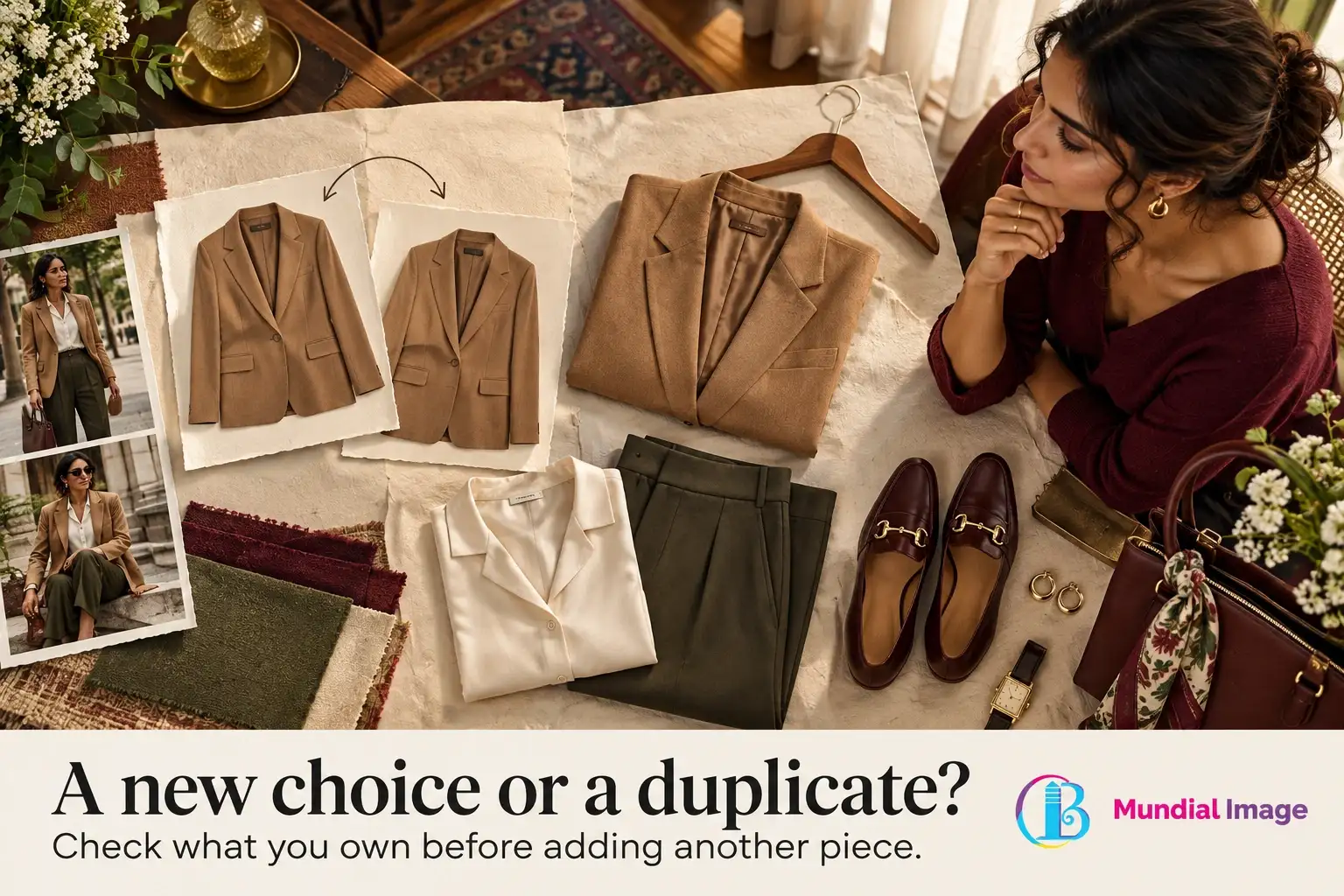
25A new choice or a duplicate?Check what you own before adding another piece.
Fig. 25A new choice or a duplicate?
A weak brief also encourages familiar defaults: “professional” becomes a generic blazer, “festive” becomes embellishment. Require the recommendation to explain its assumptions about the event. Those assumptions can be corrected before money is spent.
Pop quiz
Check what stayed with you
Four questions from this chapter. Tap a card to see the answer.
01Does Google’s shopping try-on recommend your size?Tap to check
No. Google says its preview does not determine fit or recommend a size. Check the measurements against a garment you already wear comfortably.
02How far should you trust a colour palette built from one selfie?Tap to check
As a starting hypothesis. Lighting, camera processing and screens all shift colour. Hold real fabric near your face in consistent light before you commit.
03A generated outfit has no matching product listing. What is it?Tap to check
Inspiration, not inventory. Open the retailer’s page before you plan a day around it.
04Why can an assistant keep suggesting the outfit you wore on Monday?Tap to check
It has no record of Monday. Keep a simple wear log and paste it into the brief.
08
Act IV · Brief betterStart small1 min
How to brief an AI stylist properly
Swipe for the second image
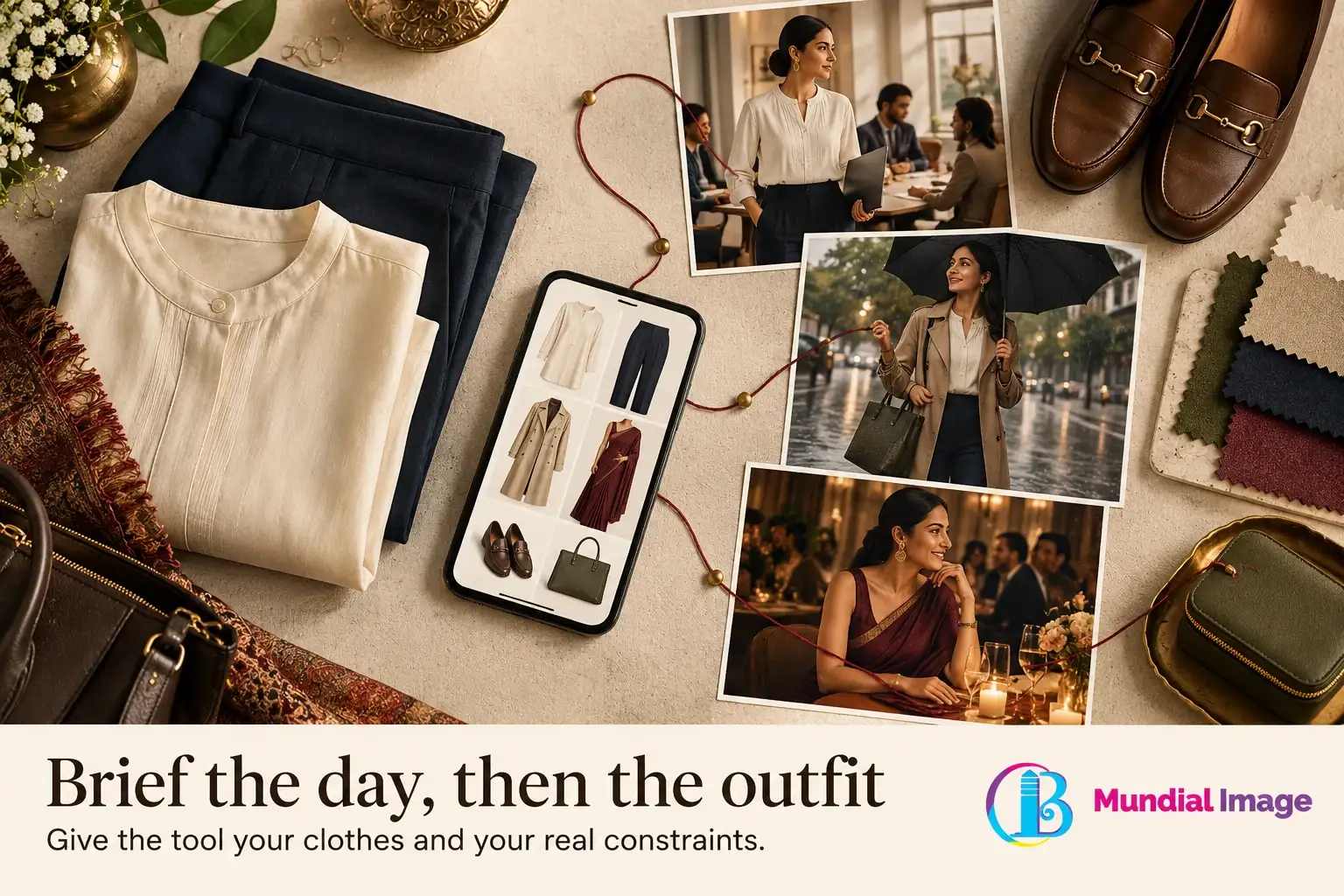
26Brief the day, then the outfitGive the tool your clothes and your real constraints.
Fig. 26Brief the day, then the outfit
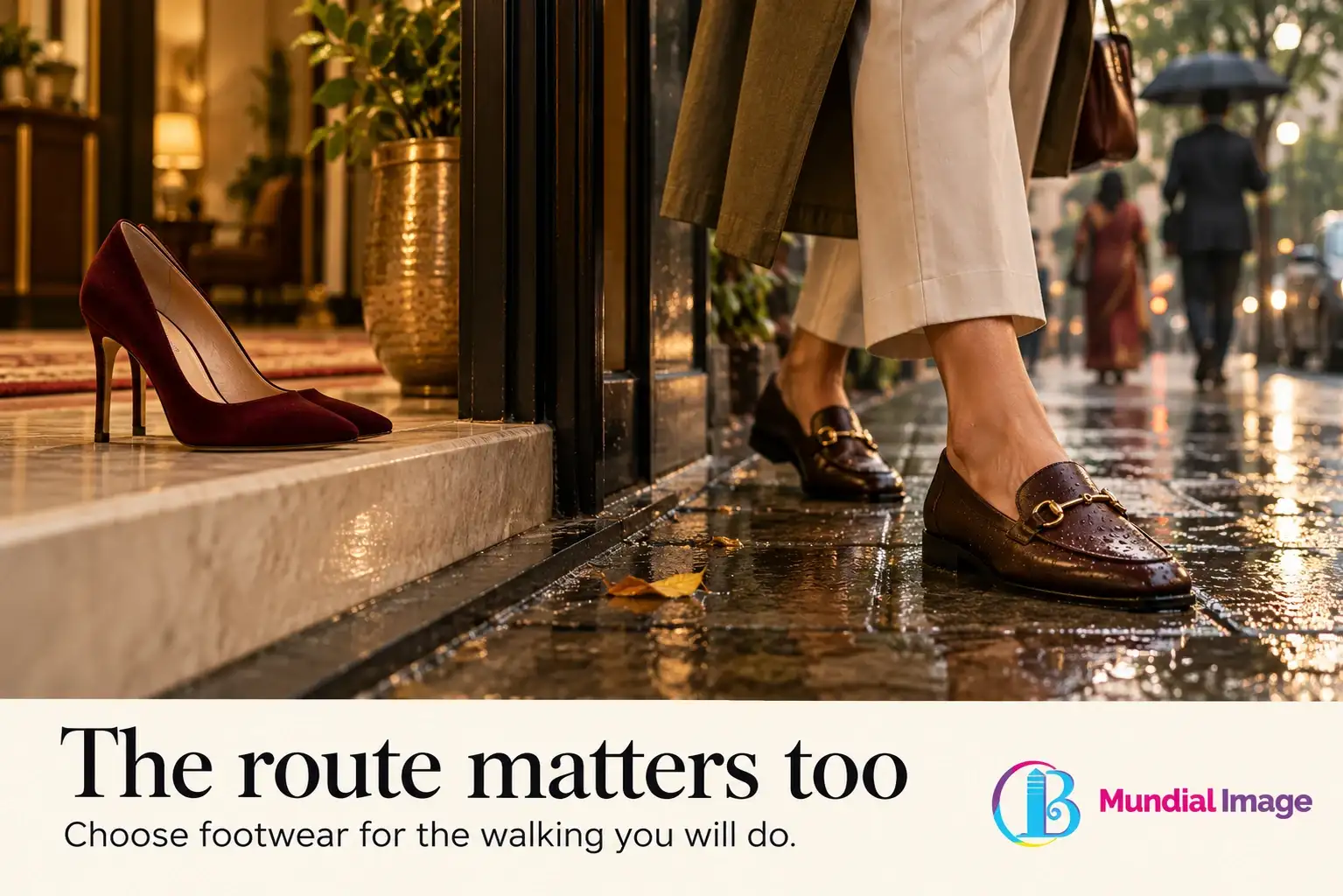
24The route matters tooChoose footwear for the walking you will do.
Fig. 24The route matters too
Start with a small, accurate inventory rather than photographing your entire wardrobe at once.
Your brief0 of 5
1
Define the day. Include your role, goal, audience, dress code, location, weather and time on your feet. Describe observable expectations rather than labelling people.
2
Show the available clothes. Use clear, unfiltered photographs, item IDs and written descriptions. Add fit or fabric details the photograph cannot establish. Mark anything unavailable.
3
State boundaries. Give a total budget, preferred coverage, footwear needs, disliked textures and shopping restrictions. Include what you want to keep expressing.
4
Request a reasoned shortlist. Ask for two options using those item IDs, the trade-off in each, and the unanswered questions that could change the choice.
5
Wear-test the result. Sit, walk, reach and check the relevant lighting. Verify purchases with the seller. Record what worked so the next recommendation has better evidence.
09
Act IV · Brief betterWritten to be copied1 min
Useful prompts for real wardrobe decisions
Workwear
Plan two outfits from my attached inventory for tomorrow’s client review. I am presenting, then commuting on foot for 20 minutes. Use the event details and comfort notes provided. Ask about any missing dress-code information first. Give item IDs and explain the trade-off in each option.
Wardrobe remix
Use only the listed clothes and shoes. Build four wearable combinations around item T04. Exclude items marked unavailable and the combinations in my recent wear log. Do not add shopping suggestions. Identify any combination you cannot judge from these photographs.
Travel packing
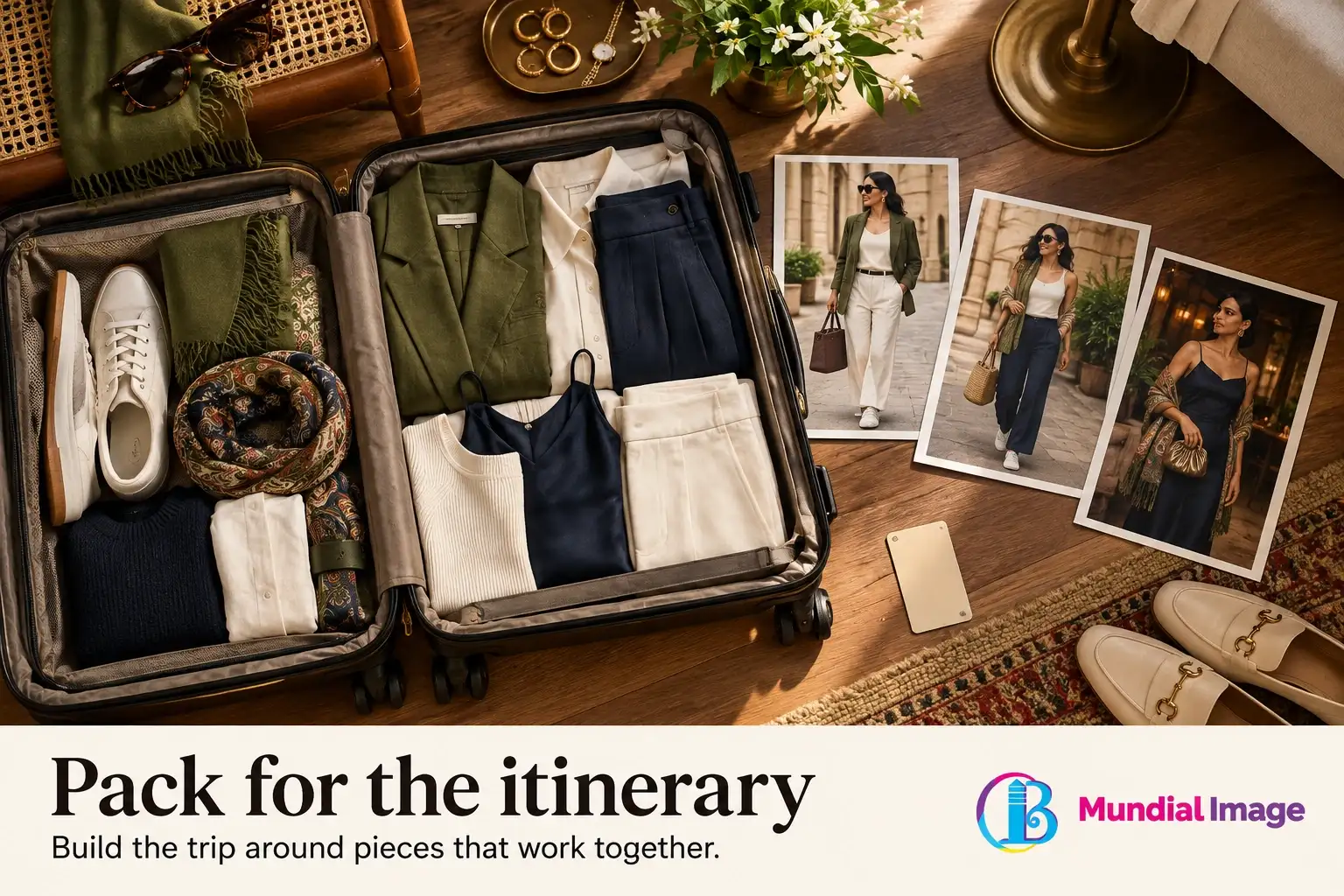
Build a packing list from this inventory for the attached itinerary. Account for laundry access, planned activities, weather information and luggage limits. Show which pieces serve each day and identify the outfit with the least flexibility if plans change.
28Pack for the itineraryBuild the trip around pieces that work together.
Fig. 28Pack for the itinerary
Occasion dressing
Help me style this outfit for the attached invitation. Before recommending accessories, ask about my role, the host’s guidance, ceremony, venue, movement and comfort. Do not infer cultural rules from the event label alone.
Shopping evaluation
Compare this garment with what I already own. Show two outfits it would complete, any likely duplication, and what I need to verify about measurements, fabric, availability and returns. Include the option of buying nothing. Separate verified product facts from suggestions.
How to use these
Paste any of these into ChatGPT or Gemini with your inventory attached, then answer the questions it asks back before you accept an outfit.
10
Act IV · Brief betterShare only what helps1 min
Is it safe to upload wardrobe or body photographs?
Start with garment-only images when they answer the question. Remove visible addresses, work badges and other people. A full-body photograph is unnecessary for many colour-combination or packing tasks.
Before you upload
Photograph the garment on its own first. Leave out addresses, work badges and other people, and read the privacy controls before anything leaves your phone.
Policies differ by feature. Google says photos used in its shopping try-on experience are not used for training. Gemini Apps has separate rules: its privacy hub describes how uploads, activity settings and human review interact. Do not assume every Google feature handles a photograph identically.
In ChatGPT, turning off “Improve the model for everyone” prevents new conversations from being used for model training. Temporary chats are not used for model improvement while temporary and may be retained for up to 30 days for safety. Feedback and connected services have their own implications. Read the controls before uploading personal photographs.
27Share only what helpsGarment-only photographs may answer the question.
Fig. 27Share only what helps
11
Act V · Prepare for the roomWhere a person helps1 min
When a human stylist or image consultant becomes more useful
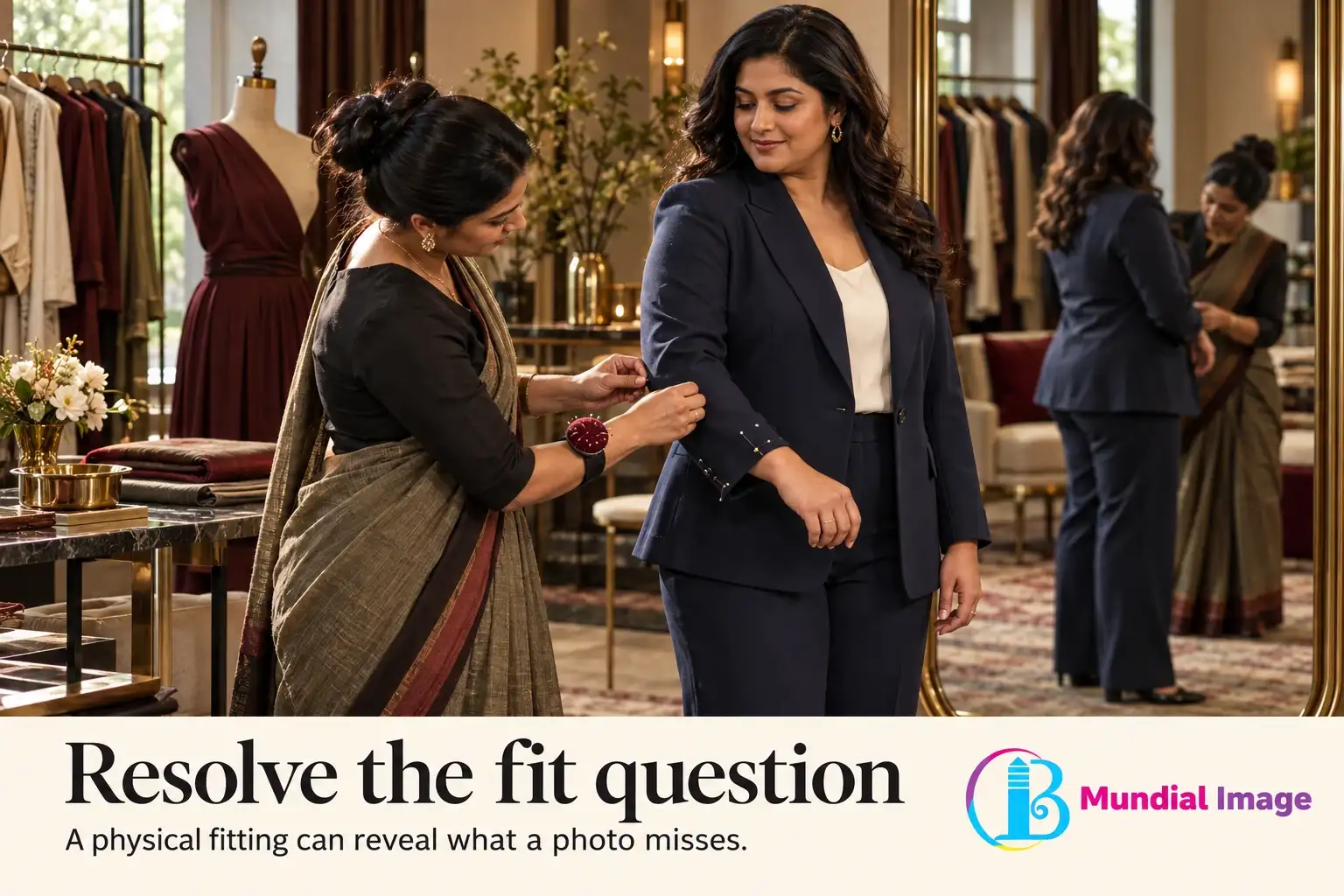
Consider a consultation when repeated mistakes have a cause you cannot identify, when clothing fit requires physical assessment, or when a major change in role or lifestyle makes your existing wardrobe difficult to use.
The useful output should be concrete: which items need alteration, which purchases can wait, what fits the occasion, and how to repeat successful combinations. For an important public appearance, it may include a rehearsal with the actual shoes, microphone, grooming and accessories.
Someone seeking executive presence support may also need help with introductions or participation at a business dinner. Matching garments covers only part of that brief. Ask a consultant how they will investigate your situation and explain their decisions; credentials alone do not answer that question.
29Resolve the fit questionA physical fitting can reveal what a photo misses.
Fig. 29Resolve the fit question
When AI is enough
Everyday experimentation with a small, accurate brief
Exploring combinations from clothes you already own
Finding a similar neckline or comparing available colours
When context deserves human judgment
Repeated mistakes have a cause you cannot identify
Clothing fit requires physical assessment
A major change in role or lifestyle makes your existing wardrobe difficult to use
An important public appearance needs a rehearsal
12
Act V · Prepare for the roomQuick answers1 min
Frequently asked questions
Can ChatGPT choose outfits for me?
Yes. Give it an accurate inventory, an occasion and your constraints. Ask it to use item IDs and flag missing information. Try on the proposed outfit before relying on its recommendation.
Can AI tell me what clothes suit me or identify my body type?
It can suggest visual directions from photographs and preferences. A body-type label inferred from an image is an estimate, not a measurement. Use actual garment fit, movement and your chosen proportions to evaluate the advice.
Which AI can style clothes?
Different tools serve different tasks. Acloset works with a digital wardrobe; ChatGPT and Gemini support conversational suggestions and shopping research or discovery; Google offers virtual try-on for eligible products. Select the function you need and check current availability.
Can AI analyse my wardrobe and plan a capsule?
Yes, if you supply a usable inventory and practical constraints. Include laundry, climate, repeat-wear preferences and unavailable items. Test the proposed combinations before removing clothes or buying missing pieces.
Will AI replace personal stylists?
There is no reliable basis for predicting that it will replace the profession as a whole. AI can handle parts of outfit ideation and organisation. Fit assessment, contextual consultation and implementation involve additional inputs and responsibilities.
Is virtual try-on accurate enough to choose a size?
Do not assume so. Check the particular tool’s stated purpose. Google’s shopping try-on is a visual preview, not a size recommendation. Use garment measurements and the retailer’s sizing information, then check fit physically where possible.
13
Act V · Prepare for the roomOne last check1 min
Before you wear the recommendation
Ask what fact would make you change the outfit. If the answer is the host’s expectations, the walking involved or the way the jacket feels when seated, check that fact before requesting another image.