Skip to content
Studio in Andheri East, Mumbai
WoMundial+91 77381 51668Mon to Fri, 10 to 6 IST

GuideVijayadashami · Tuesday 20 October 2026

Dussehra Outfit Ideas 2026: One Day, Many Rooms.

What to wear for puja, office celebrations, family visits and Ravan Dahan, with a practical check for each stop of the day and ways to rewear what you already own.

20 min readBy Mundial Image
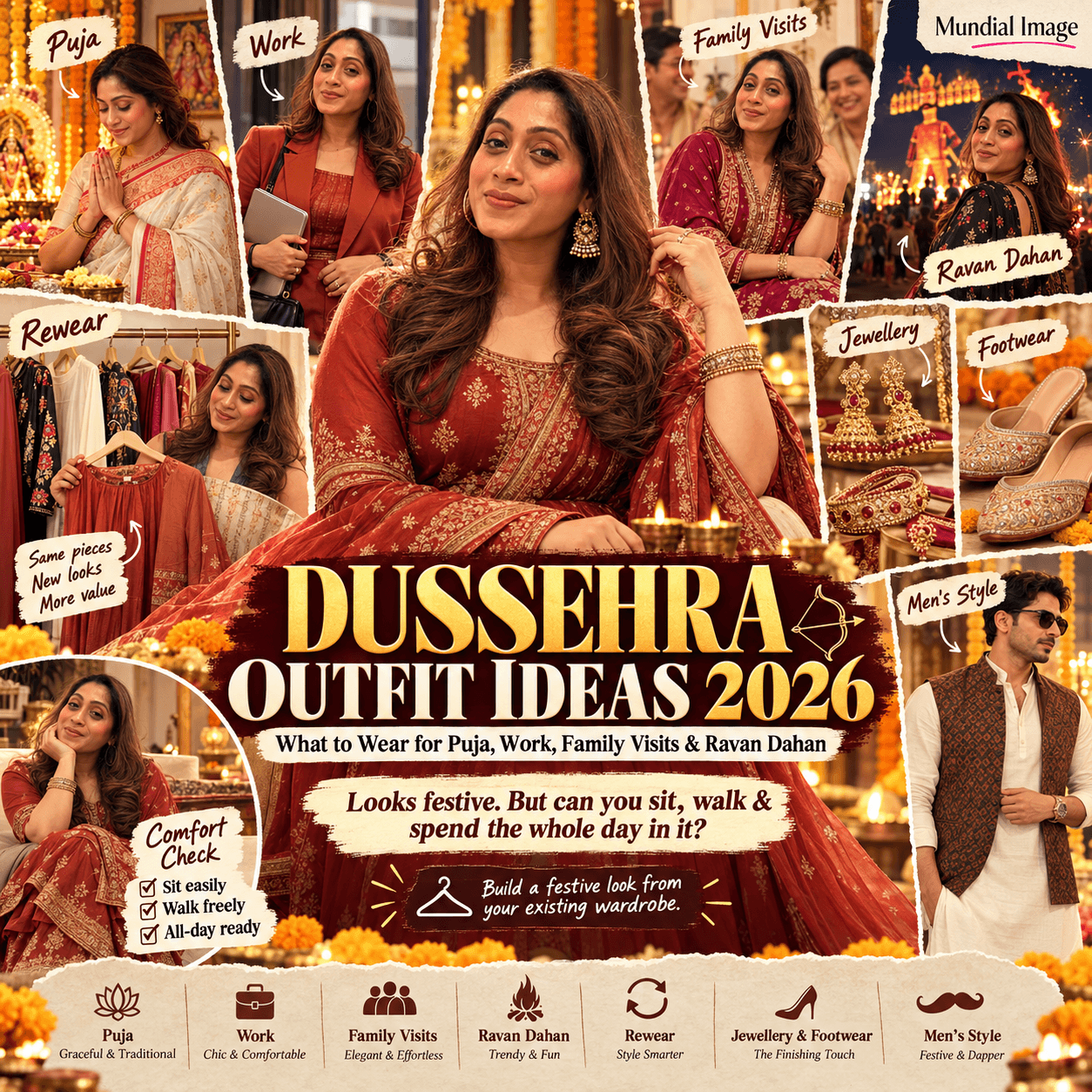
Dussehra Outfit Ideas 2026 cover: One Day, Many Rooms.
One Day, Many Rooms

The outfit looks settled until someone says, “We’re walking from here.”

Now the long hem, unfamiliar shoes and dupatta you have been holding for photographs have an actual job to do. Earlier, they only had to look good outside the house.

Dussehra dressing becomes easier when the whole day reaches the wardrobe. A morning puja, office celebration, family lunch and outdoor evening ask different things of the same clothes.

Start with the part that is hardest to dress for. You can add earrings later; you cannot make a restrictive waistband comfortable halfway through lunch.

01The short answer

What should you wear for Dussehra in 2026?

The answer

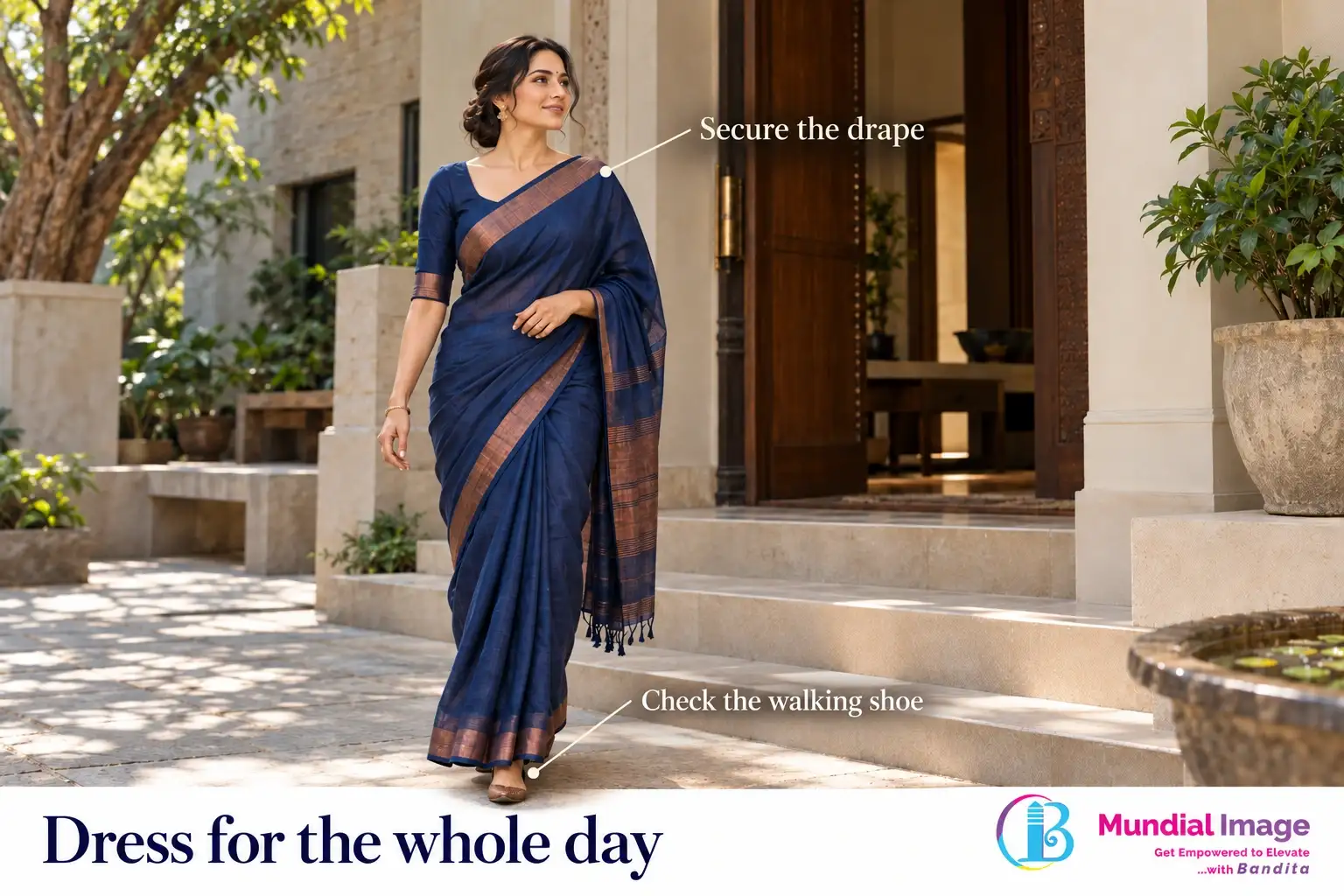
For Dussehra, choose a saree, kurta set, festive separates or a kurta with trousers that suits your plans and local customs. For outdoor events, prioritise a clear hem, secured drapes and proven walking shoes. Add jewellery or a removable layer for a dressier gathering. No single outfit or colour suits every celebration.

  • Hem firstCheck clearance on the walk, not the mirror.
  • Shoes before silhouettePick the footwear your longest stop needs.
  • One layer, not fiveA jacket or dupatta changes the whole look.
  • Test before the daySit, walk and climb in the full outfit.
Woman in an indigo saree at a home entrance, with callouts to the secured drape and walking hem.
One Day, Many Rooms

Dussehra falls on Tuesday, 20 October 2026, according to Incredible India’s festival listing.

Confirm local ceremony and event timings separately. An office celebration may happen on a different day; a Tuesday date does not mean everyone will be working.

02Plan the day

Plan the most demanding part of the day first

Write down the actual stops, including travel. If there is no Ravan Dahan in your plans, there is no reason to build the outfit around one. If the evening includes a long walk, select the shoes before deciding the trouser or saree hem.

  1. RequirementsVenue rules, household custom and work policy.
  2. ActivitySitting, standing, walking, carrying or hosting.
  3. BasePick the silhouette that fits that activity.
  4. ColourGarment, layer or small accent.
  5. FinishJewellery, hair and shoes, tested together.
SettingClothing decisionDetails that need a test
Work or office celebrationFollow the workplace brief; choose restrained festive detail if appropriateDesk-friendly sleeves and jewellery; comfortable seated fit; client meetings
Puja or temple visitCheck the household or temple’s expectationsSitting, bending, shoe removal, and keeping drapes clear of lamps
Family gatheringChoose the level of dress that fits the host and your roleServing food, carrying children, sitting after a meal
Community functionEstablish whether you are attending, hosting or appearing on stageWalking route, microphone if used, layers, visibility in photographs
Outdoor celebration or Ravan DahanLet terrain, crowd movement and venue rules leadHem clearance, stable shoes, manageable bag and secured loose ends
DinnerMatch the invitation and venueSeated comfort, sleeves near food and the journey home

A highly formal dinner may justify changing. Trying to make one outfit cover incompatible dress codes can create more work than packing a second set. The useful question is whether the base remains suitable at every stop.

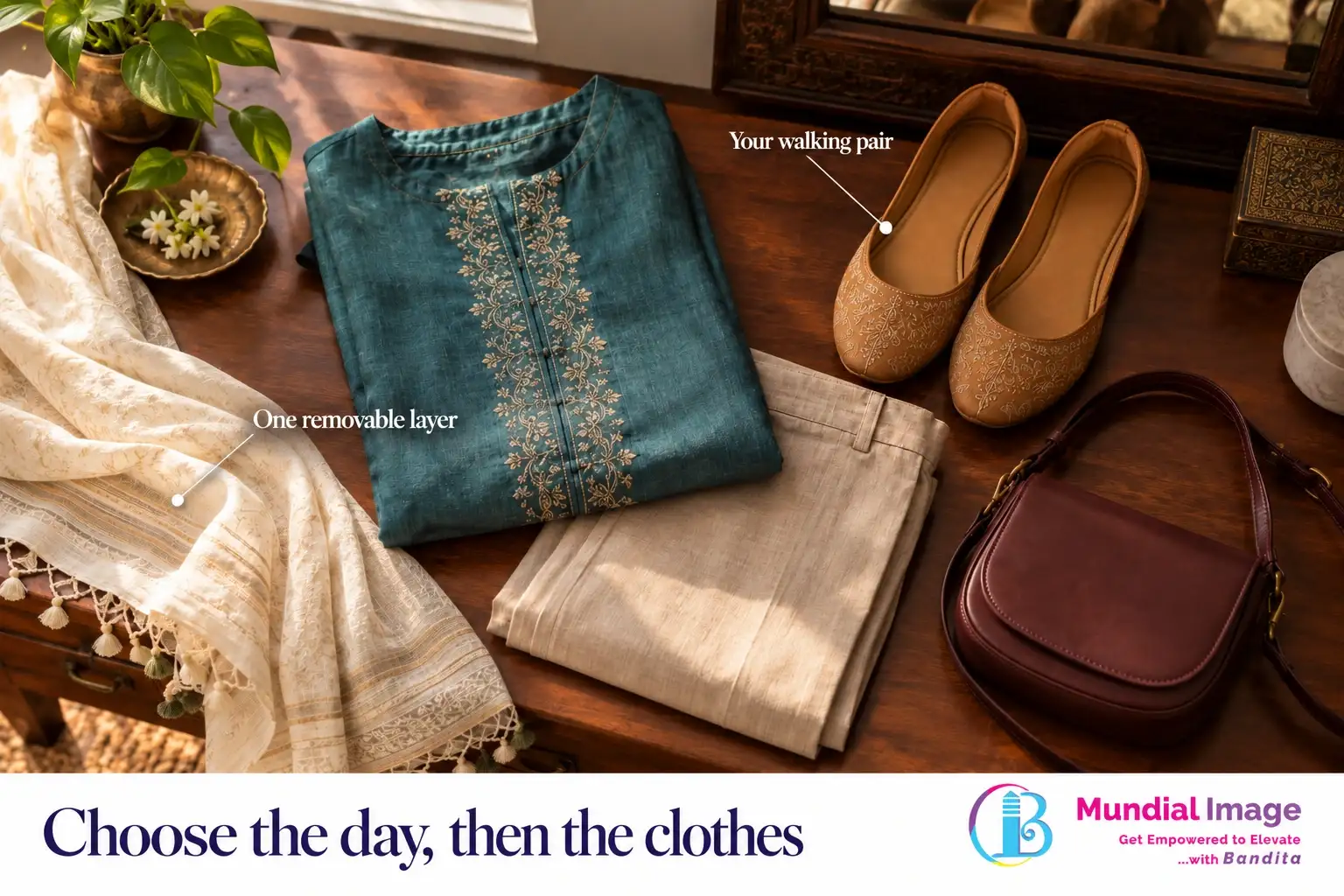
Teal kurta, cream fabric, neutral shoes and a compact bag laid out for a day with several stops.
A Wardrobe Chosen for the Itinerary

03Regional context

Vijayadashami and Dasara: start with the local celebration

These names open different cultural contexts as well as different searches. The following distinctions describe celebrations. The clothing suggestions are editorial recommendations, not religious rules.

North India

Ramlila and Ravan Dahan settings

Effigy burning is a prominent part of many celebrations, including Delhi’s, as described by Incredible India.

For a public-ground visit, dress for the approach road and standing area. A formal outfit for a private gathering need not be your outdoor outfit.

Gujarat

Garba nights and tenth-day observances

Gujarat Tourism distinguishes the preceding nights of garba from tenth-day observances, including vehicle puja.

Rewearing a bandhani dupatta or embroidered jacket can acknowledge your festive wardrobe without repeating an entire dance outfit. Follow the household’s practice rather than assuming another garba night.

Maharashtra

Leaf exchange and visits

The state tourism department describes leaf-exchange and other local Dussehra customs.

If the day involves visits, choose clothes that stay comfortable through repeated sitting and travel. A familiar saree or kurta ensemble may serve better than something you are learning to manage that morning.

Bengal

Bijoya Dashami

Durga Puja culminates in immersion on its tenth day, documented by UNESCO.

Your plans might include a household gathering, a pandal visit or a procession. Ask about participation and local expectations.

Do not treat a ritual as a photographic accessory or a red-and-white ensemble as compulsory for every guest.

Karnataka and the South

Dasara processions and Vidyarambham

Mysuru Dasara includes processions and cultural programmes.

Meanwhile, Kerala Tourism describes Vijayadashami’s Vidyarambham learning initiation.

A procession spectator and a parent helping a child sit for a ceremony face different clothing decisions. Confirm the specific event rather than assigning one dress code to South India.

Elsewhere

Kullu and other calendars

Kullu Dussehra begins on Vijayadashami and continues afterwards. A one-evening Ravan Dahan checklist cannot represent every regional celebration.

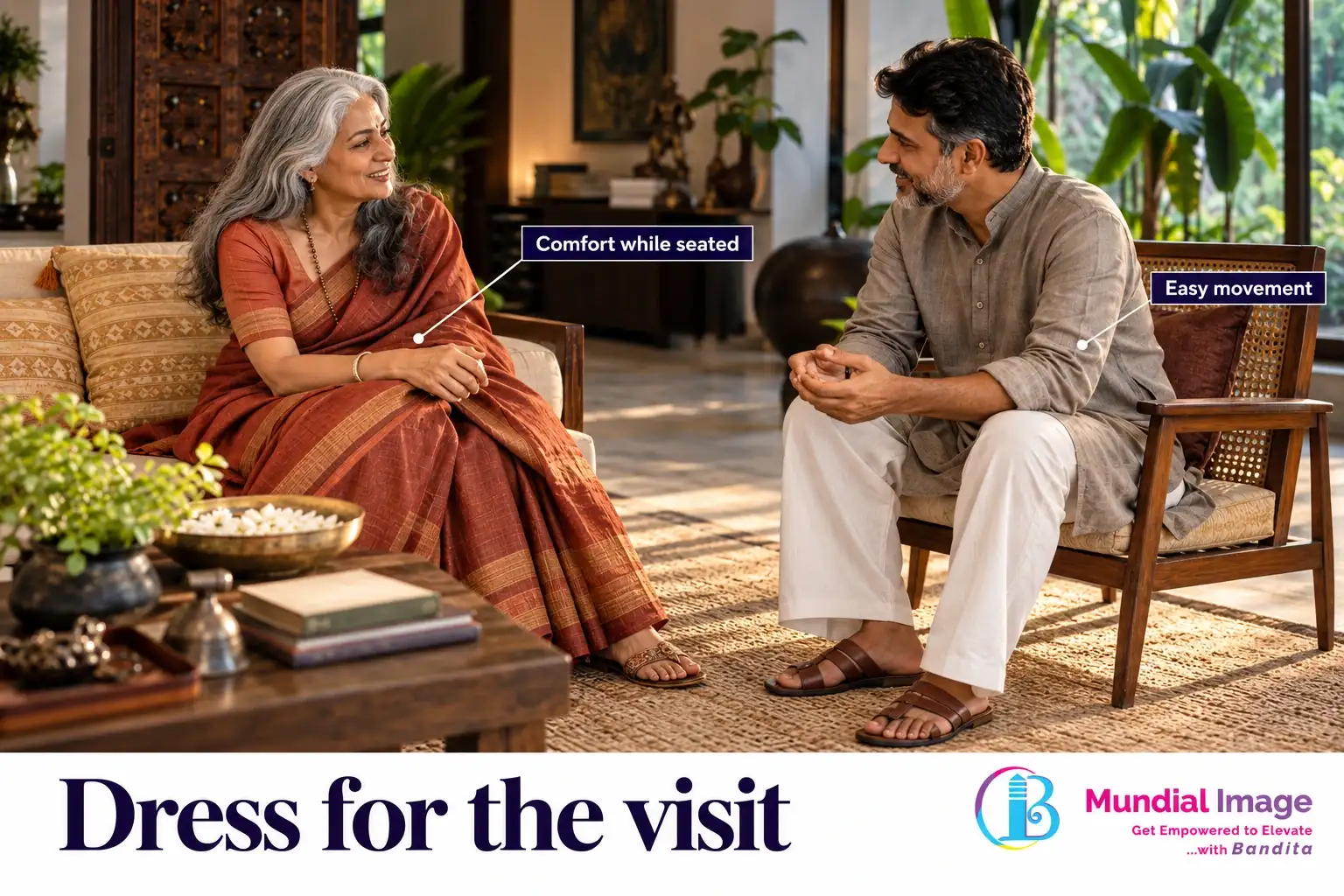
Two adults in understated Indian clothing seated for a relaxed home visit.
A Quiet Home Visit

04For women

Dussehra outfit ideas for women

Sarees: choose the drape you can live in

For a Dussehra saree, start with how much walking and sitting you expect. A familiar cotton or cotton-silk option can work for a daytime home visit.

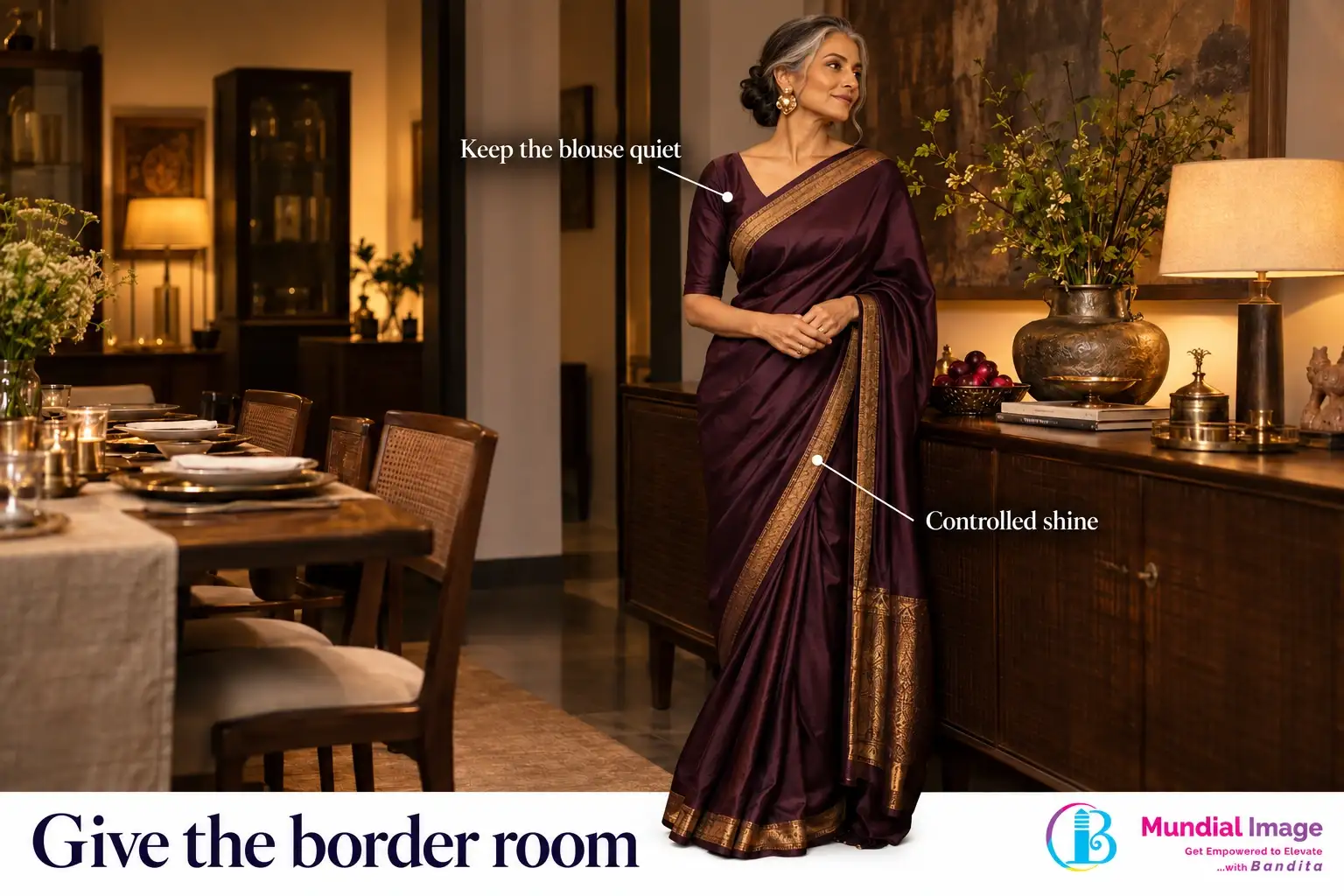
For a dressier indoor gathering, consider a silk saree, a more prominent border or a blouse with deliberate detail. The weave name alone does not establish weight, comfort or formality.

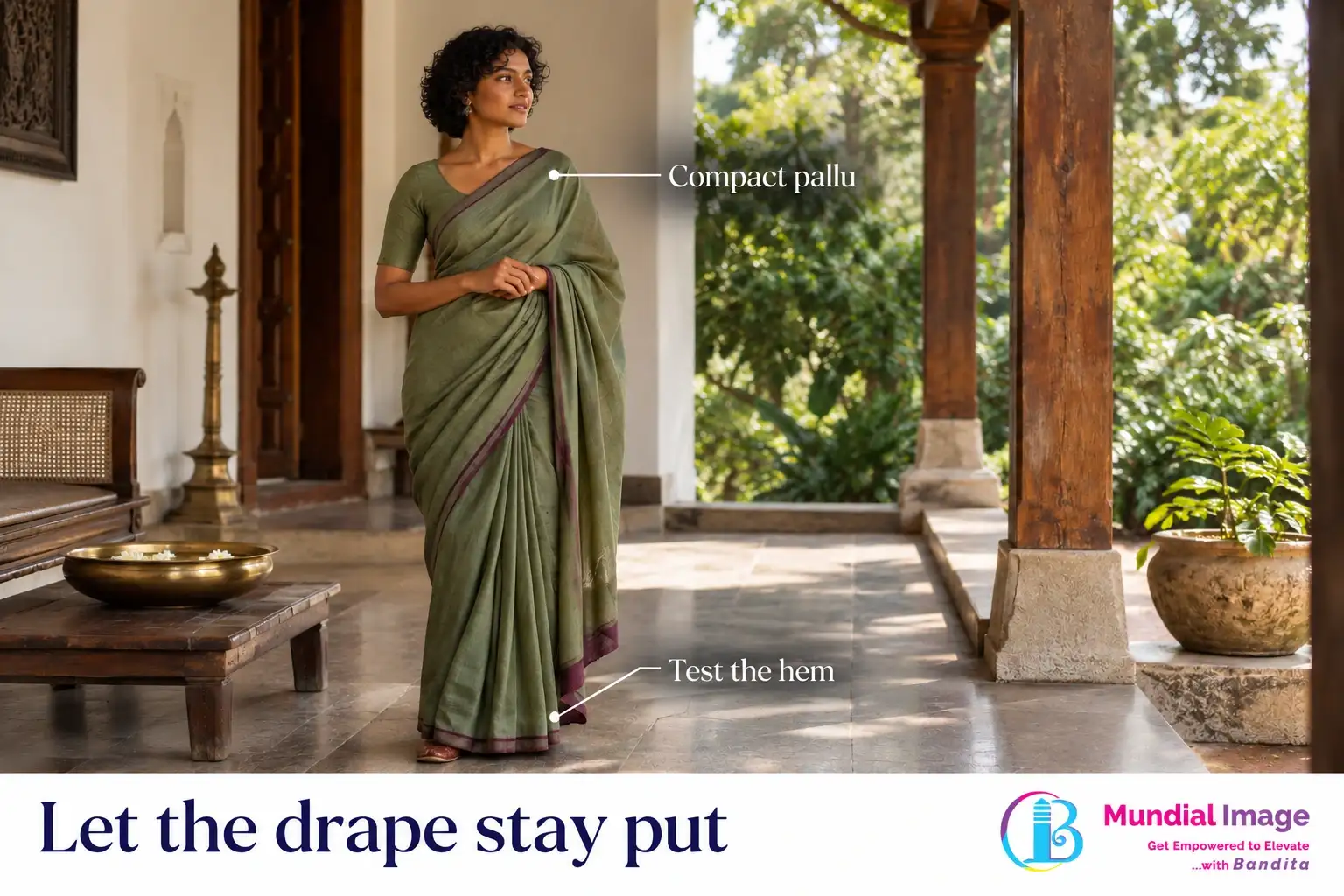
Woman in a muted green saree with a contained pallu and hem clearing the floor.
Daytime Saree and Secure Drape

Try the blouse while reaching forward. Check the petticoat or underskirt waistband after sitting. Set the hem with the shoes you will actually wear, and secure the pallu in a way that respects the textile.

A stiff saree that needs constant repositioning may be less useful than the one already worn comfortably several times.

Woman in a wine-coloured evening saree with a restrained reflective border.
An Evening Saree with Measured Shine

Kurta sets and suits: inspect the parts, not the set

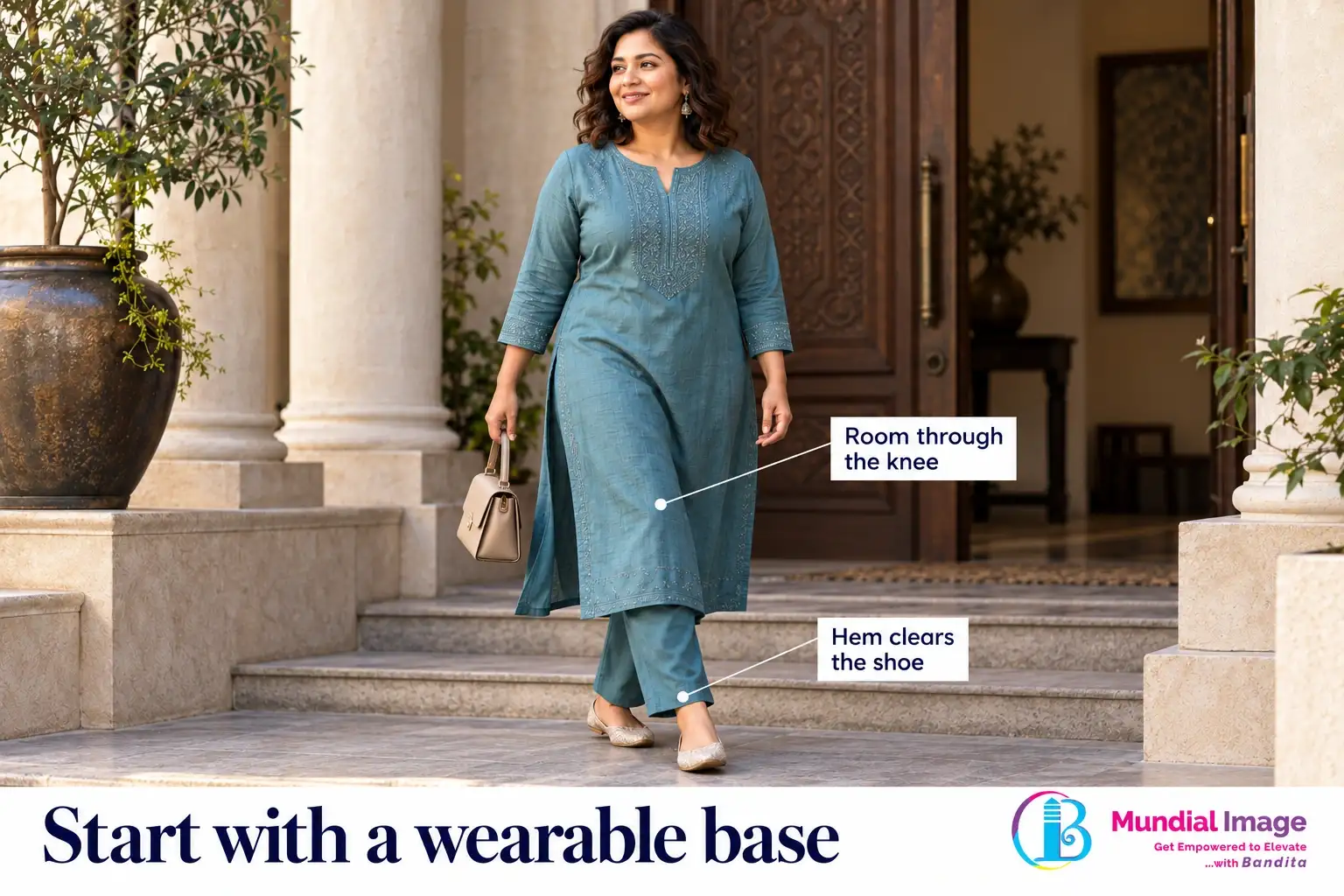
A straight kurta with relaxed trousers is a flexible starting point for mixed plans. An A-line kurta gives a different silhouette without necessarily adding a large sweep.

A salwar can offer seated ease; narrower trousers give a cleaner line but need enough room through the knee.

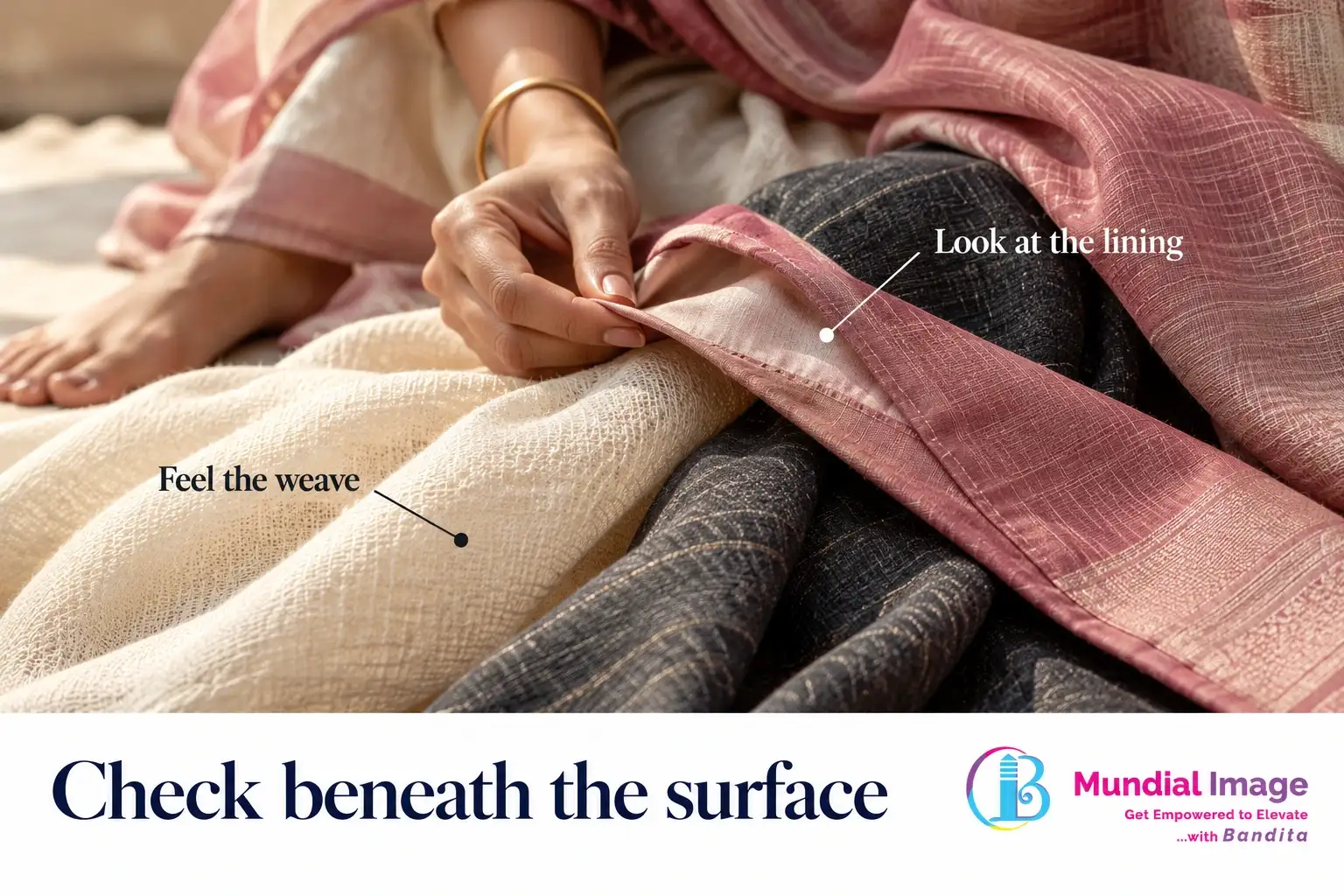
Before choosing a Dussehra suit, check its lining, armholes and waistband. Light-looking embroidery can sit on a warm, dense lining. A dupatta may add the desired colour or coverage, but its management matters.

Decide how it will stay in place while your hands are occupied.

Woman walking in a teal kurta set with relaxed trousers and clear ankle hems.
The All-Day Kurta Set

Anarkalis, shararas and skirts

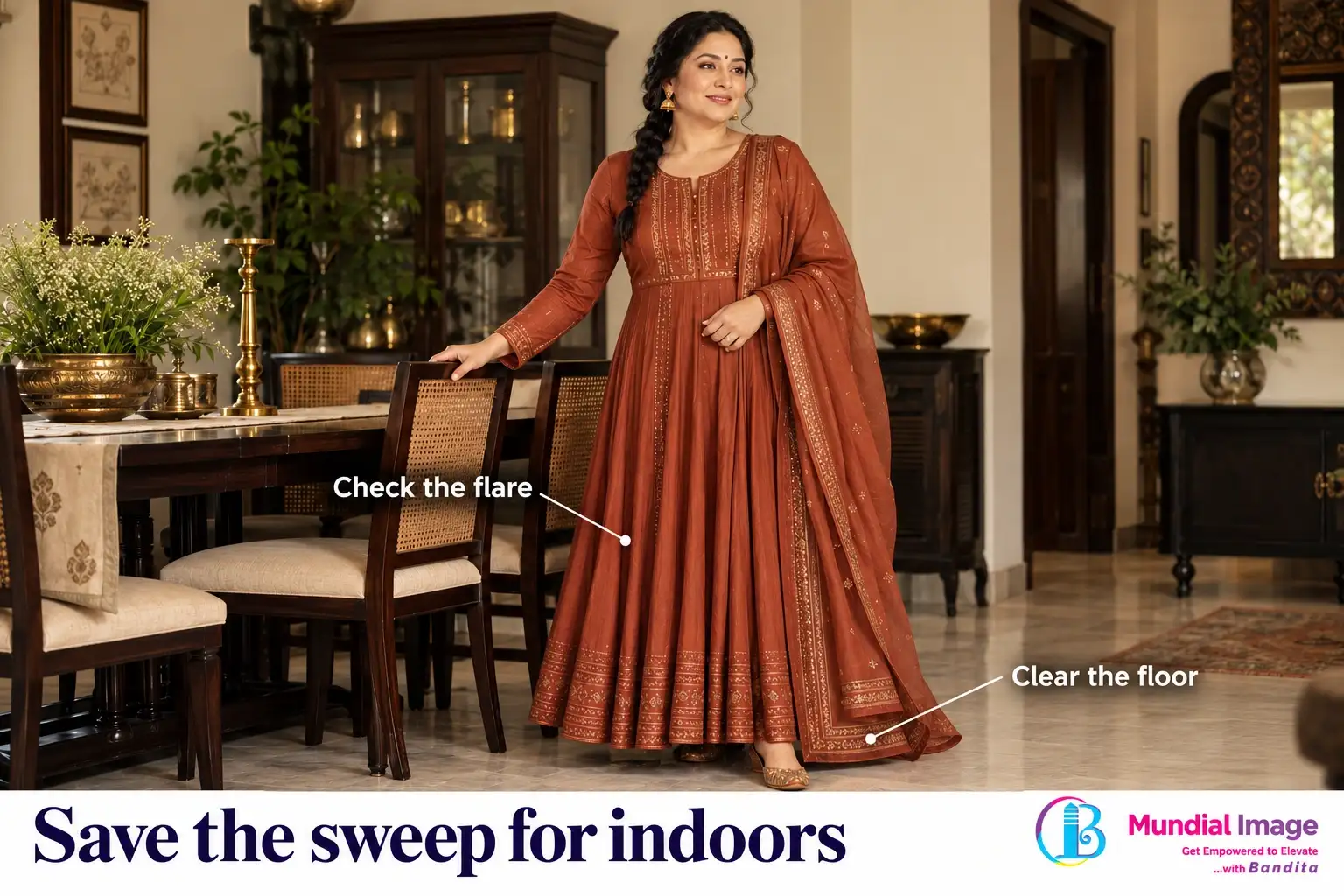
An anarkali can suit a dressier family gathering. Check where the flare starts and whether the hem clears steps. A sharara’s wide legs can be comfortable in one setting and catch underfoot in another.

Walk, turn and sit in the actual pair before assigning it an outdoor role.

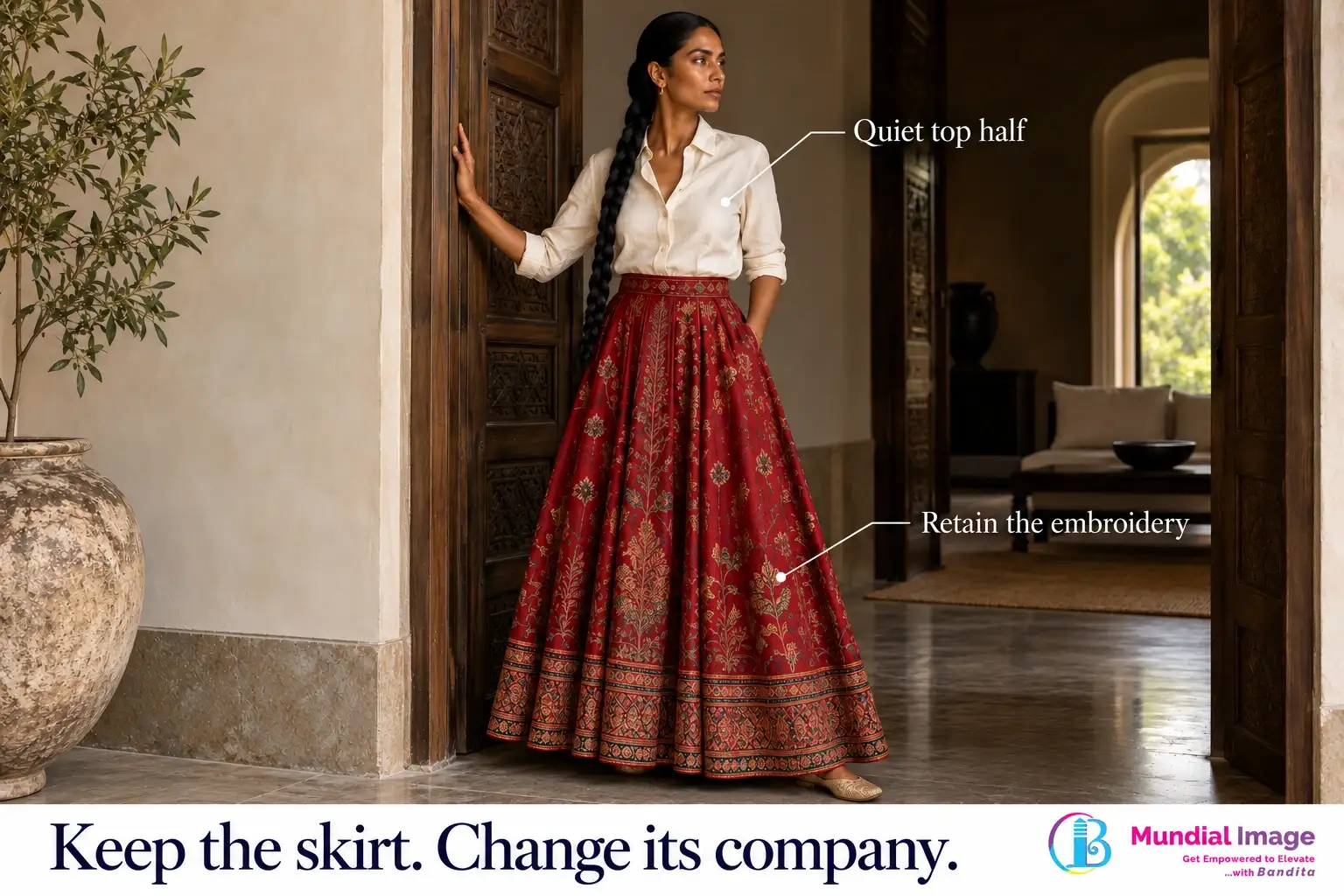
A festive skirt offers useful rewear potential. Pair it with a plain blouse or shirt when the occasion permits, then check whether the waistband and top remain comfortable together.

Keep voluminous or dragging pieces for a venue where their movement is manageable.

Woman in a rust anarkali indoors, with annotations on the flare and floor clearance.
Anarkali for an Indoor Gathering

Co-ords and Indo-western dressing

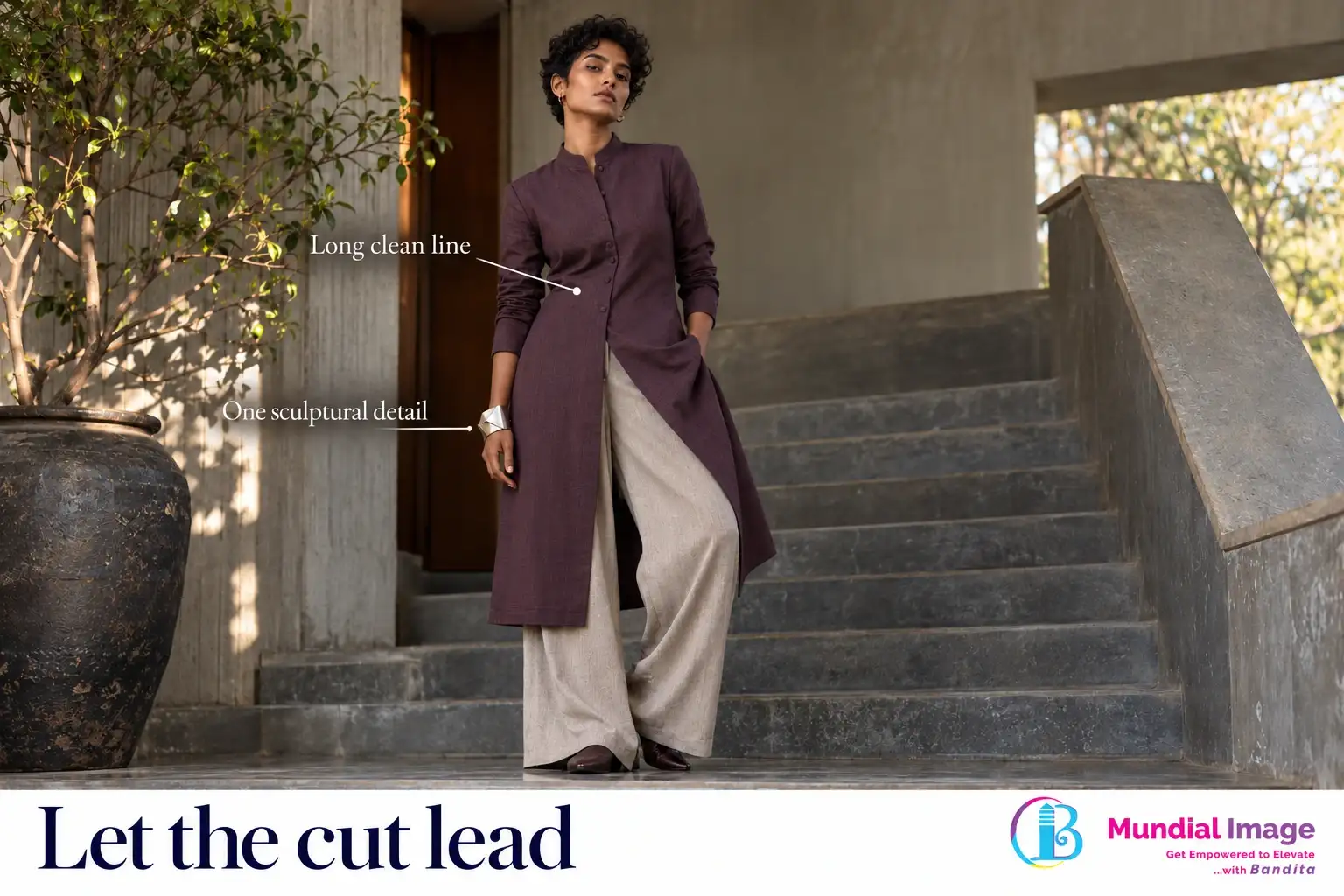
A tunic-and-trouser co-ord, a long jacket over a simple base, or a saree with a tailored blouse can offer a contemporary route. Judge the complete combination against the event.

“Indo-western” does not automatically mean informal, and matching fabric does not automatically make a set suitable for work.

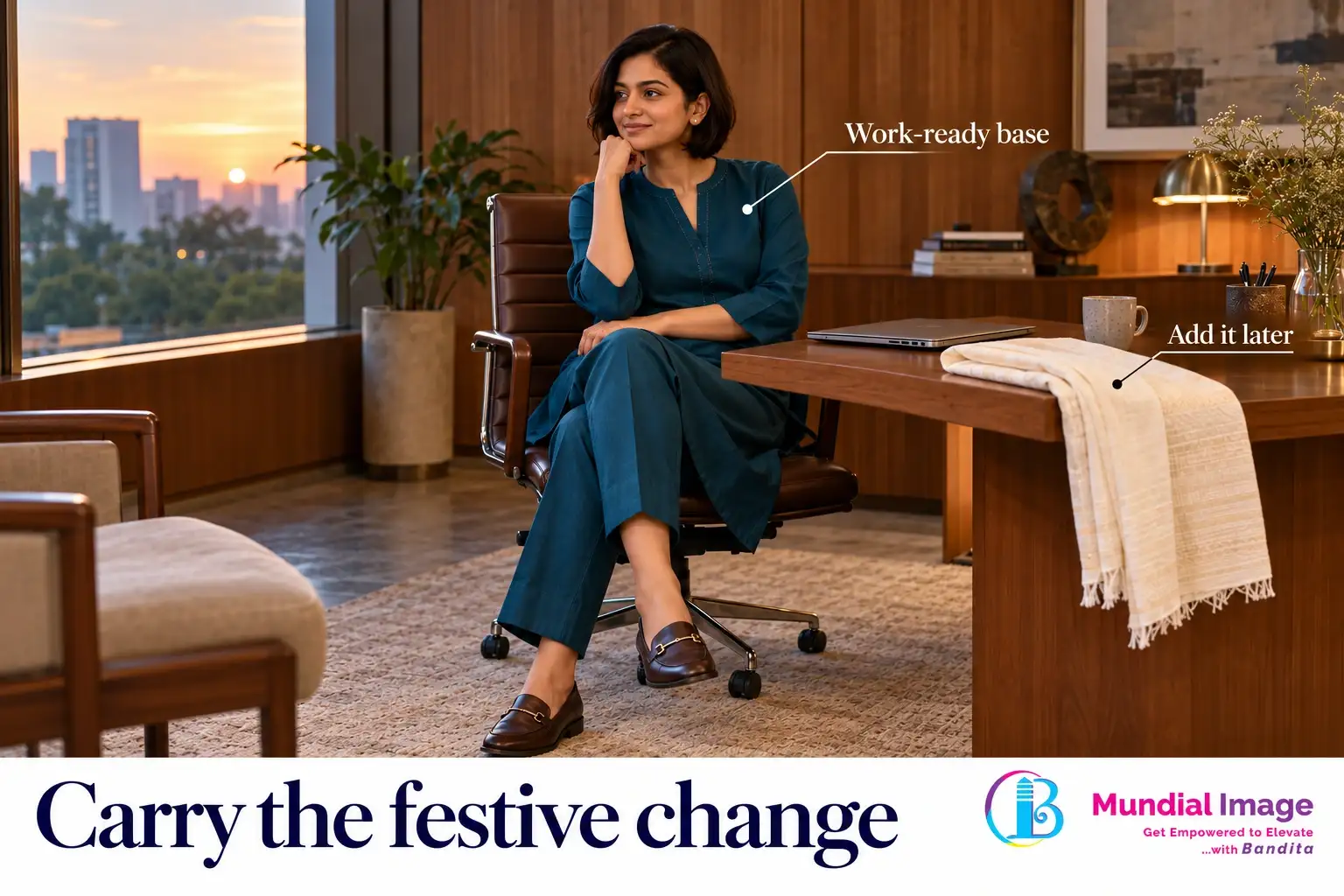
Woman in a teal office outfit beside a cream layer prepared for a later occasion.
Office-to-Puja Styling

For restrained festive dressing, let an interesting textile or border do most of the visible work. For a dressier look, add deliberate volume, shine or jewellery where you want attention.

Neither route requires changing your preferred coverage or wearing heels.

Woman in a long asymmetric plum tunic with neutral trousers and a cuff.
Contemporary Festive Separates
Patterned festive skirt paired with a plain pale shirt in an architectural interior.
A Skirt Given a New Role

05For men

Dussehra outfit ideas for men

Start with the kurta and its bottoms

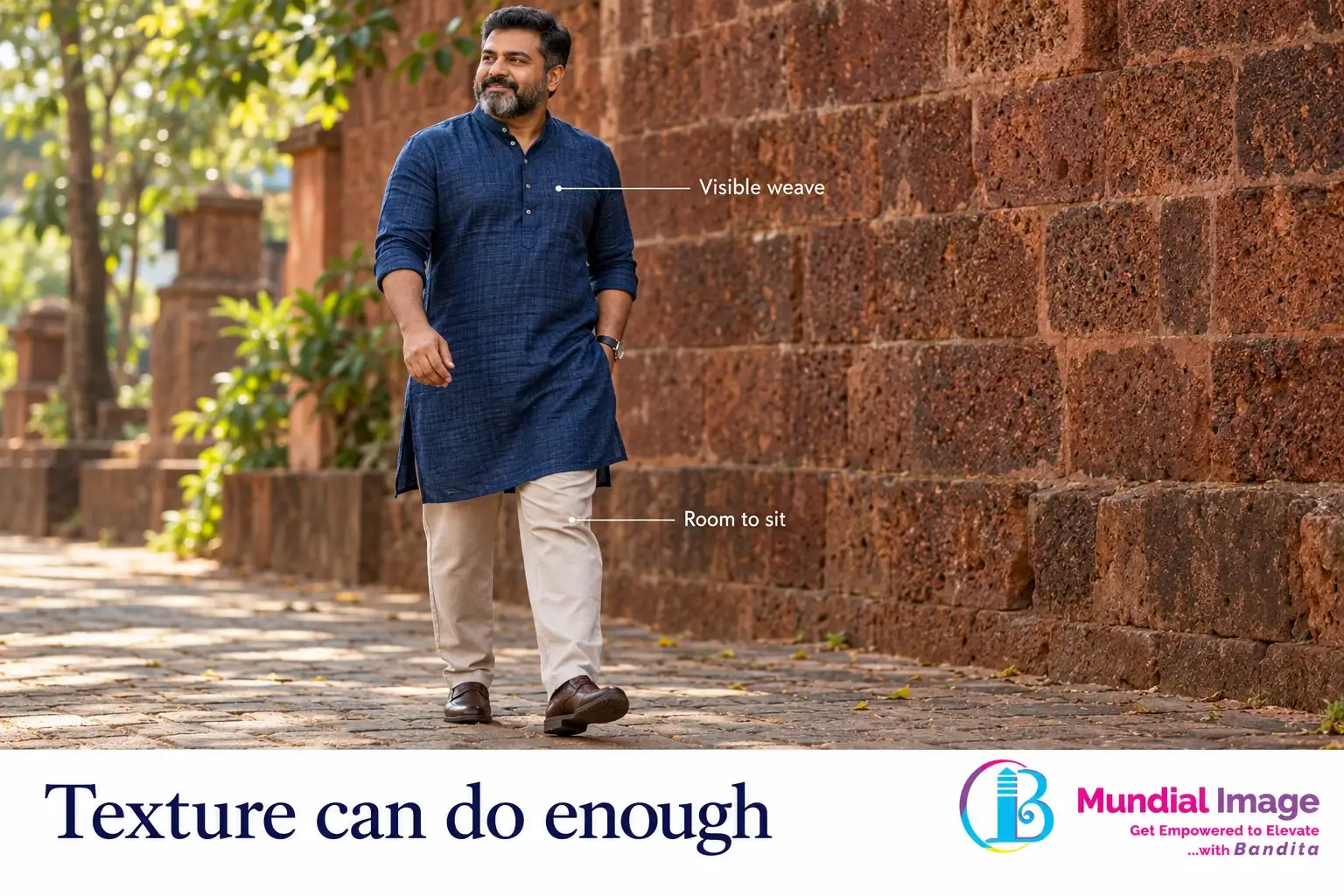
A textured kurta with comfortable trousers can cover a home puja and family visits. A short kurta gives a more contemporary outline; a longer one makes the relationship between side slits, trouser volume and footwear more visible.

Choose proportions in a full-length mirror.

Check the shoulder, armhole and neck fastening. Raise your arms and sit down. Trousers should permit the movement your ceremony or travel requires.

A very narrow pair that looks neat while standing may be inconvenient for floor seating.

Dhoti, veshti, panche or other regional clothing can be appropriate where familiar and expected; practise an unfamiliar drape before relying on it for a crowded event.

Man in a textured blue kurta and neutral trousers, shown full length.
A Textured Kurta with Trousers

Jackets and waistcoats: add only a layer you can remove

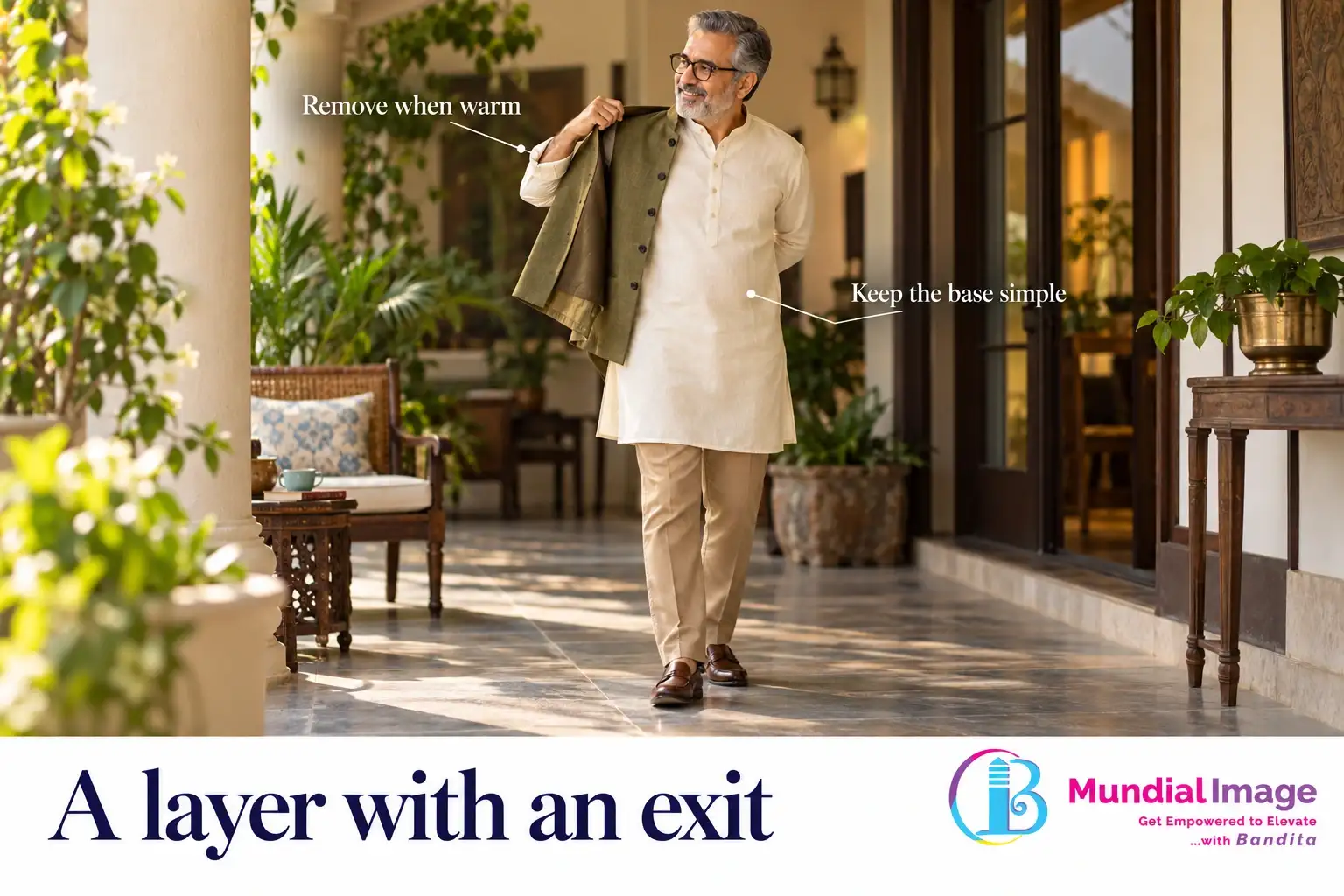
A sleeveless band-collar jacket can sharpen a plain kurta without changing the base. Check the chest when buttoned and the armhole when reaching. If the weather is warm, carry the jacket and put it on for the indoor gathering or photographs.

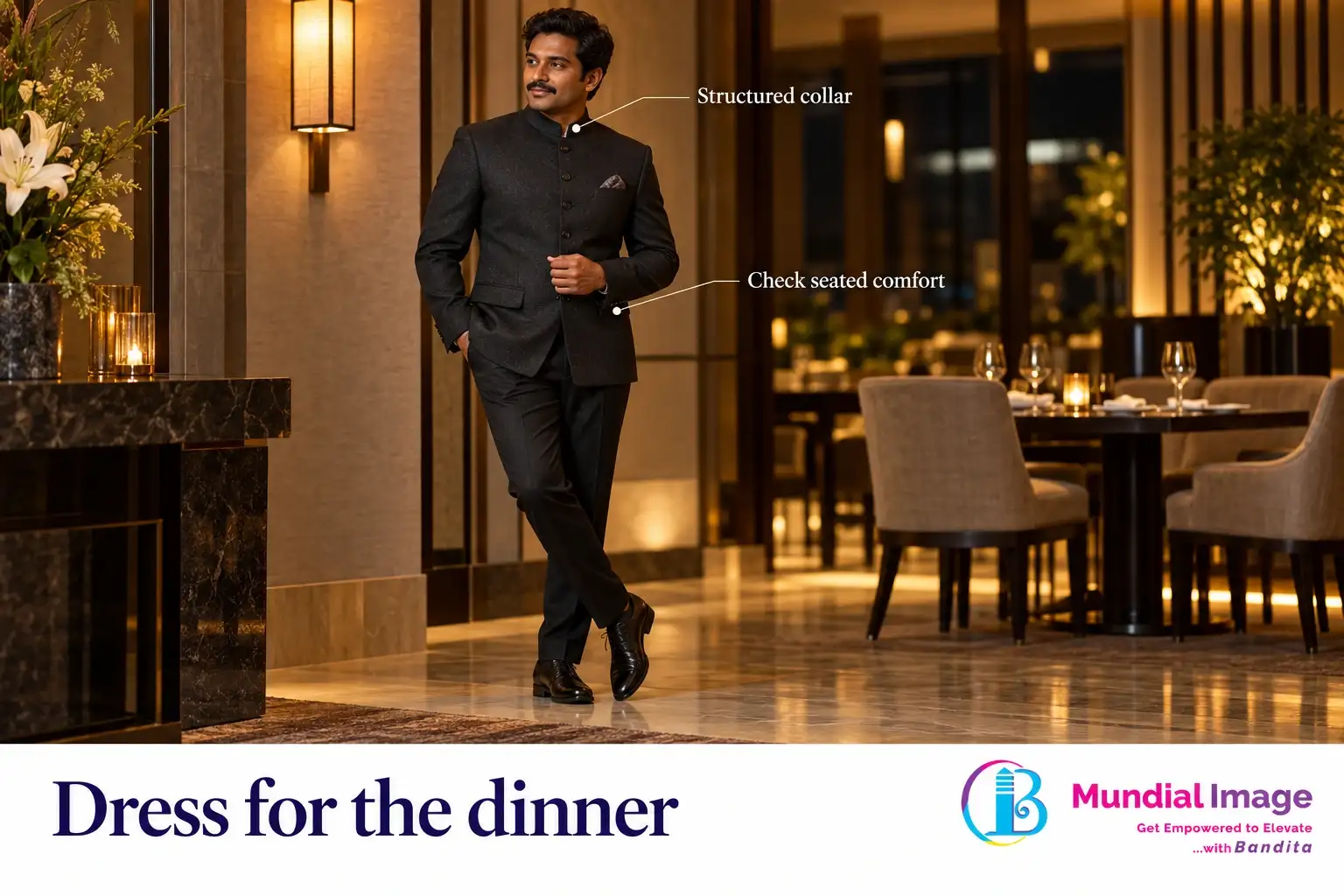
For a dressier dinner, a bandhgala may fit the invitation. Its structure and lining can be excessive for a long outdoor wait. Choose it for that part of the itinerary, with somewhere to change if needed.

Man removing an olive sleeveless jacket from a plain ivory kurta base.
The Removable Jacket

A waistcoat over a shirt is another option where the host’s brief permits a less traditional outfit.

Man in a dark bandhgala at an indoor evening dinner venue.
Bandhgala for a Dressier Dinner

Colour and texture without an accessory pile-up

Try an ink-blue kurta with stone trousers, a rust kurta with deep brown, or an ivory base with an olive jacket. These are palette suggestions, not auspicious-colour claims.

Visible weave, a considered collar or a small embroidered detail can be enough for someone who prefers minimal dressing.

A more expressive look might use a patterned jacket over a quiet base. Check the pattern in a group photograph: a very large contrast can dominate beside softer outfits.

Mojaris, loafers, sandals or supportive shoes should follow terrain, fit and venue requirements. Traditional styling does not guarantee a comfortable sole.

Close-up of an indigo collar, small gold button, neutral trousers and watch.
Men’s Festive Detail, Close Up

06One base, three contexts

One base outfit, three contexts

These examples assume the base outfit is accepted in each setting. Keep the shoe that works unless the terrain or invitation requires a change.

BaseWork or restrained daytimePuja or family visitEvening gathering
Teal straight kurta and matching trousersSmall earrings, practical bag; no extra layerAdd an ivory woven dupatta, secured for movementChange to larger earrings; retain the dupatta only if manageable
Muted rose saree with plain blouseCompact drape, studs and suitable flatsAdd familiar bangles; keep the same secure palluSwap studs for sculptural earrings and a smaller bag
Ivory kurta and stone trousersWear only where festive Indian wear is acceptedKeep the base; choose easy-removal footwear for the venueAdd an olive band-collar jacket for dinner, remove it if warm
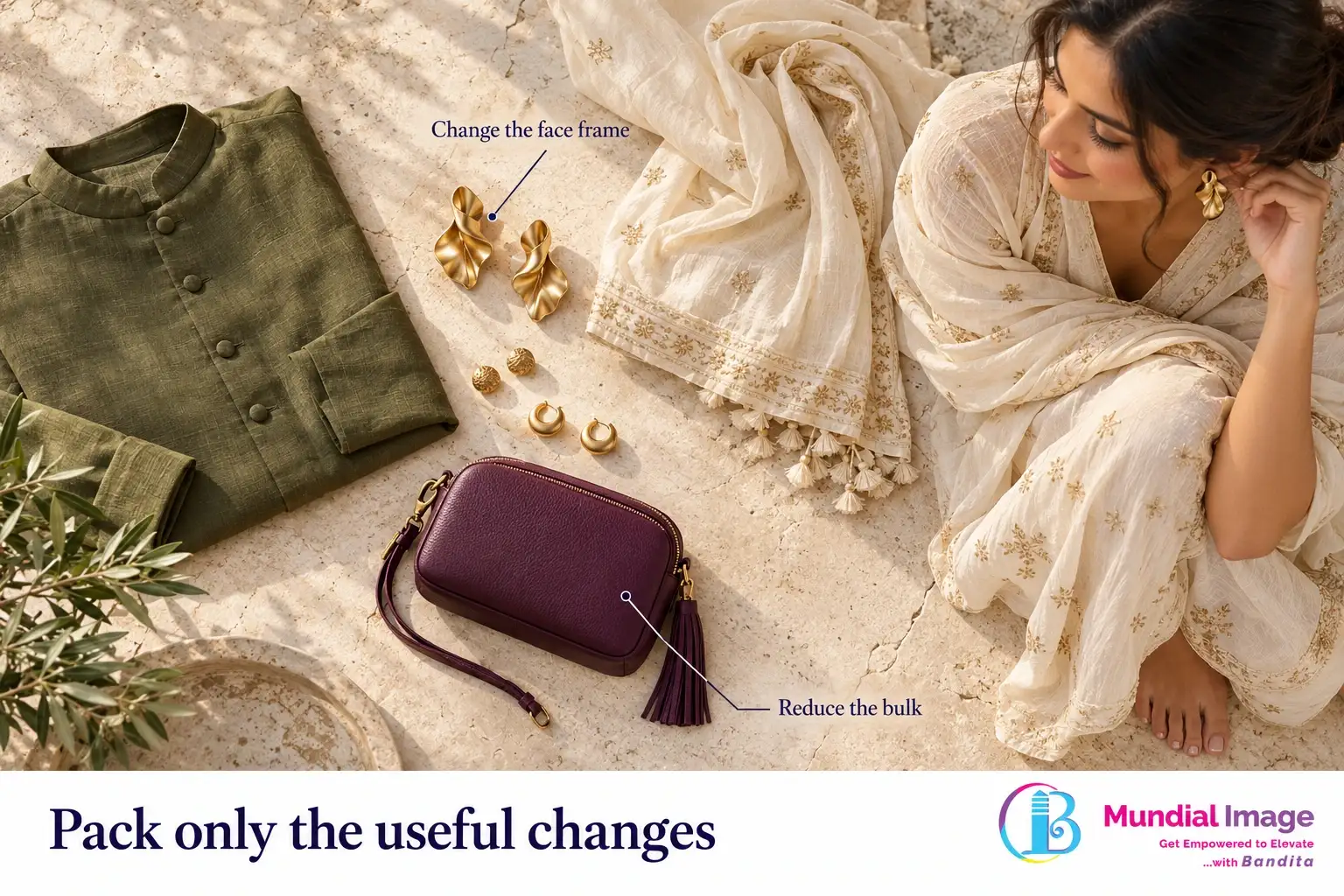
Change the face frame
  • Earrings
  • Hair arrangement
Reduce the bulk
  • Smaller bag
  • Removable layer

The changes have different jobs. A bag swap reduces bulk; earrings alter the area around the face; a jacket changes the silhouette. Adding all of them at every stop defeats the point. If work requires a uniform or formal suit, plan a real change of clothes.

07Rewear

Change the combination before buying again

First identify what made the previous look recognisable. It might have been the full matching set, a dramatic drape, stacked jewellery or a contrast blouse. Keep the piece you enjoy and change the relationship around it.

Piece already ownedDussehra recombinationWhat visibly changes
Embroidered kurtaPlain trousers, smaller earrings, no extra patterned layerEmbroidery becomes the focal detail instead of competing with the full set
SareeA different compatible blouse, compact pallu and changed earring shapeThe frame around the face and the outline of the drape
Garba skirtPlain shirt or simple blouse, if appropriate for the gatheringThe top half becomes calmer; the skirt keeps its character
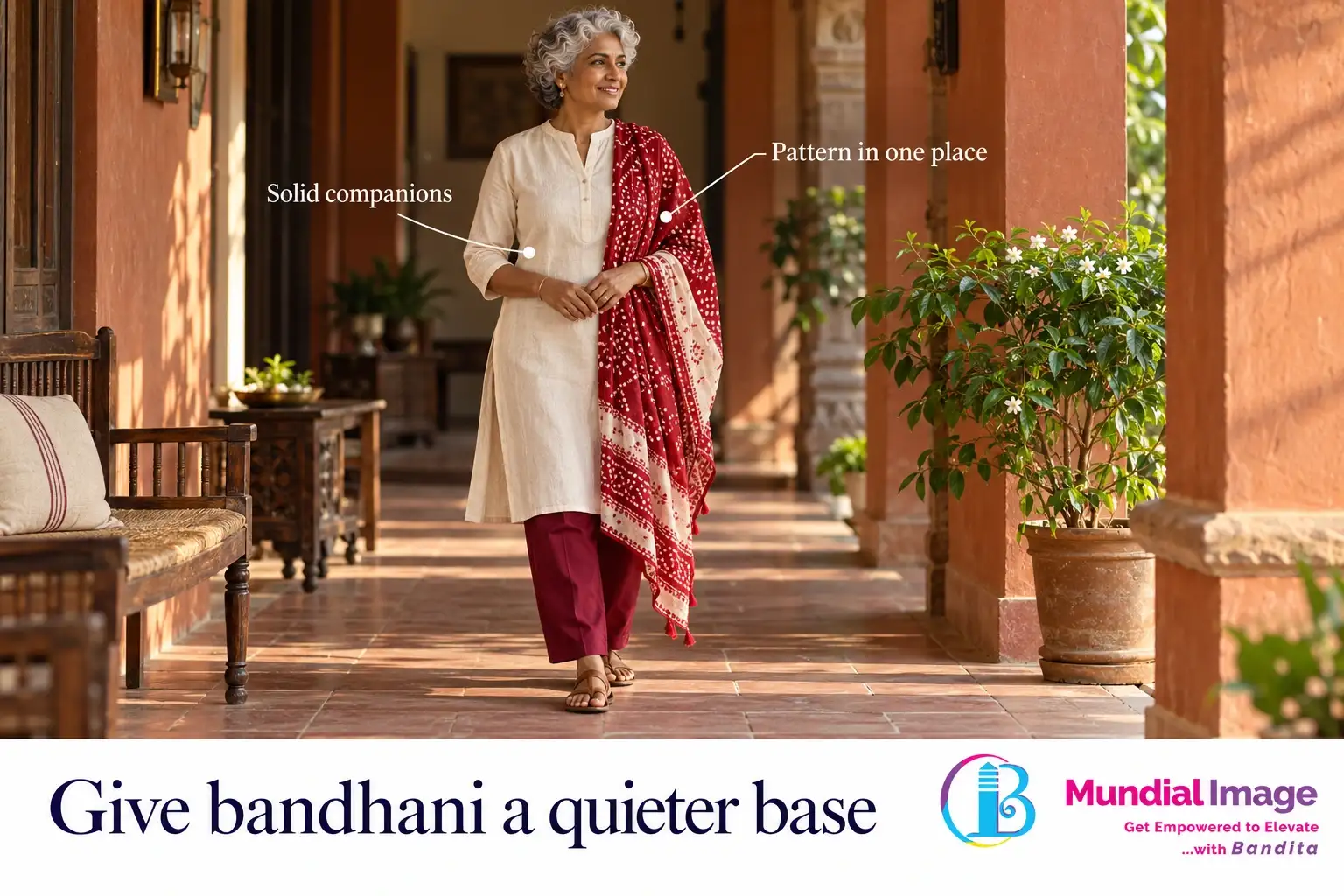
Bandhani dupattaSolid kurta and trousers already in the wardrobePattern moves into a single draped area
Large earringsPlain neckline with no competing necklaceThe same jewellery becomes easier to see
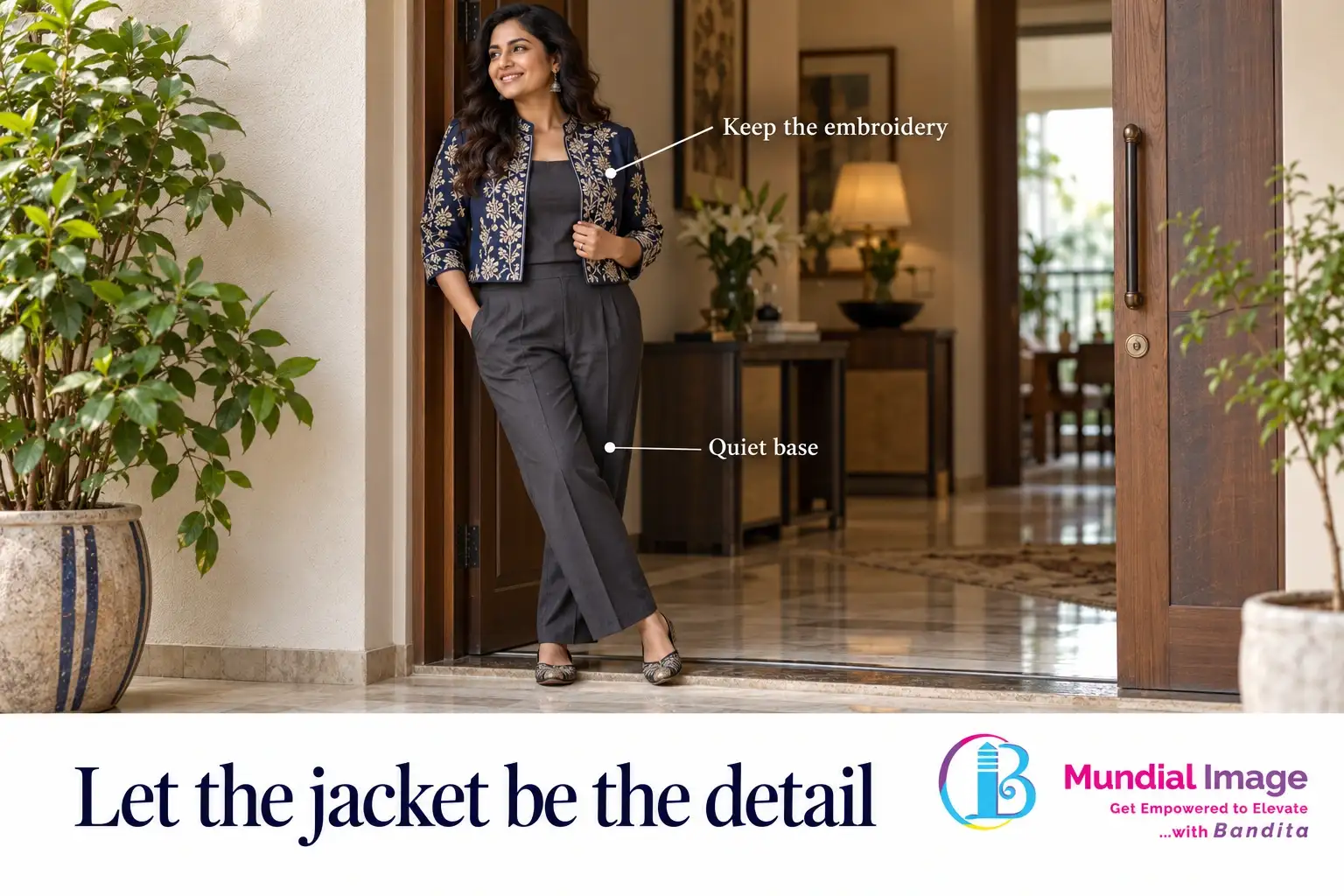
Embroidered jacketMatte top and straight trousersA dance-night layer becomes a separate for a visit or dinner
Men’s festive kurtaDifferent existing trousers and a quieter shoeThe base colour and overall formality change
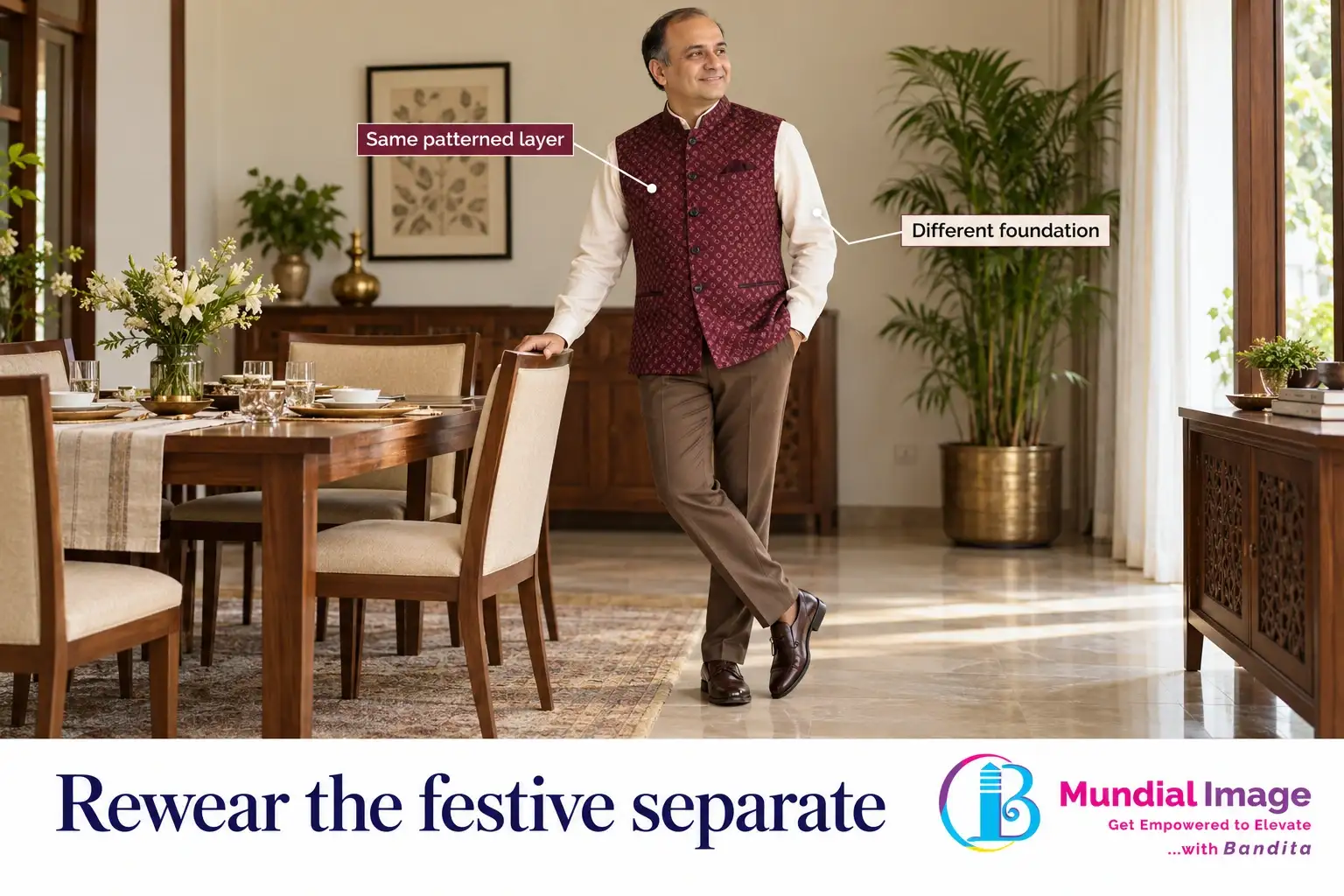
Men’s patterned waistcoatPlain shirt where accepted, or a solid kurtaThe familiar pattern appears in a different silhouette
Woman wearing a red bandhani dupatta over a quiet ivory kurta base.
Bandhani Beyond Garba
Patterned cropped jacket paired with plain dark separates.
The Embroidered Jacket Recombined
Man wearing a wine waistcoat with a pale shirt and brown trousers.
Rewearing Men’s Festive Separates

Do not cut, dye or permanently alter a treasured garment just to make it look different for one day. Try reversible changes first. Photograph the old combination beside the proposed one.

If the overall outline and the strongest contrast remain identical, changing a tiny ring will have little visible effect.

Rewear also starts with condition. Air or clean the piece according to its care instructions, inspect closures and check embellishment for snags. Repeated wear is normal. There is no styling obligation to disguise it.

08Ravan Dahan

What to wear for Ravan Dahan: the outdoor test

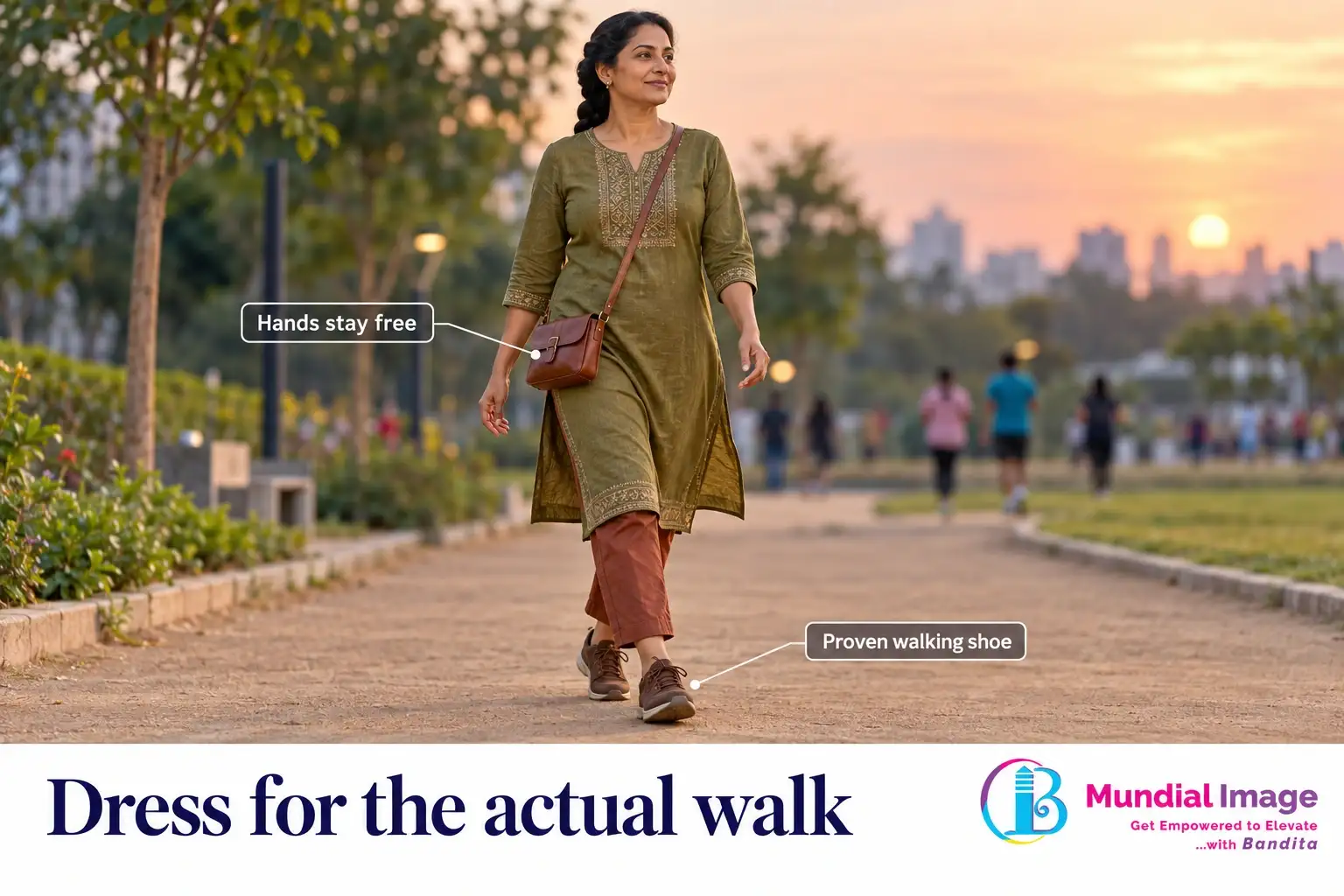
Choose clothing for the route, ground and duration. A practical starting outfit is a manageable kurta with trousers, or a familiar saree with a secured drape, plus shoes already tested for walking and standing. A wider silhouette can work if it clears the ground and you can move freely in it.

Woman in an olive kurta and ankle-clear trousers walking outdoors with supportive shoes and a crossbody bag.
Dressed for the Walk

Run this test before leaving

Tap each check as you pass it. Change anything that fails, then retest.

0 / 6

Six checks. Under two minutes.

Fix the one thing that fails.

Which footwear works best?

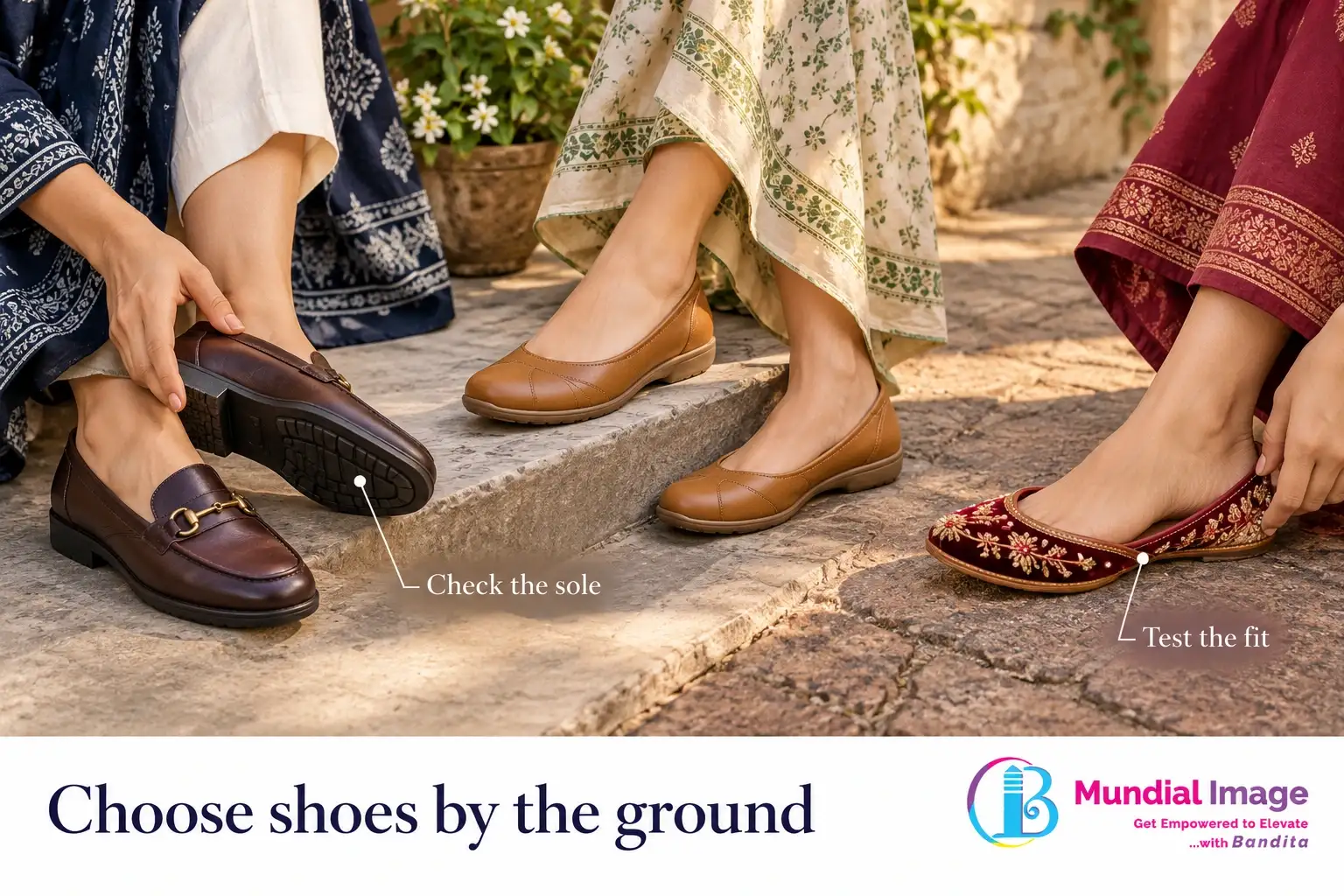
For firm indoor flooring, familiar juttis, loafers, flats or stable heels may suit. Uneven ground changes the decision: choose a secure fit and a sole that works there.

An open-backed shoe may feel easy at home and slip during a long walk. New mojari embroidery does not tell you whether the heel will rub.

If a temple requires shoes to be removed, consider the fastening and storage arrangement. Anyone using prescribed or supportive footwear should build the outfit around that need. Comfort is not a decorative detail to fix at the end.

Three footwear choices on stone ground, with callouts to sole grip and fit.
Footwear Selected by Ground
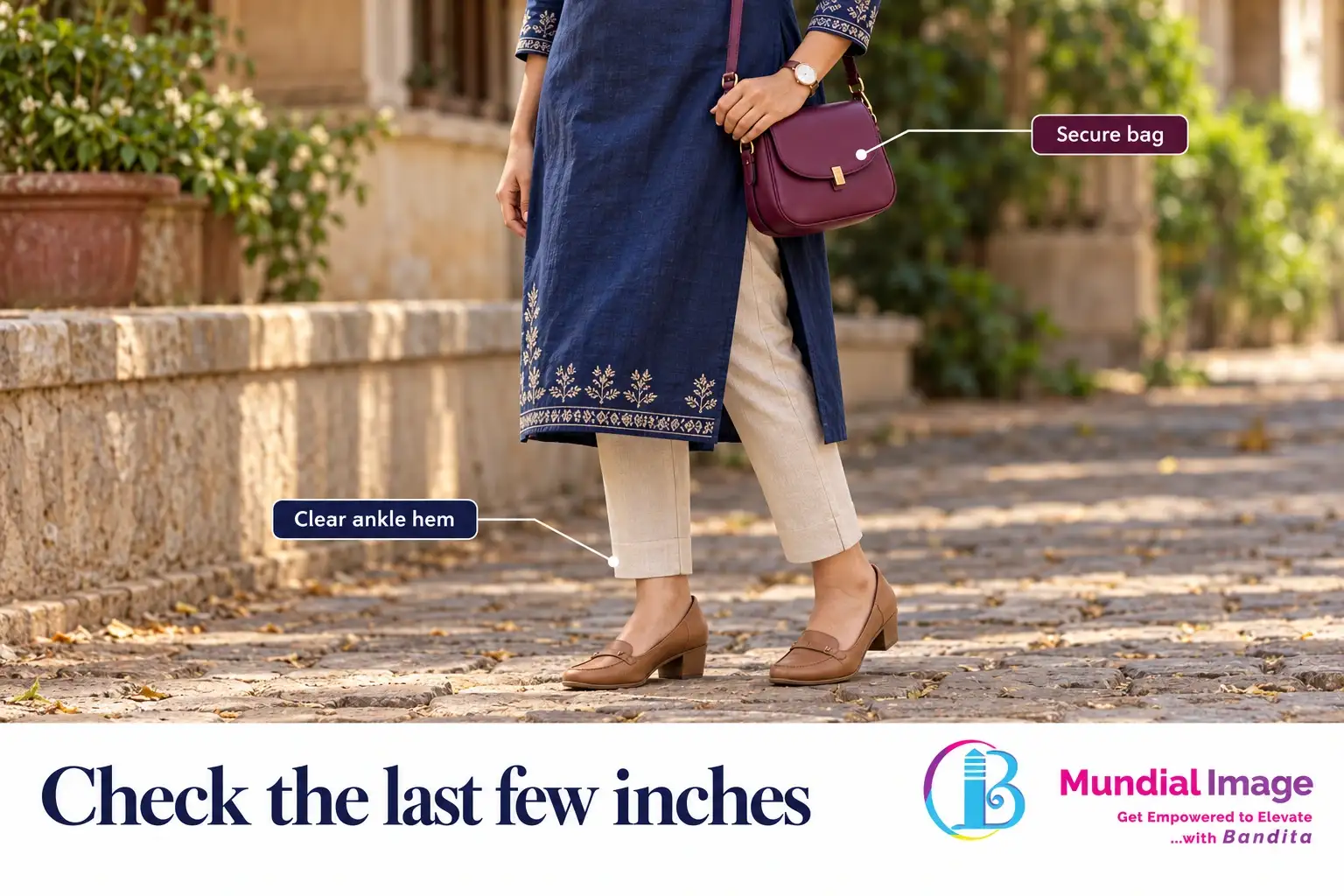
Close view of a clear trouser hem, closed shoes and a secure crossbody bag.
Hem, Shoes and a Hands-Free Bag
Kurta, cream drape, compact purple bag and jewellery arranged as a transition kit.
The Transition Kit

09Fabric and light

Fabric and October weather: check the garment, then the forecast

October is not one climate across India.

The northeast monsoon affects parts of southern peninsular India during October to December, as described in the India Meteorological Department’s research journal.

That is seasonal context, not a forecast for your event.

Check your city’s forecast near the date. For warmth, assess the complete outfit, including lining and layers. For rain risk, consider an above-ground hem, a manageable umbrella and footwear suitable for the route.

For a cooler evening, carry a layer you can actually secure.

A fabric name can mislead. Georgette describes a fabric construction and may use different fibres; a light surface does not prove breathability. Cotton can feel very different depending on weave and lining.

Test the actual garment indoors for a while, including sitting, before committing to a long day.

Hands inspecting a pink textile and its contrasting smooth lining.
Fabric, Lining and Surface

Daylight versus evening: what to change

Daylight reveals texture, creases and colour relationships clearly. A small woven border or matte surface can remain interesting without extra shine.

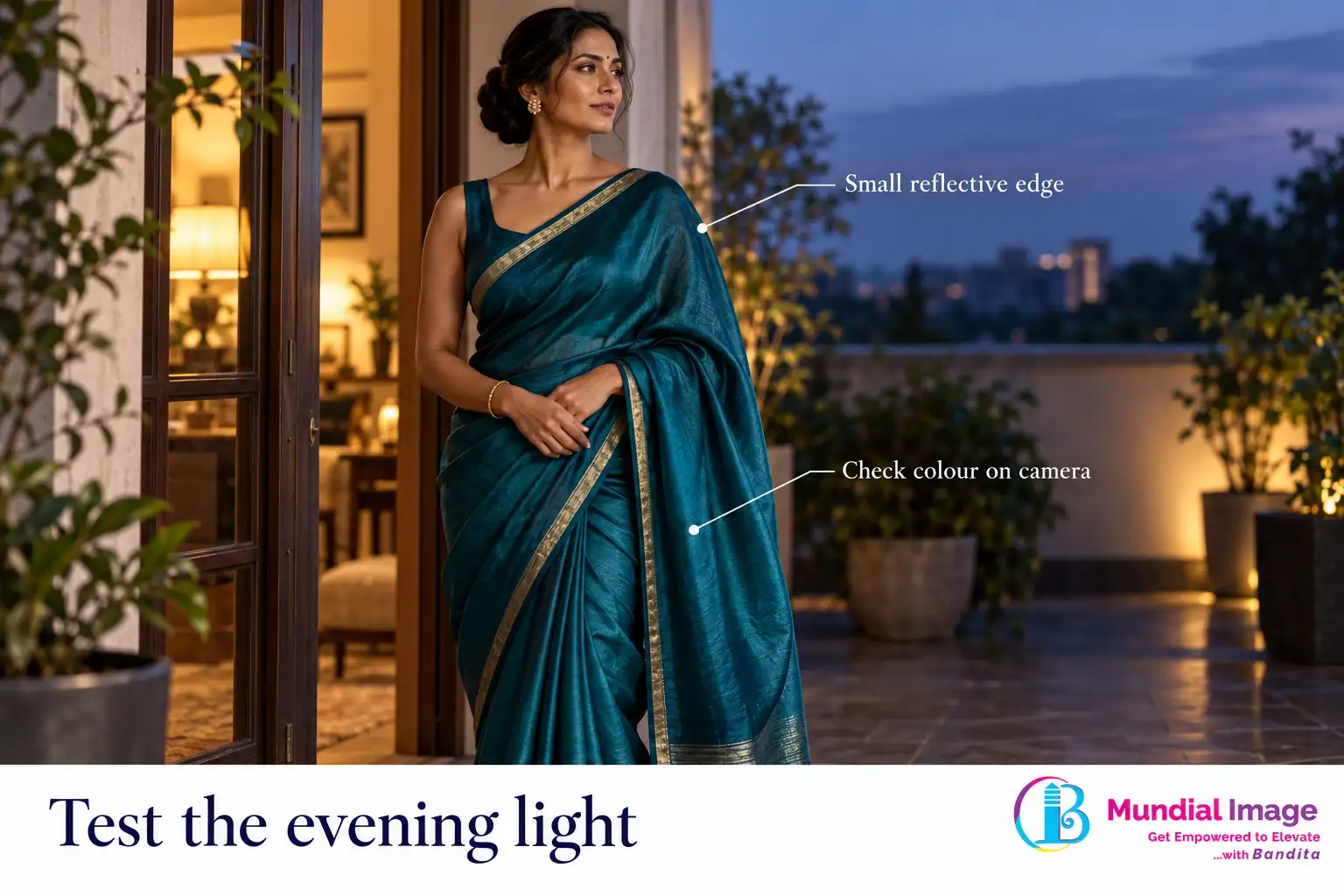
Under evening lighting, some subtle details become harder to distinguish while reflective details catch the light.

Test the outfit near a window and under lighting similar to the evening venue. Take an ordinary phone photograph in each. Look for glare on jewellery, transparency, lost detail and colours that appear different on camera.

Woman in a rose kurta beside a window, showing subtle texture in daylight.
Matte Detail in Daylight

The phone image is a check, not a substitute for the mirror.

For makeup, choose a familiar routine that you can maintain. Blot before adding more powder if the face feels shiny; test any product beforehand. An evening change can be as small as a deeper lip colour you already enjoy.

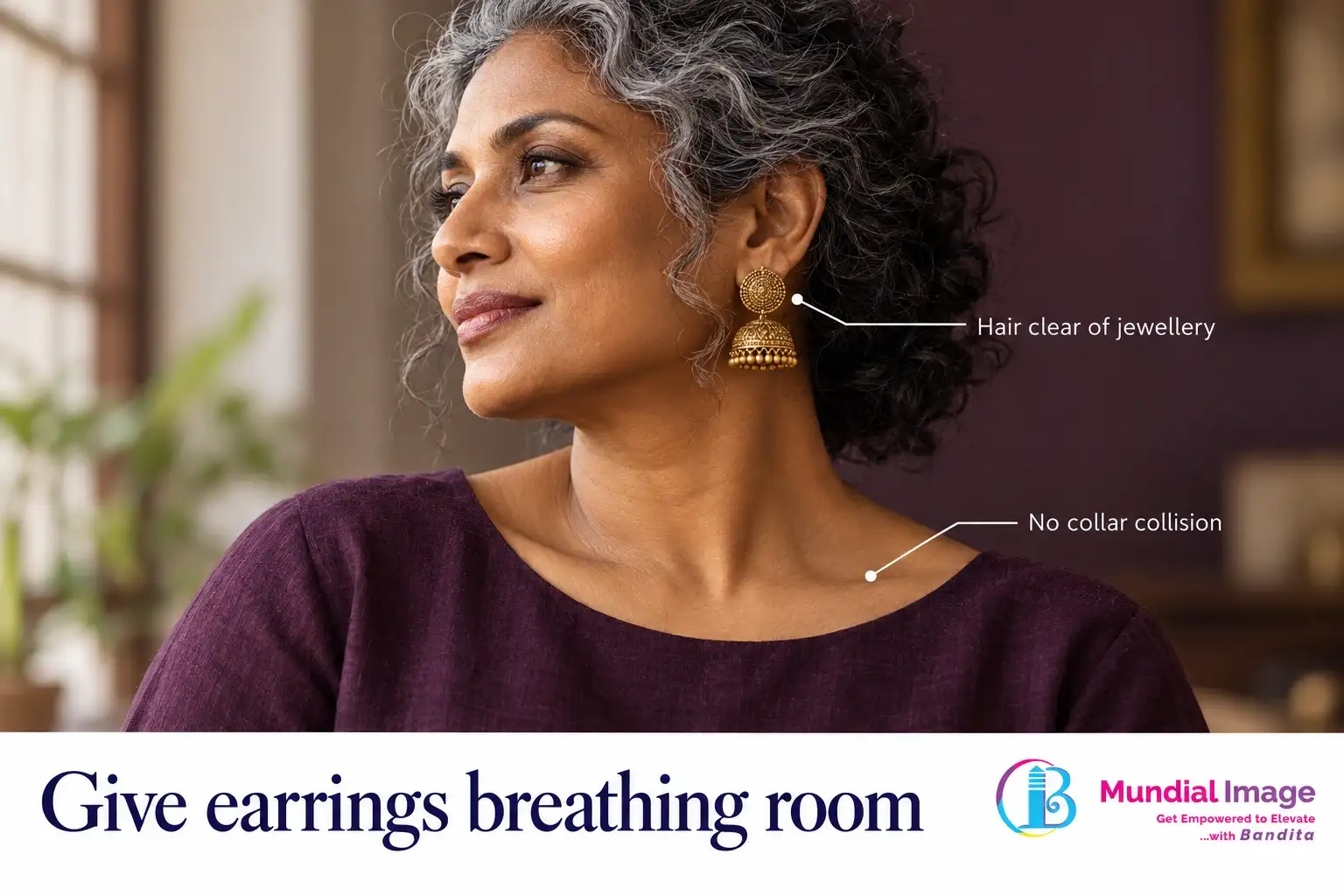
Hair tied away from earrings or secured off the face can be helpful in heat, wind or a crowded gathering. Natural texture and grey hair need no correction.

Woman in a teal saree at twilight, with a small reflective border.
Textile Shine at Twilight
Close-up of a grey-haired woman with large earrings clear of her hair and neckline.
Hair and Jewellery in Balance

10Colour and jewellery

Dussehra colours: build a palette without inventing a rule

There is no single pan-Indian clothing colour prescribed by this guide. Household and community customs matter. Ask your host if a particular ceremony has expectations; do not turn an online Navratri colour list into a universal tenth-day dress code.

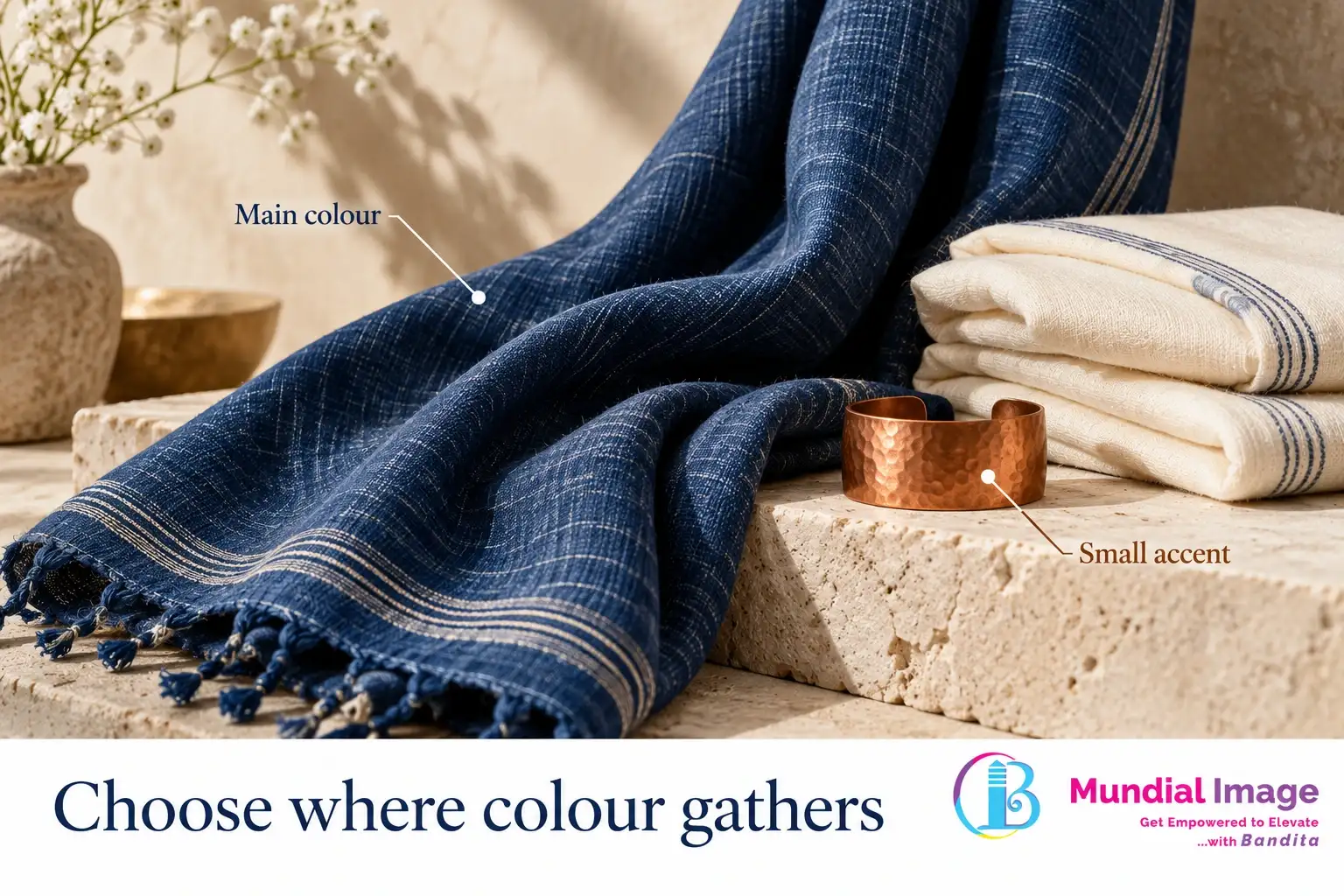
For styling, choose a main colour and compare possible companions against the actual garment.

Indigo with ivory and a little copper feels different from rose with wine, or olive with cream and muted gold.

Use the accent where you want it visible: a blouse, border, jacket or earring.

Indigo and ivory fabrics beside a hammered copper cuff, illustrating unequal colour proportions.
Indigo, Ivory and Copper

White, ivory and black are not prohibitions here

White, ivory and black are not universal prohibitions in this article. Their appropriateness depends on the household, event and your preferences.

A near-face fabric check in steady light is more useful than assigning every Indian skin tone one approved palette.

Choose the main colour after the brief, then let the accent carry the festive note. A single strong colour on a quiet base often reads more clearly on camera than several competing colours.

Jewellery: start where the outfit is already busy

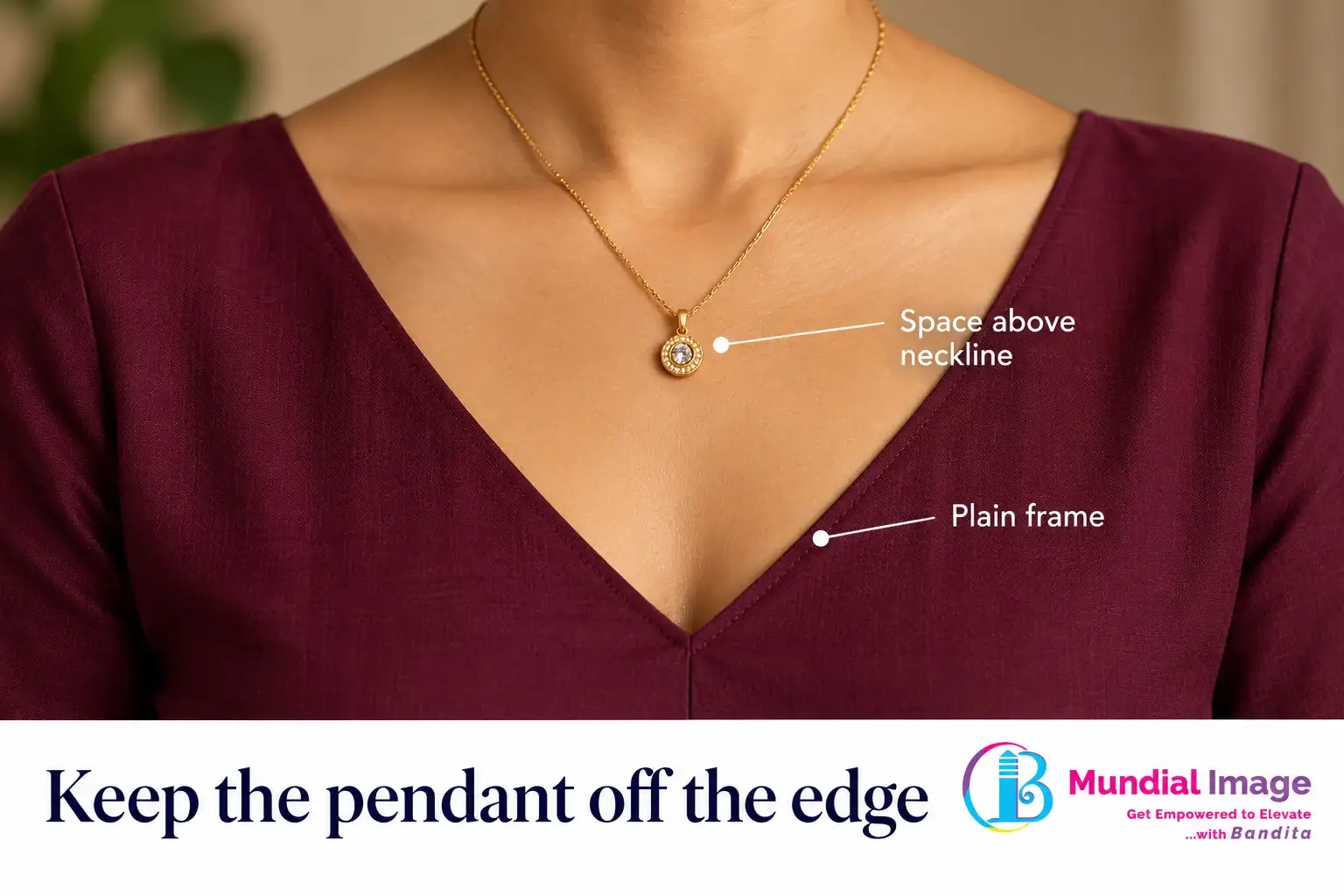
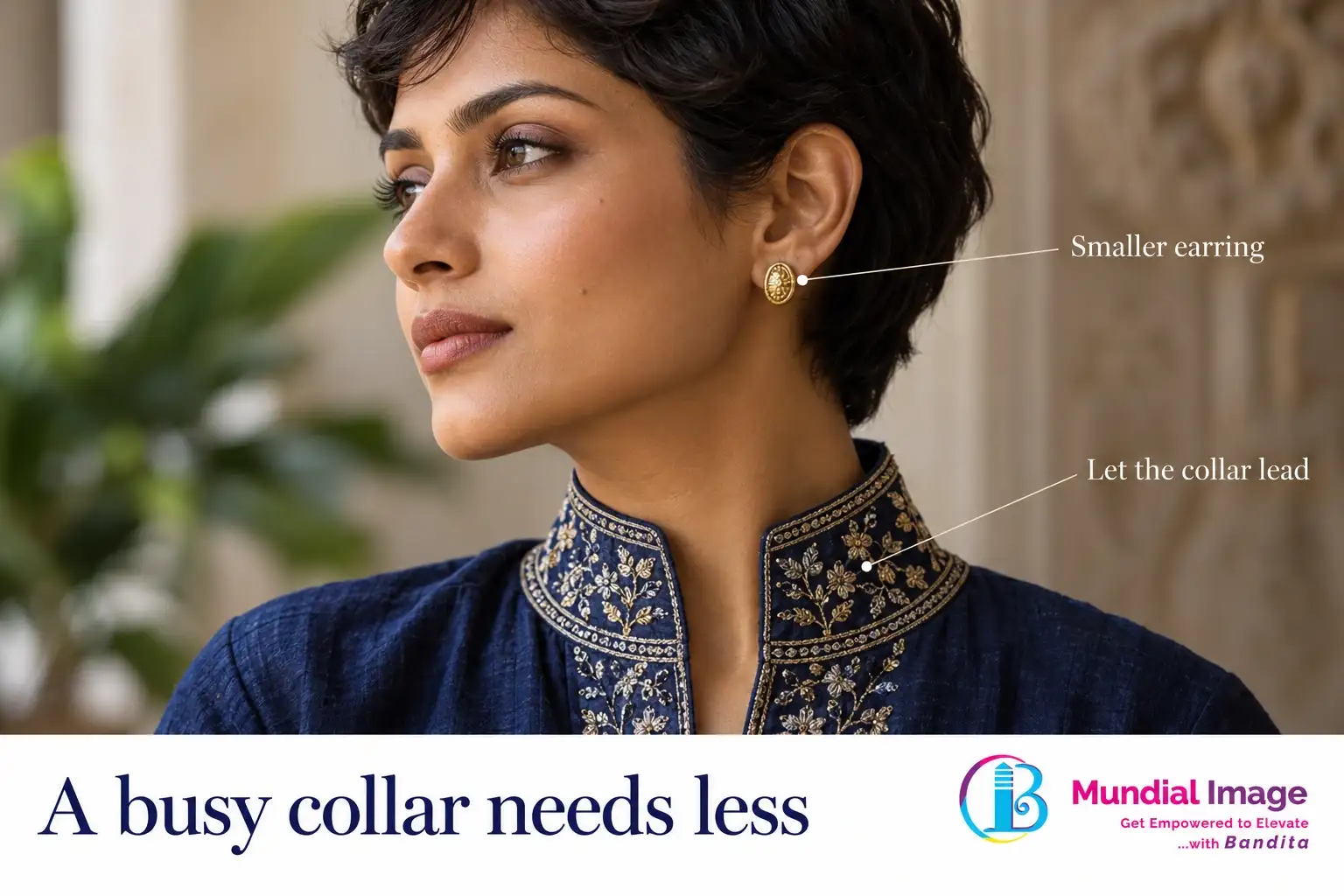
Look at the neckline, border and hair together. An embroidered high neckline may need only earrings. A plain open neckline can accommodate a necklace, but check where it ends.

A pendant landing exactly on a busy neckline can look visually crowded and catch on its edge.

With a broad saree border, test whether a large necklace adds something you want or repeats detail already present. If large earrings are the choice, turn your head and check for contact with the collar or hair.

Gold pendant placed above the V-shaped edge of a plain wine neckline.
Necklace Placement and Neckline

For a long outing, wear them at home first. Weight becomes clearer after time than in a quick mirror check.

Bangles should permit the day’s tasks. Choose secure fastenings and pieces you can comfortably manage in the crowd. Leaving a piece at home is a complete styling decision.

Compact gold earring beside an embroidered high indigo collar.
Earrings Beside a Detailed Collar

Give the neckline some space

Start with the neckline, then add the accessory it can carry.

High / detailed

Start with earrings. The neckline already holds detail.

Open / square

A compact necklace can sit within the opening.

V-neck

A pendant can follow the opening if it stays in place.

One-shoulder drape

Check earrings and pallu together before adding more.

Try jewellery with hair and drape in place. Nothing should press, snag or distract from movement. Check the whole face area.

11Family

Coordinate the family without identical outfits

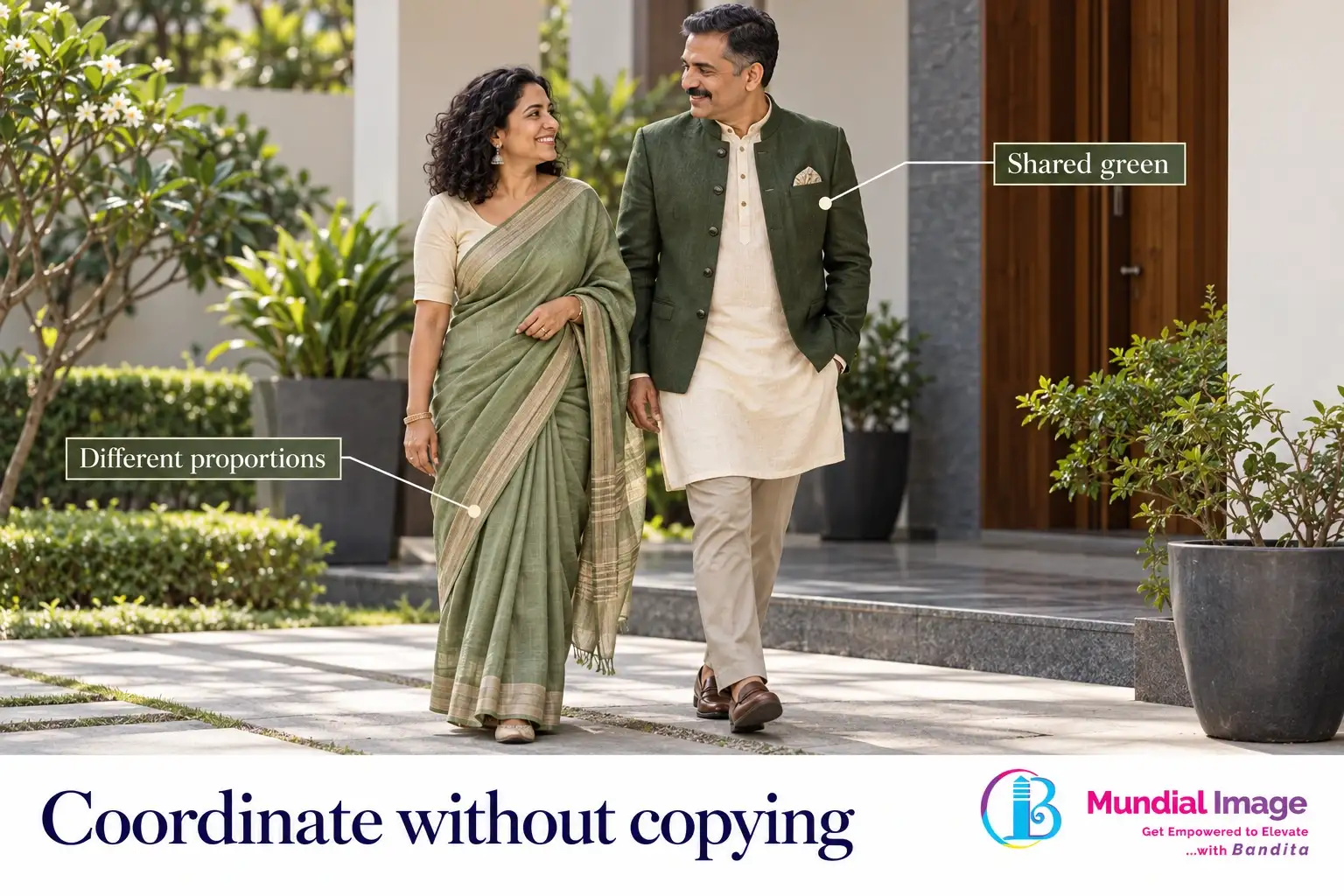
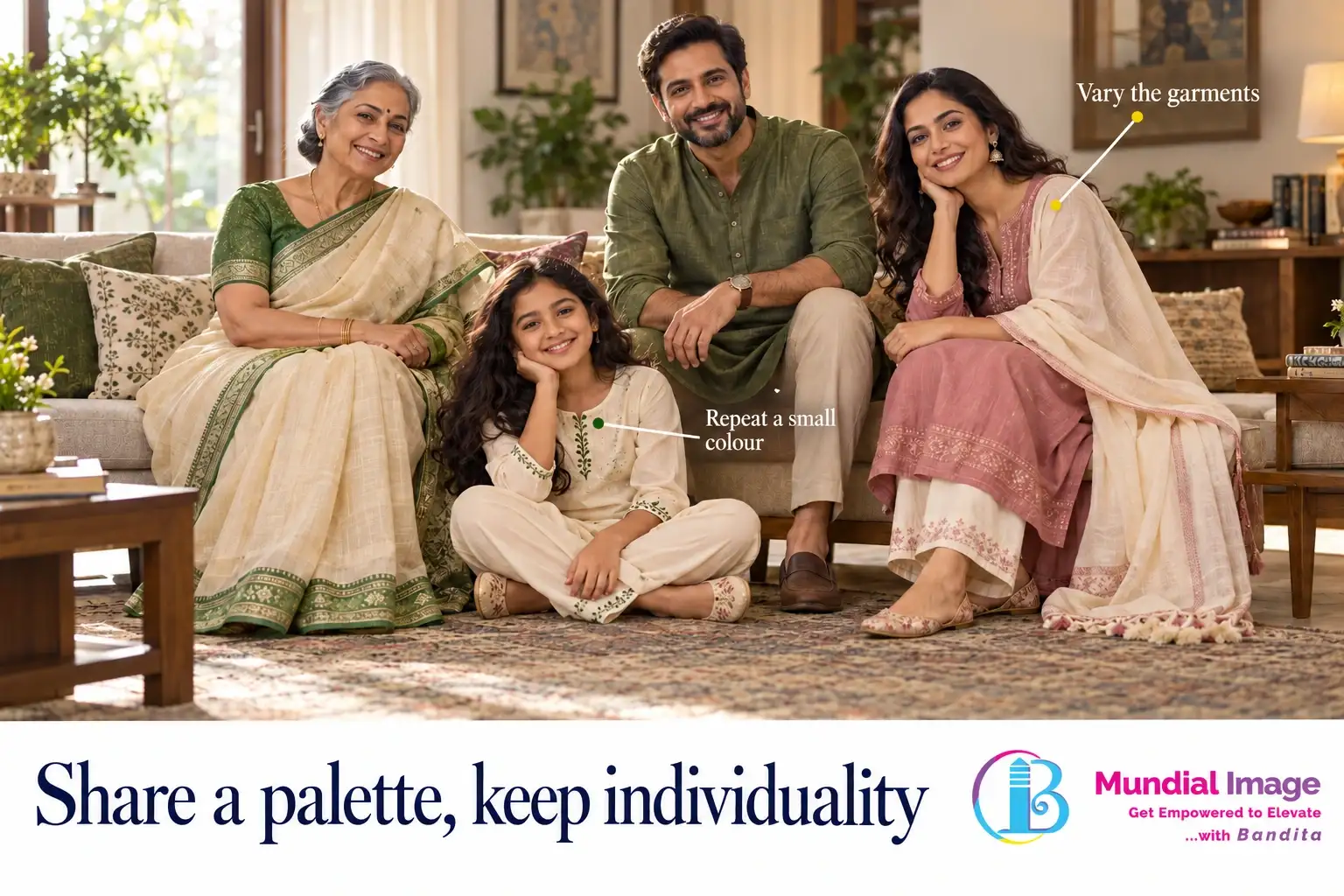
Choose one shared reference, such as a muted green or warm metal, then distribute it differently. One person might wear a green saree; another an ivory kurta with a green jacket; a child could have a small green detail in a comfortable outfit. Nobody needs an identical print.

For a larger family, lay the clothes together and take one photograph. Look for an unexpectedly bright or highly patterned piece that draws more attention than intended. Adjust only if the group wants a quieter photograph.

Personal expression and children’s comfort take priority over a perfect colour chart.

Couple wearing green and cream in different proportions through saree and jacket.
Couple Colour Harmony
Four family members in green, cream and rose outfits with different garments and shared colour details.
A Family Palette with Individuality

Fix these details before the doorbell rings

  • A hem fitted to the wrong shoesRecheck after every shoe change. Holding a skirt up all evening is a sign the outfit needs another decision.
  • An outfit tested only while standingSit for several minutes, reach forward and check the waistband.
  • A layer with nowhere to goIf the jacket is likely to come off, decide who carries it and where it goes.
  • One vague instructionShare the venue, walking requirement and level of dress instead of a general request to dress up.

12Before you ask

Dussehra outfit FAQs

Still deciding? Start with the stop that is hardest to dress for, then run the outdoor test.

Can I wear jeans for Dussehra?

Yes, if they suit the setting and the host’s expectations. Jeans with a kurta or festive top may work for an informal gathering. A ceremony, temple or workplace can have different requirements. Check those before choosing.

Is a saree practical for Ravan Dahan?

It can be if you are comfortable managing the drape, the hem clears the ground and the footwear suits the route. Secure loose fabric and follow venue instructions. A familiar saree can be more manageable than an unfamiliar trouser outfit.

Do I need new clothes for Vijayadashami?

This guide does not prescribe new clothes. Follow any custom meaningful to your household. If you are rewearing, check the garment’s condition and adapt its companions to the day’s plans.

What should I wear to a Dussehra office celebration?

Follow the employer’s dress brief and consider the rest of the working day. A restrained kurta set, suitable saree, or kurta with trousers may work where festive Indian wear is accepted. Keep jewellery and sleeves practical for your tasks.
What can men wear instead of a kurta?

A shirt with trousers, a waistcoat combination or a suitable co-ord may work for an informal celebration. A dressier invitation may call for a bandhgala or another formal outfit. Regional and household expectations take priority over a generic list.

Should Dussehra outfits match the final Navratri colour?

Do not assume that a circulated Navratri colour list creates a universal Dussehra clothing rule. Ask about the practice followed by your household or event. Choose the remaining palette according to the clothes you own and enjoy.

How do I rewear an outfit without recreating the whole look?

Keep one main garment and change a visible companion: the blouse, trousers, dupatta, jacket or jewellery scale. Compare full-length photographs. A change in silhouette or colour placement is usually more visible than swapping a tiny accessory.

Can I wear sneakers with festive clothes?

Yes, where the venue permits them. Choose a pair that meets your walking and support needs, and check the hem with those shoes. Clothing can be styled around practical footwear without pretending the shoe is invisible.

NextPut tomorrow’s outfit beside the plan

Choose the base, set out the shoes

Choose the base, set out the actual shoes and rehearse the most awkward movement the day requires. Keep any change of accessories together in a small pouch. The last decision should be easy to carry.

For help making a wider wardrobe work across your actual occasions, explore Mundial Image’s one-to-one image consulting.

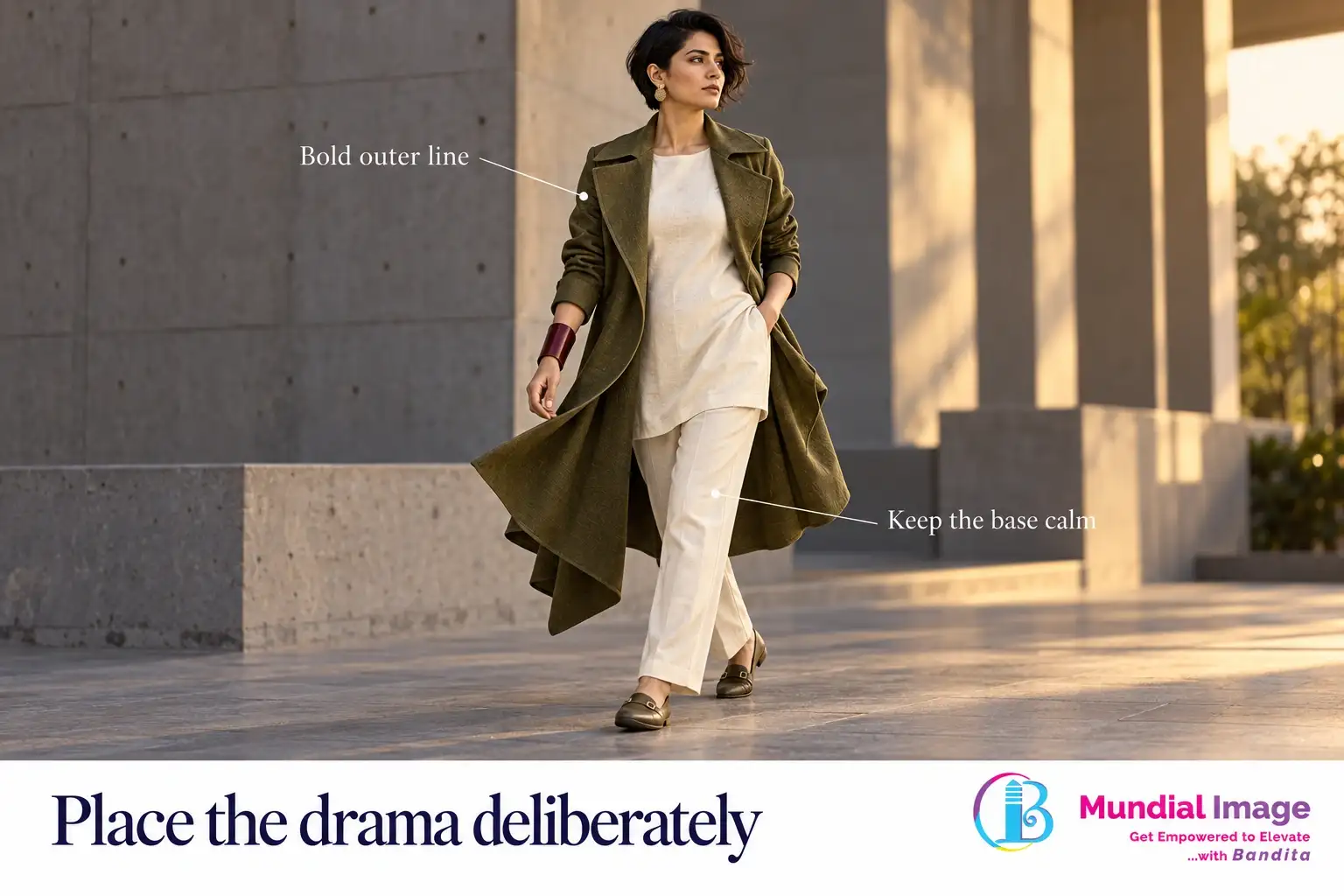
Woman in an olive sculptural jacket over quiet ivory separates.
Contemporary and Expressive
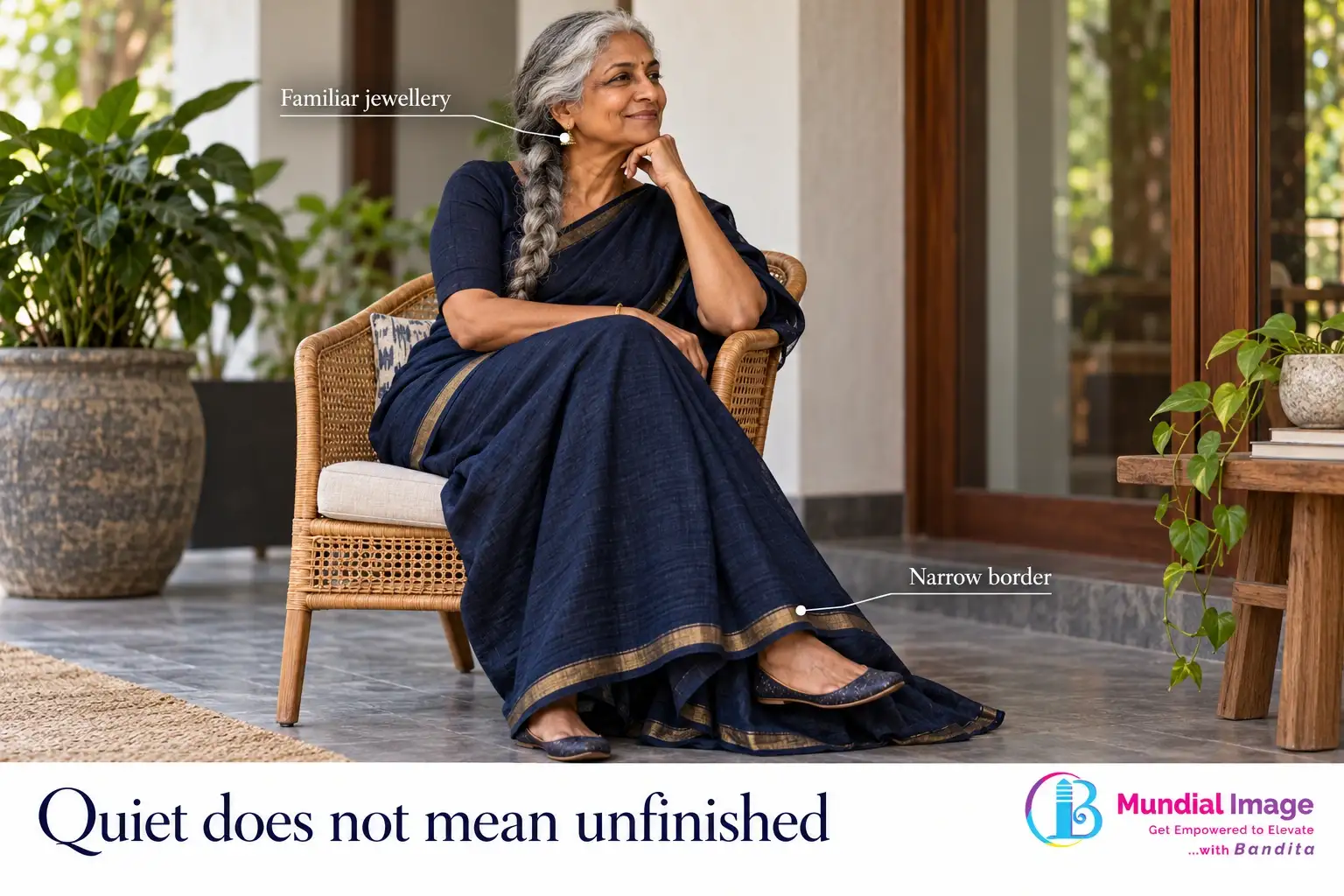
Older woman in an ink saree with a narrow border and familiar jewellery.
Quiet Classic
Woman in a rose kurta beside a window, showing subtle texture in daylight.
Matte Detail in Daylight
Sources and image note
  1. Incredible India, Dussehra. Source for the 2026 date, Ramlila and Ravan Dahan context.
  2. Gujarat Tourism, Navratri festival. Garba nights and tenth-day observances.
  3. Maharashtra Tourism, Dussehra. Local customs.
  4. UNESCO, Durga Puja in Kolkata. Tenth-day immersion.
  5. Incredible India, Mysuru Dasara and Kerala Tourism, Navarathri. Processions and Vidyarambham.
  6. Incredible India, Kullu Dussehra.
  7. India Meteorological Department, Mausam journal. Northeast monsoon context.

Styling formulas and checklists are original Mundial Image editorial recommendations, not measured performance findings. Editorial images are AI-generated styling illustrations. They depict imagined garments and settings, not products for sale or documentary records of rituals.